A cake that browns too quickly on top, a roast that takes far longer than expected, or cookies that come out differently from one side of the pan to the other can make an oven feel unreliable. Homeowners often ask, what causes oven temperature swings when recipes suddenly stop producing predictable results. The answer is sometimes normal oven cycling, but large or persistent changes can point to a part that needs professional attention.
Most modern ovens do not hold one exact temperature every second. They heat above the selected setting, pause, then turn the heat back on after the temperature drops. The concern is whether the oven’s average temperature stays close enough to the setting to cook food consistently.
Some Oven Temperature Swings Are Normal
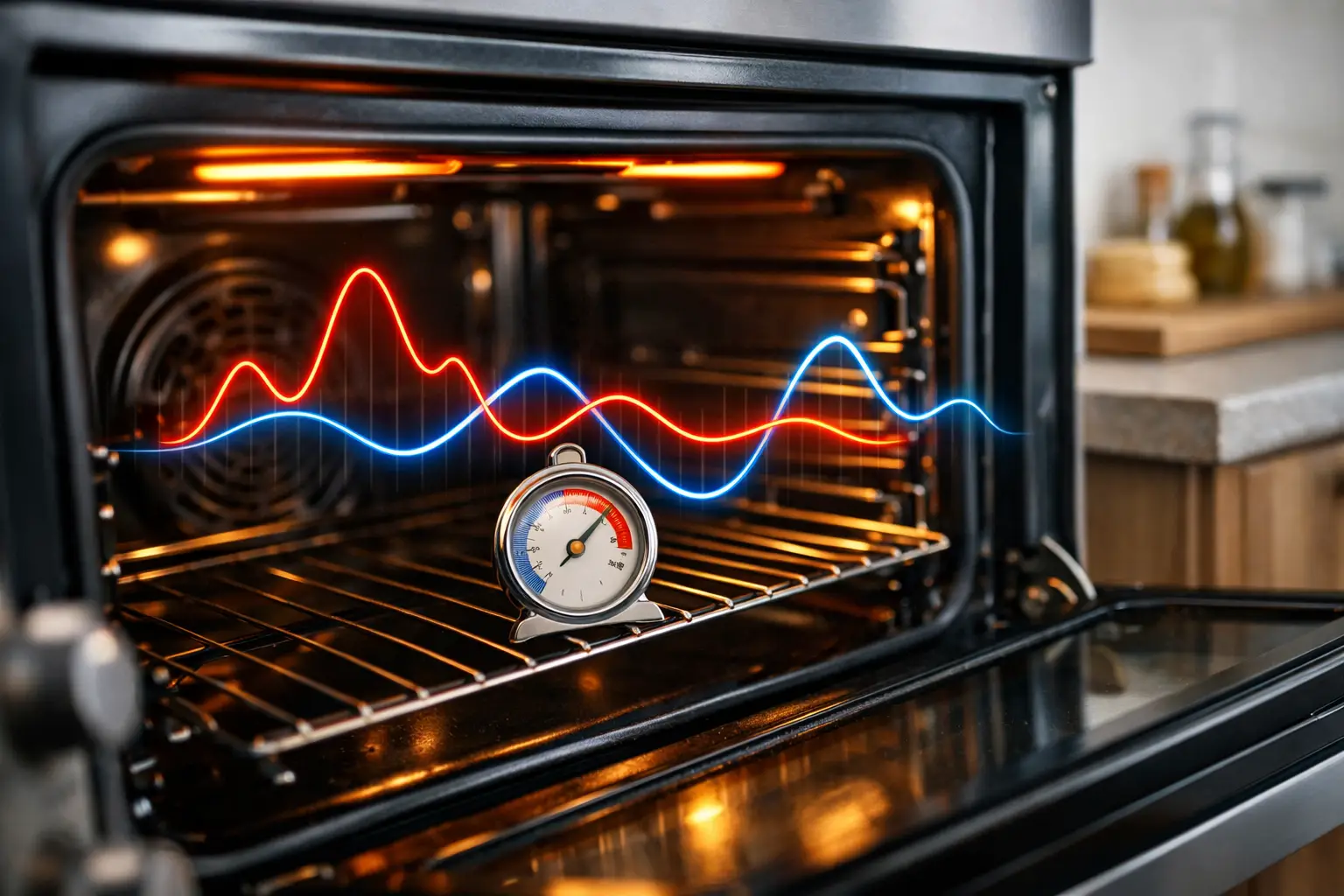
When you set an oven to 350°F, the appliance’s sensor and control system work together to maintain an average near that temperature. The heating element or gas burner cycles on until the cavity gets warm enough, then cycles off. As the oven cools, it turns back on.
A small rise and fall during this cycle is expected. Depending on the model, an oven may move roughly 15 to 25 degrees above or below its target before correcting itself. Opening the door, adding cold food, using a heavy pan, or selecting convection can also temporarily affect the reading.
The issue becomes more concerning when the swing is wide, the oven never reaches the chosen temperature, food is repeatedly undercooked or burned, or the display and actual oven temperature differ by a substantial amount. In those cases, changing recipes is not a lasting solution. A diagnosis can identify whether the problem is calibration, airflow, a worn component, or an electrical control issue.
What Causes Oven Temperature Swings Beyond Normal Cycling?
A failing oven temperature sensor
The temperature sensor is the slim metal probe inside the oven cavity, usually mounted along the back wall. It monitors heat and sends information to the control board. If the sensor is damaged, loose, contaminated, or drifting out of range, the oven may receive inaccurate information about its own temperature.
That can lead to extended heating cycles, premature shutoff, or temperatures that seem to overshoot the setting. A technician can test the sensor’s resistance and wiring rather than replacing parts based on a guess. In some cases, the sensor itself is fine but the connection between the sensor and control is not.
A worn bake or broil element
In an electric oven, the bake element provides most of the heat for standard baking, while the broil element helps with preheating and top heat. A weakened, cracked, or partially failed element may still glow or heat, yet fail to provide steady output. The result can be slow preheat times, uneven browning, and temperature recovery that takes too long after the door is opened.
The same principle applies to gas ovens. A weak igniter may not draw enough current to open the gas safety valve consistently. The burner can ignite late, cycle poorly, or fail to produce the heat needed to maintain the selected temperature. Because gas and electrical components require safe testing procedures, this is not a repair to handle by trial and error.
A faulty electronic control board
The electronic control board interprets the sensor reading and tells the oven when to heat. If the board has a failing relay, damaged circuit, or intermittent connection, it may leave an element on too long or fail to turn it on when needed.
Control board problems can resemble sensor or element problems, which is why a complete diagnosis matters. Replacing a board without confirming the cause can create unnecessary expense. An experienced appliance technician tests the related components and checks for signs of heat damage or failed relays before recommending repair.
A damaged door gasket or poor door seal
The gasket around the oven door keeps heat inside the cavity. If it is torn, flattened, loose, or coated with baked-on residue, heat can escape faster than the appliance can compensate. You may notice extended preheat times, hot air leaking around the door, or food that cooks inconsistently near the front of the oven.
A weak seal does not always create dramatic temperature swings on its own, but it puts added strain on the heating system. It can also make an existing sensor, element, or control problem more noticeable. Replacing a worn gasket is often a straightforward repair when caught early.
Airflow and rack placement problems
Not every uneven result means the oven has failed. Blocking vents with oversized pans, foil, or cookware can disrupt heat circulation. In a convection oven, a fan that is not running properly can also leave hot and cool zones throughout the cavity.
Try leaving space around cookware and using the rack position recommended by the recipe. Avoid lining the oven floor or covering vents with foil unless the manufacturer specifically allows it. If one side of every pan still cooks differently, or convection cooking no longer improves consistency, the fan motor or heating system may need inspection.
Calibration settings that no longer match actual temperature
Many ovens include an offset or calibration feature that lets the displayed setting be adjusted slightly. This can help when an otherwise functional oven consistently runs a little hot or cold. It is useful for a small, stable difference, not for a temperature that rises and falls unpredictably.
For example, if the oven consistently averages 15 degrees low, an approved calibration adjustment may correct it. If it is 30 degrees low one day and 40 degrees high the next, calibration will only mask the real problem. Sensor accuracy, element performance, and control operation should be checked first.
How to Confirm Whether the Temperature Is Actually Off
A basic oven thermometer can be helpful, but it should not be treated as the final word. Inexpensive dial thermometers may react slowly and can be inaccurate themselves. A more reliable approach is to place a quality thermometer near the center rack, allow the oven to preheat fully, and record readings over 20 to 30 minutes as the oven cycles.
Look at the average temperature rather than reacting to a single high or low reading. Also test with the oven empty and the door closed. Opening the door repeatedly can create a temperature drop that is unrelated to a component failure.
Pay attention to cooking symptoms as well. A single batch of cookies can be affected by a dark pan, crowded rack, recipe variation, or an inaccurate thermometer. Repeated issues across different foods, pans, and settings provide much stronger evidence that the oven needs service.
When to Schedule Oven Repair
Schedule a professional diagnostic when temperature swings are severe, preheat times have noticeably increased, food burns on one side, or the oven produces error codes. You should also stop using the appliance and seek prompt service if an electric element is visibly cracked or sparking, a gas oven smells strongly of gas, the burner does not ignite correctly, or the oven trips a breaker.
For homeowners in North Texas, IAS Appliance Solutions can inspect major-brand electric and gas ovens, identify the source of inconsistent heating, and provide an upfront repair recommendation. A stocked service vehicle can help reduce delays when a common sensor, igniter, element, gasket, or related component is needed.
A Consistent Oven Should Not Require Guesswork
A little cycling is part of normal oven operation. Constantly adjusting cook times, rotating every pan, or accepting unpredictable results is not. Before your next important meal or holiday gathering, address repeated temperature problems with a clear diagnosis. A properly operating oven gives you dependable heat, safer operation, and one less disruption in a busy household.

No comment