
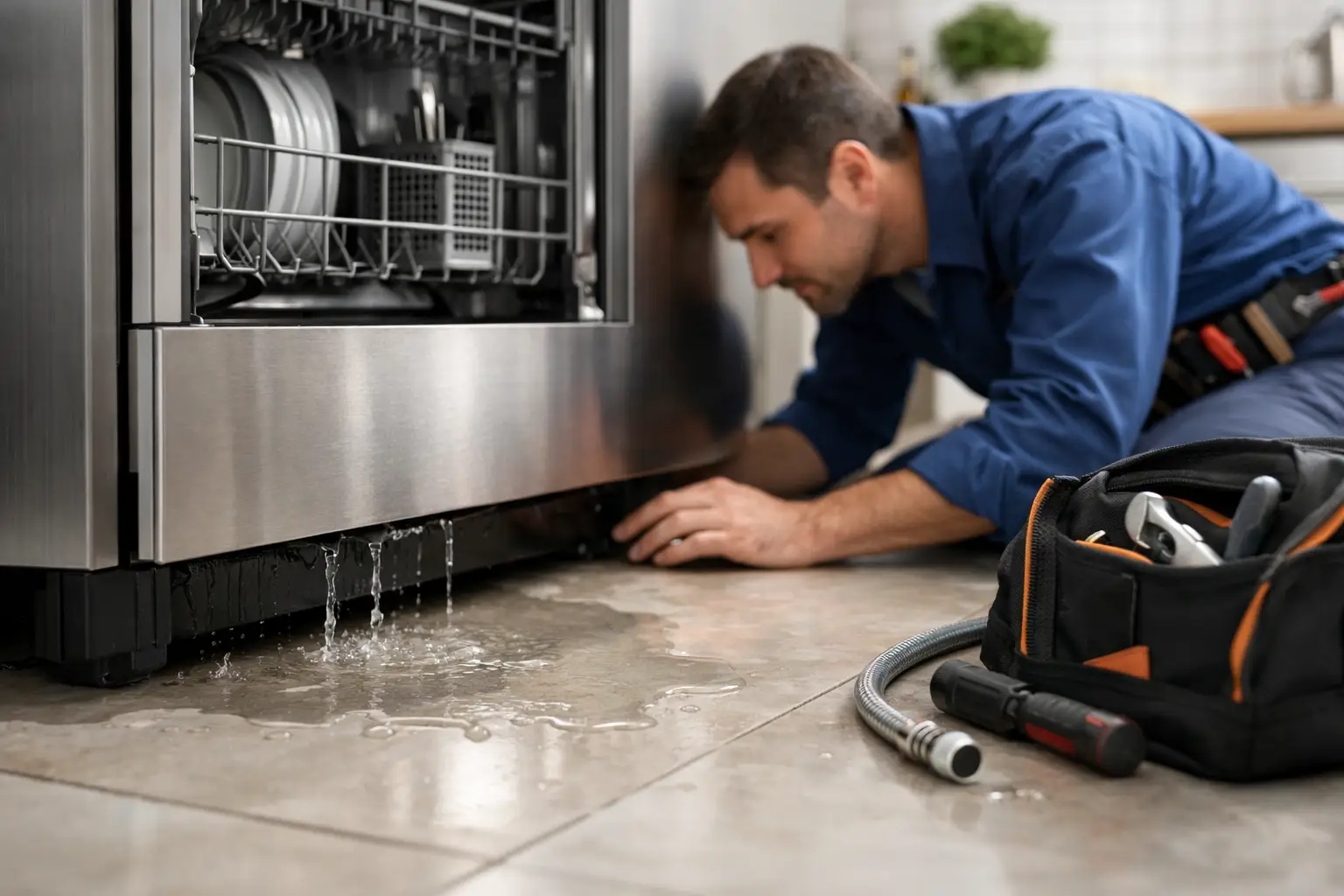
A puddle beneath the dishwasher after a normal cycle is more than an inconvenience. Water can reach cabinet flooring, baseboards, and nearby electrical connections before anyone notices it. Dishwasher leaking from bottom repair starts with identifying where the water is actually escaping, because the visible puddle is not always directly below the failed part.
A loose connection may create a slow leak only during draining. A worn door seal may let water run down the front of the machine. A damaged pump or cracked hose can leak underneath the unit, where the problem stays hidden until flooring begins to swell. The right repair protects both your dishwasher and your kitchen from a much larger cleanup.
What to Do When Water Appears Under Your Dishwasher
If you see water on the floor, stop the dishwasher and avoid starting another cycle to “see if it happens again.” Turn off the dishwasher at its breaker if water is close to the electrical connection or outlet. Then shut off the water supply valve under the sink if you can safely access it.
Use towels to contain the water and remove standing moisture from the floor. If the dishwasher has been leaking for more than one cycle, check the cabinet toe-kick, adjacent flooring, and the area under the sink for dampness. A small amount of water can travel farther than expected.
Before calling for service, it can help to note when the leak appears. Does it happen as the dishwasher fills, during the wash portion of the cycle, or when it drains? That detail gives a technician a useful starting point, but do not pull out a built-in dishwasher or remove electrical panels unless you have the experience to do so safely.
Common Causes of a Leak From the Bottom
A leaking pump or pump seal
The circulation pump moves water through the spray arms, while the drain pump removes it at the end of the cycle. Seals around these parts can wear out with age, and pump housings can crack. When either happens, water may drip from the bottom center of the dishwasher.
Pump repairs require access beneath the appliance and often involve disconnecting hoses and electrical components. Depending on the dishwasher’s age, model, and the availability of parts, replacing the seal or pump can be a sensible repair. A technician should confirm the source first, since water from a hose above the pump can look very similar.
A loose, split, or clogged drain hose
The drain hose carries used water from the dishwasher to the sink drain or garbage disposal. A loose clamp, cracked hose, or poor connection can leak during the drain cycle. In some cases, a blockage causes water to back up and escape from a connection that was already weak.
A drain hose issue is usually repairable without replacing the dishwasher. The key is to inspect the full hose path, connection points, and drainage setup rather than replacing a part based on a guess.
A water inlet valve problem
The inlet valve opens to let fresh water enter the dishwasher. If the valve body cracks or a connection loosens, water may leak underneath the front or side of the appliance while it fills. This type of leak can be intermittent, so a dry floor between cycles does not rule it out.
Because the inlet valve connects to the home’s water supply, the repair should include checking the supply line and fittings for corrosion or damage. Replacing only one visibly wet part can leave another leak waiting to happen.
A worn door gasket or misaligned door
Not every bottom leak originates underneath the dishwasher. A flattened, torn, or dirty door gasket can allow wash water to escape from the front corners. The water then runs down the door and collects along the bottom of the unit.
Overloaded racks, a damaged lower spray arm, or a dishwasher that is no longer level can also force water toward the door. A technician may find that the machine needs a gasket, leveling adjustment, spray arm replacement, or a combination of smaller corrections.
Too much detergent or the wrong detergent
Hand dish soap, excessive detergent, or detergent that is not intended for an automatic dishwasher can create heavy suds. Suds push water past the door seal and leave a confusing puddle on the floor. This is one of the few causes a homeowner can often correct without a part replacement.
Stop the cycle, remove as much foam as possible, and run a rinse cycle only after confirming that the dishwasher is otherwise safe to operate. If leaking continues with the correct amount of dishwasher detergent, there is likely a mechanical issue as well.
Why Accurate Dishwasher Leaking From Bottom Repair Matters
Water under a dishwasher can come from the appliance, the kitchen sink plumbing, the refrigerator water line, or a spill that traveled under the cabinets. An accurate diagnosis prevents spending money on the wrong repair.
During professional service, the technician can inspect the door seal, spray arms, pumps, hoses, inlet valve, tub, drain connection, and mounting position. The dishwasher may need to be run through controlled portions of a cycle to pinpoint when and where the leak begins. This approach is more reliable than replacing the most common part and hoping the problem disappears.
It also helps uncover secondary damage. If water has reached wood flooring or cabinetry, drying the area promptly matters. The appliance repair may be straightforward, but delaying it can turn a modest hose or seal repair into damaged flooring and cabinet work.
Can You Repair It Yourself or Should You Schedule Service?
A homeowner can safely check for obvious detergent foam, a door that is blocked by a dish rack, or water coming from the sink cabinet rather than the dishwasher itself. Cleaning visible debris from the door gasket can also help if the gasket is intact.
The trade-off changes when the dishwasher must be pulled from its cabinet opening. Built-in units are heavy, connected to water and drain lines, and often hardwired or plugged into a tight space. Incorrectly moving the unit can damage flooring, kink a line, or create an electrical risk.
Professional service is usually the better choice when water appears beneath the machine, when the leak returns after a cleaning, or when you cannot tell whether the source is the dishwasher or nearby plumbing. It is especially wise to schedule service if you see rust, a burning smell, repeated drainage problems, or water near electrical components.
For homeowners in Frisco, Plano, McKinney, Allen, Prosper, Celina, Little Elm, Denton, Aubrey, and The Colony, IAS Appliance Solutions provides in-home dishwasher diagnostics and repair with clear recommendations before work begins. An experienced technician can explain whether repairing the failed component makes sense or whether the dishwasher’s condition and repair cost make replacement a better long-term decision.
What to Expect From a Professional Repair Visit
A good repair visit should begin with the problem you observed: where the water appeared, how often it leaks, and which part of the cycle was running. The technician will inspect the appliance and test likely leak points rather than relying only on the initial symptom.
After diagnosis, you should receive a straightforward explanation of the failed component, the recommended repair, and the expected cost before authorizing work. When the needed part is available, many dishwasher repairs can be completed during the same visit. If a special-order part is necessary, you should know what to expect before any work proceeds.
Keep the area around the dishwasher dry while you wait for service, and avoid using the appliance until the cause has been confirmed. Acting early is the practical way to protect your kitchen, limit disruption, and get back to a dishwasher you can trust.


[…] leak deserves quick attention, even if it appears small. Water can damage flooring, cabinets, and the subfloor before it becomes obvious. If you see water around the dishwasher, stop the […]
[…] dishwasher leaks, drains slowly, or stops […]
[…] properly installed for the dishwasher to clean effectively and operate safely. A loose fitting can leak slowly behind the appliance, sometimes causing cabinet damage long before anyone notices. An improperly […]
[…] attention to whether customers describe upfront pricing. A dishwasher repair can range from a straightforward adjustment or cleaning to a part replacement that requires more […]
[…] worn gasket, or damaged inlet valve may be repairable. However, a cracked tub, severe corrosion, or continuing water leak can put flooring, cabinets, and adjacent rooms at risk. Turn off the dishwasher’s water […]