
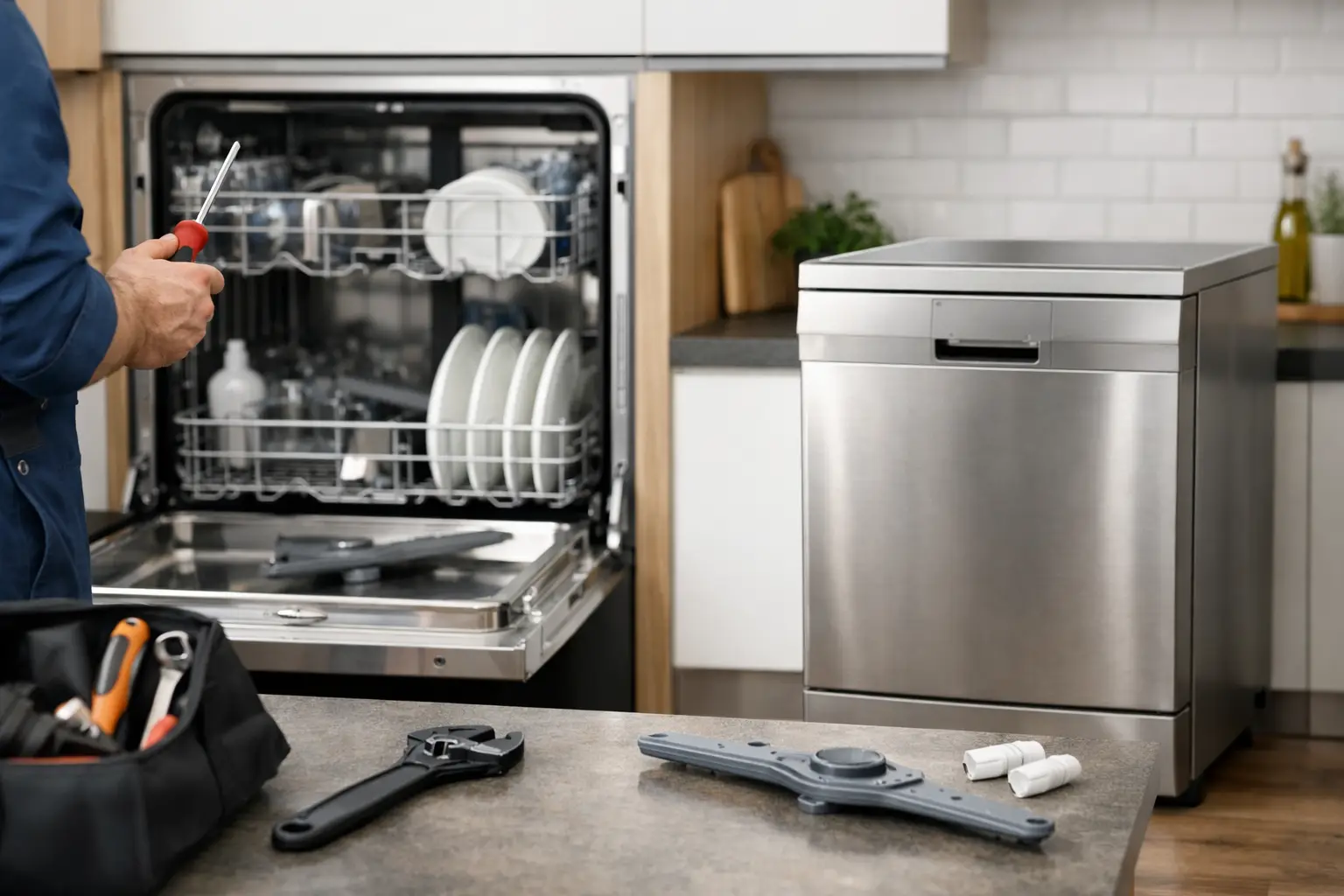
A dishwasher that stops cleaning properly can disrupt the whole kitchen routine fast. When deciding whether to repair or replace dishwasher equipment, the right answer is rarely just about whether it still turns on. Its age, the type of failure, repair cost, condition, and history of problems all matter.
For many North Texas homeowners, a professional diagnosis is the fastest way to replace uncertainty with a clear plan. Some issues are straightforward repairs that can restore reliable performance on the first visit. Others are signs that investing in a new dishwasher will be the more practical choice.
Repair or Replace Dishwasher: Start With Its Age
Most dishwashers last about 8 to 12 years, though maintenance, water quality, usage, and original build quality can move that number in either direction. Age alone does not decide the issue, but it provides useful context.
A dishwasher under five years old is usually worth repairing, particularly if it has had no recurring trouble. A worn door latch, faulty inlet valve, damaged rack wheel, clogged drain path, or failed heating component can often be addressed without making replacement the sensible default.
Between roughly six and nine years old, the decision depends more heavily on the specific failed part and the repair estimate. A dependable midlife dishwasher with one isolated problem may have several useful years remaining. But repeated breakdowns, declining cleaning results, and costly electronic failures can change the math.
Once a dishwasher reaches 10 years or more, replacement becomes a stronger consideration, especially if it needs a major part. That does not mean every older unit should be removed. A well-maintained model may still be worth a modest repair. The key is avoiding a costly fix that only delays another expensive problem a few months later.
Compare the Repair Cost to Replacement Value
A common rule of thumb is to reconsider repair when the estimate reaches about half the cost of a comparable new dishwasher. It is a helpful starting point, not a hard rule.
For example, repairing a relatively new dishwasher may be worthwhile even when the repair is not inexpensive, because a comparable replacement could involve the purchase price, delivery, installation, and possible adjustments to cabinetry or plumbing. On the other hand, putting a significant amount into an aging dishwasher with a history of service calls can be difficult to justify.
Look at the full cost, not just the part price. A transparent repair estimate should identify the diagnosed issue, the labor involved, and whether the repair is expected to provide a lasting solution. It should also account for the appliance’s overall condition. Replacing one failed component will not solve unrelated wear in an older pump, control system, seals, or racks.
A qualified technician can help you distinguish between a repair that restores dependable operation and a repair that simply gets the dishwasher through the next few months.
Failures That Are Often Worth Repairing
Many dishwasher problems sound serious but are repairable. If the unit is otherwise in good condition, these issues commonly support repair rather than replacement.
Poor cleaning or standing water
Dishes that come out dirty, gritty, or wet may point to a clogged spray arm, filter issue, drain restriction, circulation problem, or heating-related failure. Standing water at the bottom of the tub can be caused by a blocked drain line, a drain pump issue, or an installation-related drainage problem. These conditions need proper diagnosis, but they do not automatically mean the dishwasher has reached the end of its life.
Door, rack, and dispenser problems
A dishwasher door that will not latch, racks that no longer roll smoothly, or a detergent dispenser that fails to open can make everyday use frustrating. In many cases, the affected component can be replaced without replacing the entire appliance.
Isolated electrical components
Switches, sensors, valves, pumps, and heating elements can fail independently. When a dishwasher is still within a reasonable age range and has performed well otherwise, replacing one component is often the cost-conscious choice.
When Replacement Is Usually the Better Investment
Replacement deserves serious consideration when the dishwasher has major structural damage, repeated failures, or a repair estimate that approaches the cost of a suitable new model.
Leaks require special attention. A loose hose, worn gasket, or damaged inlet valve may be repairable. However, a cracked tub, severe corrosion, or continuing water leak can put flooring, cabinets, and adjacent rooms at risk. Turn off the dishwasher’s water supply and avoid running it until the source is identified.
A failed control board can also complicate the decision. Control boards are critical electronic components, and availability varies by model. If the dishwasher is older, the board is costly, or replacement parts are discontinued, installing a new dishwasher may be more practical than pursuing an uncertain repair.
Frequent service calls are another clear signal. One repair in several years is normal appliance ownership. Multiple unrelated repairs in a short period suggest the machine may be nearing the end of its dependable service life. Homeowners should not have to keep scheduling repairs just to get through a normal week of meals.
Consider Performance, Efficiency, and Your Household Routine
A new dishwasher may offer quieter cycles, improved drying, better rack layouts, and lower water or energy use. Those upgrades can be appealing, particularly for a busy household that runs the dishwasher daily. Still, efficiency alone does not always justify replacing a machine that is working well after a reasonably priced repair.
Think about what is actually affecting your routine. If your dishwasher is a little louder than newer models but cleans well and needs a simple repair, fixing it may be the sensible move. If it leaves dishes dirty after multiple repairs, leaks intermittently, or interrupts a large family’s daily cleanup, reliability may be worth more than extending its life one more year.
Also consider installation requirements before choosing replacement. A new dishwasher must fit the existing opening and connect correctly to water, drainage, and electrical service. Homes with older plumbing, modified cabinets, or hardwired units may need added attention during installation. Planning for those details early helps prevent surprises.
Get a Diagnosis Before You Make the Call
Dishwasher symptoms can be misleading. A machine that will not start may have a simple latch issue, a power supply problem, or a more involved control failure. A dishwasher that will not drain may have a removable obstruction, a failing pump, or an issue outside the appliance itself.
That is why a professional in-home diagnosis is valuable. It prevents homeowners from replacing an appliance that could have been repaired economically, while also preventing money from being spent on a repair that does not make long-term sense.
IAS Appliance Solutions helps homeowners throughout Frisco, Plano, McKinney, Denton, and surrounding North Texas communities make that decision with an honest assessment and upfront pricing. An experienced technician can inspect the appliance, explain the cause in clear terms, and recommend repair or replacement based on the condition of your specific dishwasher, not a one-size-fits-all answer.
A Simple Way to Decide
Before scheduling service or shopping for a new model, gather a few details: the dishwasher’s approximate age, brand and model number, what it is doing or not doing, whether it has leaked, and any previous repairs. This information helps make the appointment and diagnosis more efficient.
Then weigh the estimate against the dishwasher’s remaining expected life, repair history, and the cost of a comparable installed replacement. If the repair is targeted, reasonably priced, and likely to restore dependable use, repair is often the right call. If the unit is old, unreliable, leaking, or facing a major expensive failure, replacement can provide more predictable value.
The best decision is the one that gives your household a functioning kitchen without unnecessary expense or disruption. A clear diagnosis and an honest recommendation make that choice much easier.







No comment