A gas oven can look completely normal while the oven igniter is beginning to fail. The display may light up, the oven may click, and you may even smell a small amount of gas, yet the burner never comes on. For a busy household, that can turn dinner plans into a frustrating problem fast. Knowing the warning signs helps you decide when a simple service call is the safer, more cost-effective choice.
What an Oven Igniter Does
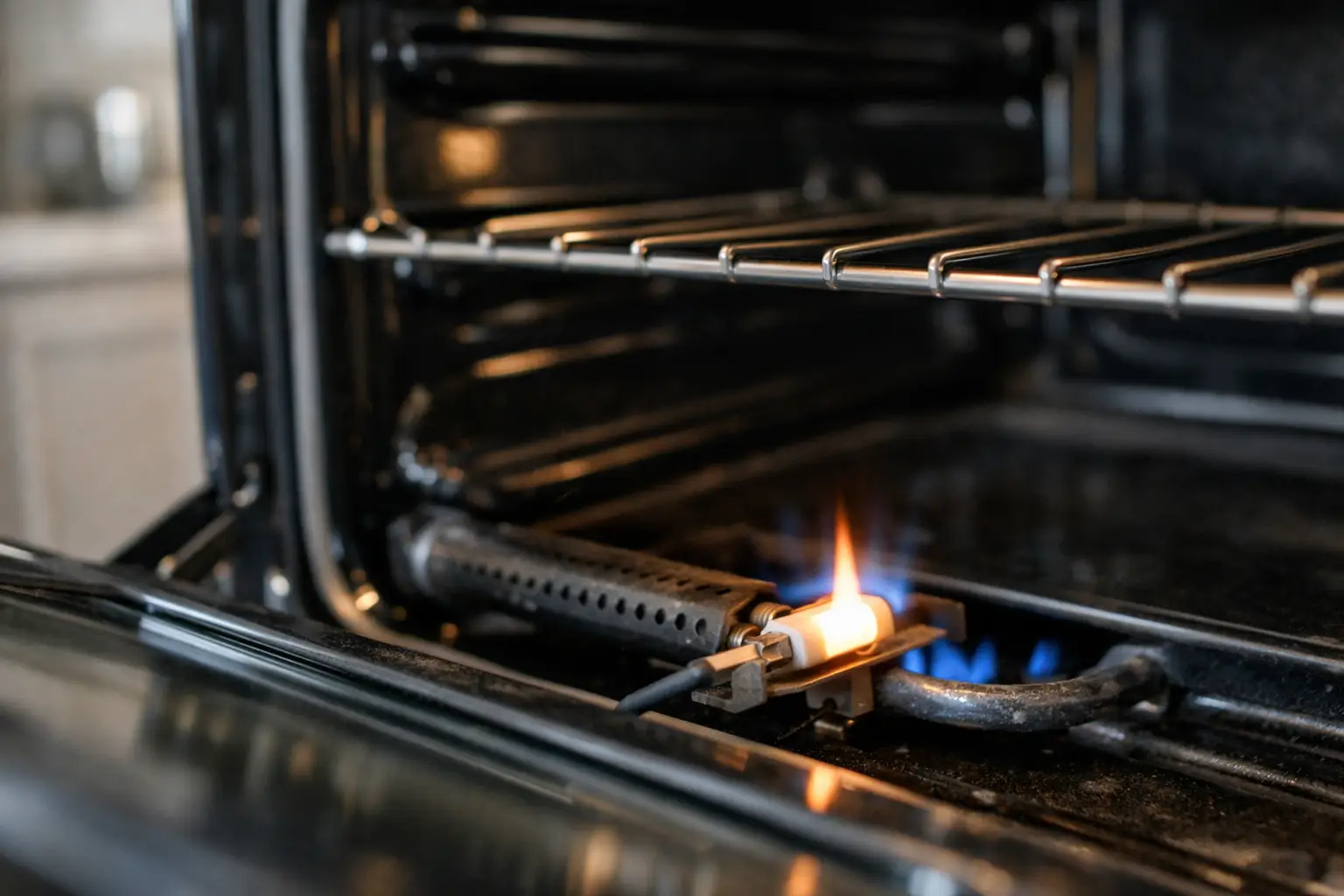
In most modern gas ovens, the igniter is the small component responsible for starting the bake or broil burner. When you select a temperature, electricity heats the igniter until it glows bright orange. Once it reaches the proper temperature and draws enough electrical current, the gas safety valve opens and gas flows to the burner. The burner then lights and begins heating the oven cavity.
This process happens in a matter of seconds when the oven is working properly. As the igniter wears down, however, it may still glow without becoming hot enough or drawing enough current to open the safety valve. That is why a glowing igniter does not always mean the igniter is healthy.
Igniters are wear parts. They operate under intense heat each time the oven cycles, so eventual failure is common, particularly in an oven that is used often. A failed igniter is not necessarily a sign that the entire range needs replacement.
Signs Your Oven Igniter May Be Failing
The most common symptom is an oven that takes much longer than usual to preheat. A healthy oven should begin producing heat shortly after you set the temperature. If it takes several minutes before the burner lights, or if preheating now takes far longer than it used to, a weak igniter is one likely cause.
Another familiar sign is a glow with no flame. You may see the igniter turn orange at the bottom of the oven, but the burner remains off. Because the igniter can glow even when it is too weak to trigger the gas valve, this symptom often points to an igniter nearing the end of its service life.
You may also notice that baking results have become inconsistent. Cookies may brown unevenly, casseroles may take longer than expected, or the oven may struggle to hold temperature. These concerns can be related to an igniter, but they can also come from a temperature sensor, control board, gas valve, or airflow issue. Proper diagnosis matters because replacing parts based on a guess can add cost without solving the problem.
If the broil function works but bake does not, or the reverse is true, that detail is useful. Many ovens use separate igniters for the bake and broil burners. One working function does not rule out an igniter problem in the other circuit.
When an Igniter Problem Becomes a Safety Concern
A gas appliance deserves prompt attention when you smell gas. If you smell a strong or persistent gas odor, turn the oven off, avoid operating electrical switches or open flames, leave the area, and contact your gas utility or emergency services as appropriate. Do not try to relight the oven or troubleshoot the component yourself.
A brief smell of gas before ignition may occur with some oven failures, but it is still not something to ignore. The burner should ignite quickly once gas is released. Repeated failed ignition, delayed ignition, popping sounds when the burner finally lights, or a gas smell that lingers all call for professional evaluation.
Electrical safety matters as well. Igniters use high heat and are connected to the appliance’s electrical system. A cracked igniter, damaged wire connection, or incorrect replacement part can create additional problems. Gas ranges also require correct reassembly of burner components and panels after service.
Why a Glowing Igniter Is Not a Complete Diagnosis
It is understandable to search for the visible part that seems to be causing the problem. The challenge is that several oven components can create similar symptoms. A weak igniter may glow but fail to open the gas valve. A defective gas safety valve can prevent gas flow even when the igniter is functioning. A failed control board or relay may not send consistent power to the igniter in the first place.
Technicians diagnose the system rather than relying on appearance alone. They can inspect the igniter, verify electrical readings, assess the burner and valve operation, and check whether the oven is reaching and maintaining the selected temperature. This approach helps avoid replacing an igniter when the actual fault is elsewhere.
The exact repair also depends on the oven’s design and brand. Some models use round-style igniters, while others use flat, rectangular styles. The correct part must match the appliance specifications, mounting arrangement, and electrical requirements. An ill-fitting universal part may not deliver reliable performance.
What to Do Before Scheduling Oven Repair
Before arranging service, make a few simple observations that can help speed up diagnosis. Note whether the issue occurs in bake, broil, or both settings. Pay attention to whether the igniter glows, whether the burner lights at all, and approximately how long preheating takes. If the oven has displayed an error code, write it down.
It is also helpful to locate the model number, typically found on the oven frame, behind the door, on the storage drawer frame, or in another manufacturer-designated location. With that information, a service provider can better prepare for the appointment.
Avoid repeated attempts to force the oven to start. Do not use a match or lighter to ignite an oven burner unless the manufacturer specifically provides instructions for doing so, and do not disassemble the appliance while it is connected to gas and power. What appears to be a straightforward igniter replacement can involve fragile components, sharp edges, and gas-related safety considerations.
Repair or Replace the Oven?
An igniter replacement is often a practical repair when the rest of the oven is in good condition. If the appliance heats consistently after repair, the controls work properly, and there are no major additional issues, replacing the worn component can extend the oven’s useful life without the expense and disruption of a new appliance installation.
Replacement becomes a more serious consideration when an older oven has multiple expensive failures at once, such as control problems, a failing gas valve, extensive corrosion, damaged wiring, or recurring temperature issues. Parts availability can matter too. A clear diagnostic assessment gives you the information needed to compare repair cost, appliance age, condition, and expected reliability.
A trustworthy service recommendation should be straightforward. You should know what failed, what repair is proposed, and what the expected cost will be before work begins. There is no benefit in replacing a functioning appliance when a targeted repair can restore dependable service, and no benefit in repeatedly repairing one that is no longer a sensible long-term investment.
Get a Clear Answer Before the Next Meal Is Delayed
When an oven will not heat, is slow to preheat, or produces a glow without a flame, an experienced technician can identify whether the oven igniter is the problem or whether another component needs attention. For homeowners across North Texas, IAS Appliance Solutions provides clear diagnostics, upfront pricing, and practical repair recommendations designed to minimize disruption.
A working oven is easy to take for granted until it stops in the middle of a busy week. Addressing unusual ignition or heating behavior early can help restore safe, reliable cooking before a small inconvenience becomes a larger interruption.


[…] same principle applies to gas ovens. A weak igniter may not draw enough current to open the gas safety valve consistently. The burner can ignite late, […]
[…] burners do not ignite properly after installation, the cause may be as simple as a misplaced burner cap or as involved as […]