
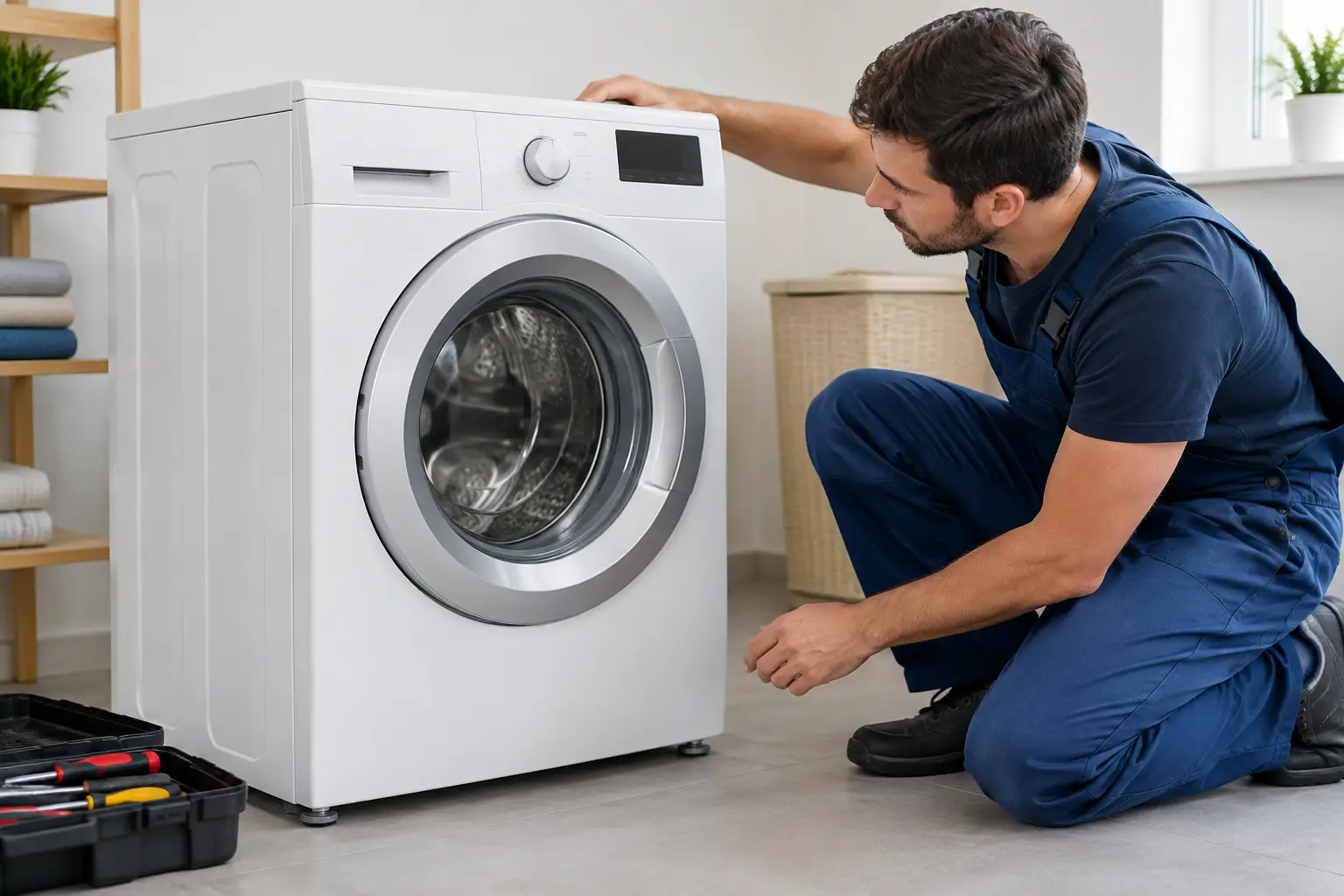
A washer that walks across the laundry room or bangs hard during spin is more than an annoyance. The repeated movement can loosen water connections, damage flooring, strain internal parts, and turn a routine load of laundry into a disruption. Before assuming the washer needs a major repair, start with the simple causes. Many vibration problems come down to an uneven floor, an unbalanced load, or an installation issue.
Knowing how to fix washer vibration starts with identifying when it happens. A small amount of movement during a high-speed spin can be normal, especially with a large front-load washer. Violent shaking, repeated thumping, rattling, or a machine that shifts several inches is not normal and should be addressed before using the washer again.
Start With the Load Inside the Washer
An uneven load is the most common reason a washer suddenly vibrates, particularly when washing bulky items. Bath mats, comforters, towels, jeans, and a single heavy item can collect on one side of the drum as the spin cycle speeds up. The washer then has to fight the uneven weight, which creates pounding and movement.
Pause the cycle if your model allows it, wait until the drum stops completely, and redistribute the items around the basket. If you are washing one bulky item, add two or three similar lightweight items to help balance it. Do not pack the drum tightly. Overloading prevents clothes from moving freely, while underloading can leave one heavy item without enough counterweight.
If the vibration happens only with certain loads, the washer itself may be fine. Adjusting how those items are washed is often the lasting solution. A bulky comforter may also be too large for a standard residential washer and may need to be washed at a laundromat with commercial equipment.
Check Whether the Washer Is Level
A washer must sit firmly on all four feet. Even a slight tilt can become a major vibration when the drum reaches high spin speed. This is especially common after moving the appliance, replacing flooring, or installing a new washer-and-dryer set.
Place a bubble level across the top of the washer from side to side, then from front to back. If the machine is not level, adjust the threaded leveling feet at the bottom corners. Most models allow you to turn each foot by hand or with a wrench. Raise or lower the appropriate corner until the washer is level and does not rock when you press down on opposite top corners.
Once the feet are adjusted, tighten the locking nuts against the washer cabinet if your model has them. This detail matters. A correctly leveled foot can gradually shift if it is not secured, bringing the vibration back a few weeks later.
The floor itself also matters. A washer on a solid concrete slab is less likely to shake than one installed on an older wood floor or an upstairs laundry room. Leveling feet can correct the appliance position, but they cannot fully eliminate flex in a floor structure. Anti-vibration pads may reduce noise transferred to the floor, but they will not repair a weak floor or an internal washer problem.
Confirm the Installation Is Secure
Newly installed washers can vibrate severely if the shipping bolts were left in place. These bolts secure the drum during transportation and are usually located on the back of front-load washers. They must be removed before the washer is operated. Running the machine with shipping bolts installed can cause loud banging and damage the suspension system.
Check the owner’s manual for your model if you are unsure whether the bolts have been removed. Do not remove random fasteners from the back panel. Shipping bolts are specific, larger bolts designed for transport, and the openings are often covered with plastic caps after removal.
Also make sure the drain hose and water supply hoses have enough room behind the washer. Hoses that are pinched, pulled tight, or striking the wall can create noise that sounds like a vibration issue. The washer should have reasonable clearance from the wall, cabinets, and dryer so it is not making contact during spin.
Look for Signs of a Mechanical Problem
When load balancing and leveling do not solve the issue, the washer may have worn or damaged internal components. Top-load and front-load machines use suspension parts to keep the tub centered as it spins. Depending on the model, these may include suspension rods, springs, shock absorbers, dampers, counterweights, tub bearings, or drive components.
A washer with failing suspension parts may shake during nearly every spin cycle, even with a small, balanced load. You may also notice that the tub bounces excessively when gently pressed down by hand. On a front-load washer, a rumbling or grinding sound that gets louder as the drum spins can point to worn bearings. A loose counterweight can create a heavy knocking sound, while a worn shock absorber often allows the tub to move too freely.
These issues are not good candidates for trial-and-error repair. Accessing the suspension or bearing system can require disassembling much of the washer, handling heavy components, and correctly reassembling panels, wiring, hoses, and seals. Continuing to run a washer that is banging violently can turn a manageable repair into damage to the cabinet, tub, motor, or nearby plumbing.
A Quick Drum Check
With the washer off and empty, open the door or lid and gently move the inner basket or drum. Some movement is normal, but it should not feel loose, scrape against the outer tub, or drop noticeably. Turn the drum by hand. Grinding, metal-on-metal noise, or rough resistance are signs that a professional diagnosis is the safer next step.
Do not reach behind the drum, remove cabinet panels, or work near electrical connections without first disconnecting power. If there is standing water, a burning smell, leaking, or visible damage, stop using the appliance until it can be inspected.
How to Fix Washer Vibration on Different Washer Types
The basic checks are similar, but the pattern of vibration can differ by washer type. Front-load washers spin at much higher speeds, so they are especially sensitive to level installation and shipping bolts. They can also feel more dramatic during spin because the drum is mounted horizontally and carries a concentrated load of wet laundry.
Top-load washers are more likely to become unbalanced when a large item wraps around the center agitator or settles to one side. If a top-load washer repeatedly stops, redistributes laundry, and tries to spin again, it may be detecting an out-of-balance load. That can be a load issue, but frequent occurrences can also signal weak suspension rods or a worn basket support.
Compact and stacked laundry units need extra attention to installation. Because of their height or lighter cabinet design, even a small amount of rocking can feel amplified. Never try to stabilize a stacked unit with cardboard, wood scraps, or loose shims. Proper leveling feet and a stable floor are the right fix.
When It Is Time to Schedule a Repair
It makes sense to call for service when the washer still vibrates after being leveled and tested with a balanced load, or when the machine makes grinding, scraping, or hard banging sounds. A repair professional can identify whether the issue is related to the suspension, bearings, drive system, counterweight, control system, or installation conditions.
For homeowners in Frisco, Plano, McKinney, Denton, and surrounding North Texas communities, IAS Appliance Solutions provides in-home washer diagnosis with clear, upfront recommendations. An experienced technician can determine whether a repair is practical, explain the parts involved, and help prevent further damage from repeated vibration.
Before scheduling, make a quick note of when the vibration occurs, what type of load is in the washer, and whether there are any new sounds or leaks. Those details can make the diagnostic visit more efficient. If the washer is moving forcefully or striking nearby surfaces, leave it off until the problem is corrected – protecting your laundry room now is usually far less costly than repairing the damage later.





No comment