
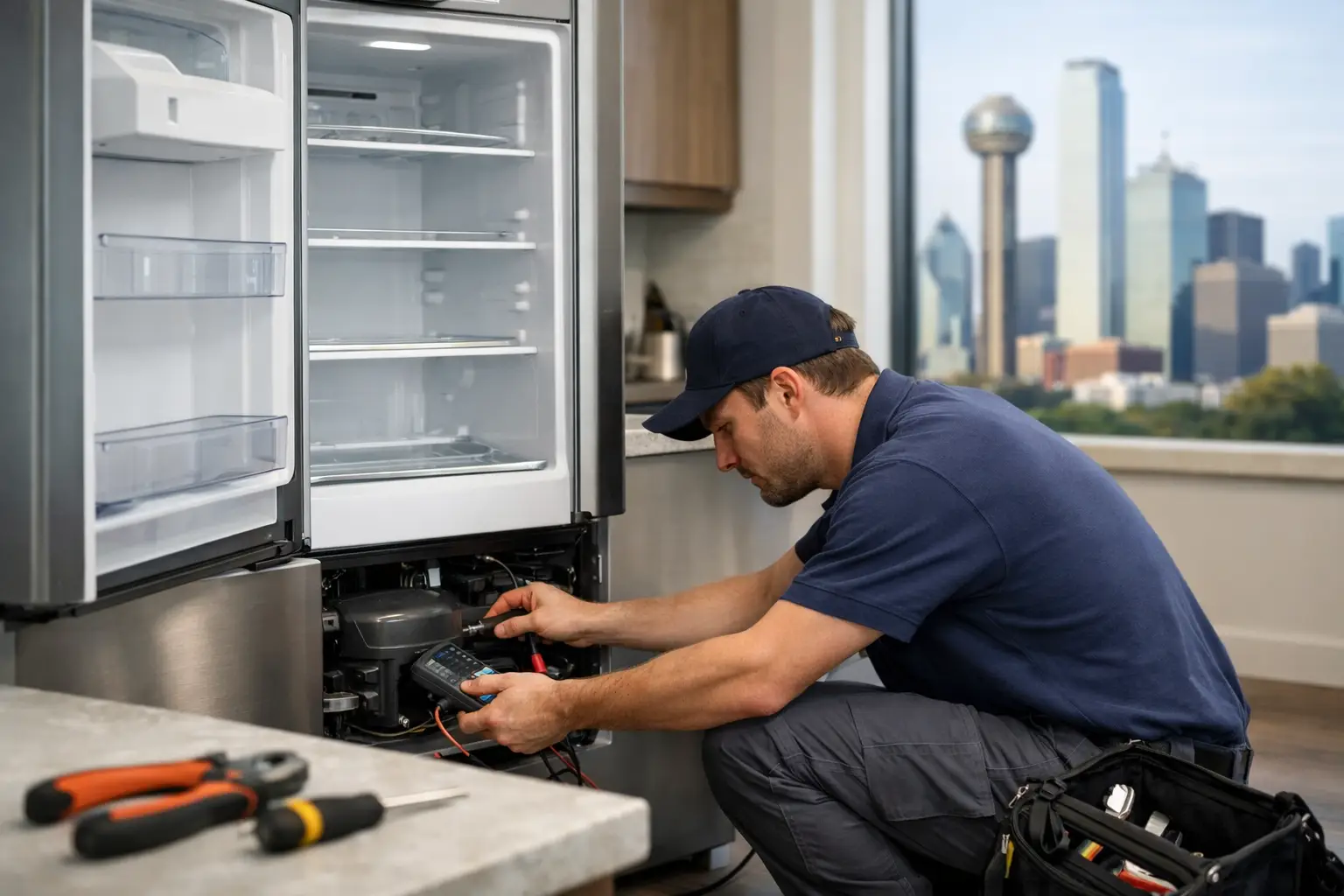
A refrigerator can sound normal, show a working light, and still fail to keep food at a safe temperature. When you need refrigerator not cooling repair Dallas homeowners can depend on, the priority is protecting your groceries, finding the actual cause, and avoiding a repair that only masks the problem.
A warm refrigerator is disruptive quickly. Milk, meat, leftovers, medications, and prepared meals may all be affected, while a freezer that starts thawing can create an even bigger cleanup. Some cooling issues have a simple explanation. Others involve components that should be diagnosed and repaired by an experienced technician. Knowing the difference helps you act quickly without paying for unnecessary work.
First, Protect Your Food and Check the Temperature
The refrigerator compartment should generally stay at or below 40°F, while the freezer should remain at 0°F. If you have an appliance thermometer, use it instead of relying only on the control panel setting. A refrigerator display or dial can be set correctly even when the appliance is not actually reaching that temperature.
Keep the doors closed as much as possible while you assess the situation. Move perishable food to a cooler with ice or another working refrigerator if the interior temperature has been above 40°F for several hours. When in doubt about food safety, it is better to discard questionable perishables than take a chance.
Before scheduling service, check whether the refrigerator is plugged in securely and whether the kitchen breaker has tripped. Also look at the temperature controls. They can be bumped during cleaning, while loading groceries, or by curious children. These quick checks are worthwhile, but repeated resets or constant temperature adjustments will not solve a failed cooling component.
Common Reasons a Refrigerator Stops Cooling
A refrigerator relies on airflow, electrical controls, fans, sensors, and a sealed cooling system working together. The symptom may be simple – food feels warm – but the source can vary considerably.
Blocked Airflow or Dirty Condenser Coils
Cold air has to circulate between the freezer and fresh-food sections. Overpacked shelves, large boxes placed against air vents, or frost buildup can restrict that airflow. In some models, the freezer remains cold while the refrigerator section warms because air is no longer moving where it needs to go.
Dust and pet hair on condenser coils can also make the unit work harder to release heat. Depending on the refrigerator design, the coils may be behind the appliance or beneath it. Cleaning accessible coils can help performance, but it will not correct a failed fan motor, refrigerant leak, or compressor problem.
Failed Evaporator or Condenser Fan
Fans are essential to cooling. An evaporator fan moves cold air through the freezer and refrigerator compartments, while a condenser fan helps remove heat from the system. If either fan fails, you may hear unusual noises, notice inconsistent temperatures, or find that one section cools better than the other.
A fan issue is often repairable, but the technician should confirm whether the motor, wiring, control board, or an ice obstruction caused the failure. Replacing the visible part without identifying the reason it failed can lead to another service call.
Defrost System Problems
Most modern refrigerators automatically defrost frost from the evaporator coils. When a defrost heater, thermostat, sensor, or control component stops working, ice can build up behind the freezer panel. That ice blocks airflow and gradually causes the refrigerator section to become warm.
You may see heavy frost on the freezer’s back wall or notice that cooling improved briefly after unplugging the appliance for an extended period. A manual thaw can temporarily restore airflow, but it does not repair the failed defrost component. The issue will usually return.
Damaged Door Gaskets or Poor Door Closure
A torn, warped, or dirty door gasket lets warm kitchen air enter the refrigerator. The compressor may run longer, moisture can collect inside, and temperatures can rise during a busy household day. Check for visible gaps, cracked seals, or containers that prevent the door from closing fully.
Door-gasket concerns are usually less complex than sealed-system repairs, but they still matter. A refrigerator that cannot maintain a proper seal wastes energy and places extra strain on other components.
Control Board, Sensor, Compressor, or Sealed-System Failure
Electronic controls and temperature sensors tell the refrigerator when to cool and when to defrost. A failed control board or sensor can cause intermittent cooling, unusual cycling, or a unit that appears powered on but does not cool correctly.
More serious problems can involve the compressor, start relay, refrigerant lines, or a leak in the sealed system. These repairs require proper diagnosis, model-specific parts, and specialized equipment. They are not a safe do-it-yourself project, particularly when electrical components and refrigerant are involved.
When to Call for Refrigerator Not Cooling Repair in Dallas
Call for professional service promptly if the refrigerator is warm despite correct settings, the freezer is thawing, the compressor clicks repeatedly, there is heavy frost buildup, or you see water leaking onto the floor. A burning smell, sparks, or a repeatedly tripped breaker requires immediate attention. Unplug the appliance if it is safe to do so and avoid using it until it has been assessed.
It also makes sense to schedule service when the unit cools inconsistently. For example, the refrigerator may be cold in the morning and warm by evening, or the freezer may work while the fresh-food compartment does not. Intermittent performance is still a real failure, and waiting can turn a smaller repair into spoiled food and a more expensive problem.
For homeowners in Frisco, Plano, McKinney, Allen, Prosper, Celina, Little Elm, Denton, Aubrey, and The Colony, local service can reduce the time spent managing a failing appliance. A technician who arrives prepared with common parts and diagnostic tools has a better chance of completing an appropriate repair on the first visit.
What a Proper Refrigerator Repair Visit Should Include
A good repair decision begins with diagnosis, not guesses. The technician should ask about the symptoms, inspect airflow and frost patterns, test relevant electrical components, and evaluate whether the compressor and cooling system are operating as expected. The goal is to identify the failed part and the condition that led to the failure.
You should receive a clear explanation of the recommended repair before work begins. That includes what is wrong, what part is needed, the expected cost, and whether repair is sensible for the refrigerator’s age and condition. Transparent upfront pricing gives you the information needed to approve service without surprise charges afterward.
Repair is often the practical choice when the refrigerator is otherwise in good condition and the problem involves a fan, defrost component, gasket, sensor, relay, or control issue. Replacement may deserve consideration if a very old unit has a major sealed-system or compressor failure, especially if parts are difficult to obtain. There is no universal answer – the right option depends on the model, age, repair cost, and the appliance’s overall reliability.
IAS Appliance Solutions provides experienced refrigerator diagnostics and repair with an emphasis on honest assessments, prompt scheduling, and lasting solutions. Technicians service major brands and work to minimize the interruption a refrigerator failure creates for your home.
Avoid These Common Mistakes While You Wait
Do not chip ice from freezer panels with a knife or sharp tool. It is easy to puncture an interior liner or refrigerant line, turning a manageable repair into a major issue. Avoid repeatedly unplugging and restarting the refrigerator as well. One reset may help reveal a temporary control issue, but continuous cycling can make symptoms harder to diagnose.
Do not assume a loud or quiet refrigerator tells the whole story. Some failed units still make normal operating sounds, while others may run continuously because they are struggling to reach temperature. Likewise, a working interior light only confirms that the appliance has power. It does not confirm that the cooling system is functioning.
Keep the model number available before you call. It is commonly found on a label inside the refrigerator compartment or along the door frame. Sharing the model, symptoms, and any recent changes – such as a power outage, unusual noise, or frost buildup – helps the service process move more efficiently.
A refrigerator that is not cooling is more than an inconvenience, but a clear diagnosis can keep the disruption manageable. Protect your food, avoid risky DIY repairs, and arrange service when the problem does not resolve with basic checks. The sooner the cause is identified, the sooner your kitchen can return to normal.







[…] require testing the heating element, thermostat, thermal fuse, wiring connections, and airflow. A refrigerator cooling problem may involve a fan motor, control board, defrost system, or sealed-system concern. Professional […]
[…] flooring, a struggling dryer can become a safety concern, and a refrigerator that is running but not cooling can put groceries at risk. Knowing when to call for service helps you protect both your home and […]
[…] an accurate price requires an in-home assessment by a trained technician. A refrigerator that is not cooling, for example, might have a failed fan motor, a defrost issue, a damaged control board, or a […]
[…] symptoms can overlap with defrost-system failures, fan issues, temperature-control problems, and damaged door hinges. That is why a professional […]
[…] sign. If a washer has required several repairs in a short period, or a refrigerator has repeated cooling issues, continuing to replace individual parts can become more expensive than choosing a new […]
[…] work continuously, so minor changes in performance can become bigger problems quickly. If the refrigerator compartment is warm, the freezer is thawing, or the unit runs almost constantly, it is worth scheduling service before […]