
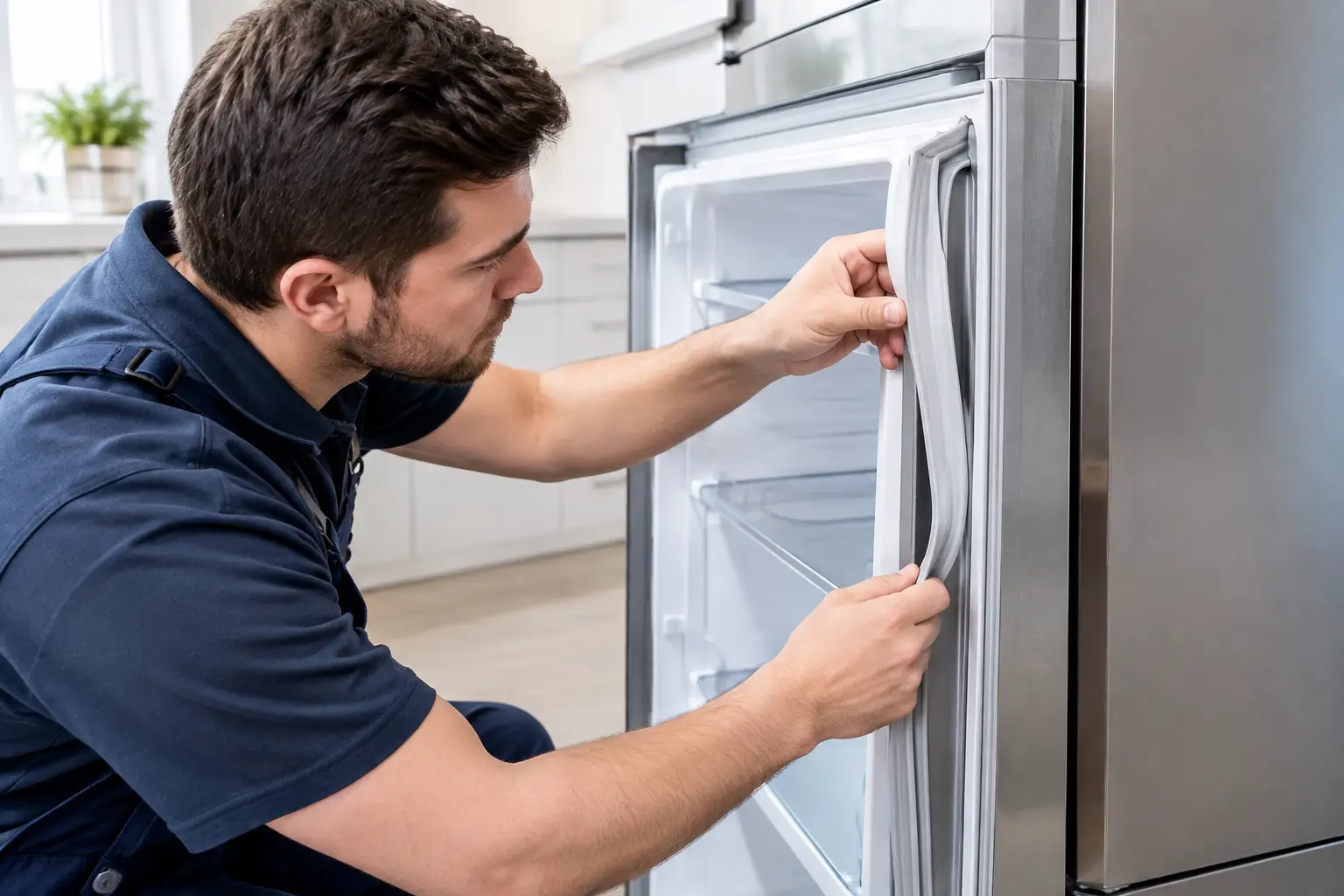
A refrigerator door that will not seal tightly can turn a normally quiet appliance into a source of warm food, excess moisture, and higher utility use. Refrigerator seal repair addresses the flexible gasket around the door opening, but the gasket is not always the real reason cold air is escaping. A worn seal, sagging door, loose hinge, cabinet alignment issue, or cooling problem can create similar symptoms.
For a busy household, the practical question is not just whether the rubber seal looks worn. It is whether the refrigerator is maintaining a safe, steady temperature without running longer than it should. A clear diagnosis can prevent a simple door-seal issue from becoming spoiled groceries or unnecessary strain on the compressor.
What a Refrigerator Door Seal Actually Does
The refrigerator gasket is the soft, magnetic strip that runs around the edge of the door or drawer. When the door closes, it creates an airtight barrier between the chilled interior and the warmer kitchen air. That barrier helps the refrigerator hold temperature and cycle normally.
When the seal is dirty, torn, hardened, warped, or pulled away from the door, humid air can enter the compartment. You may notice condensation, frost near the door edge, a refrigerator that seems to run constantly, or food that does not feel as cold as usual. In North Texas, where kitchens can be busy and indoor humidity can fluctuate, even a small air leak can make the appliance work harder.
A failed seal can affect more than energy use. Warm air brings moisture with it, which can lead to frost buildup in the freezer and water droplets inside the fresh-food compartment. Those signs are easy to dismiss at first, but they are worth addressing before they create a larger refrigeration problem.
Signs You May Need Refrigerator Seal Repair
A gasket issue is often visible, but not always. Start by looking closely at the full perimeter of the door. Cracks, tears, flattened sections, missing magnetic pull, and corners that curl away from the frame all point to a seal that may no longer be doing its job.
The paper test can also provide a useful clue. Close the refrigerator door on a strip of paper and gently pull it out. If it slides free with little resistance in several locations, the seal may be weak. One loose spot does not automatically mean the entire gasket needs replacement, though. The door may be out of alignment, or the gasket may simply need cleaning and reshaping.
Other common warning signs include:
- Condensation or sweating around the door frame
- Frost buildup near freezer door edges or on stored food
- A door that pops open, needs an extra push, or does not sit level
- Frequent compressor operation or unusual warm spots inside the refrigerator
- A visible gap between the gasket and cabinet when the door is closed
These symptoms can overlap with defrost-system failures, fan issues, temperature-control problems, and damaged door hinges. That is why a professional inspection is valuable when cleaning the gasket does not restore a firm seal.
When Cleaning Is Enough and When Replacement Makes Sense
Not every refrigerator door seal needs to be replaced. Food residue, grease, and dust can keep an otherwise healthy gasket from lying flat. Cleaning the gasket and the surface it contacts with mild soap, warm water, and a soft cloth may improve its grip. Avoid harsh solvents or abrasive tools that can damage the rubber.
A gasket that has become slightly misshapen may sometimes improve with gentle warming and careful repositioning. However, a seal with splits, brittle rubber, missing sections, or a weakened magnetic strip generally needs replacement. Trying to patch a torn gasket rarely produces a dependable, long-term result.
Replacement also makes sense when the gasket has lost its flexibility. Refrigerator seals are exposed to years of opening, closing, spills, and temperature changes. Once the material becomes stiff or permanently flattened, it may no longer conform to the cabinet opening, even if it looks mostly intact.
The trade-off is simple: replacing a gasket can be an economical repair when the refrigerator is otherwise operating properly. If the door is bent, the hinges are damaged, or the appliance has multiple cooling failures, the repair decision should account for the refrigerator’s age, condition, and the cost of needed parts. An honest assessment should focus on the actual source of the problem, not just the most obvious symptom.
Why the Door May Not Seal Even With a New Gasket
A new gasket cannot compensate for a door that is not closing correctly. Refrigerator doors are heavy, especially when loaded with milk, condiments, and other everyday items. Over time, hinges can loosen or wear, and the door can begin to sit lower than the cabinet opening. The result is a gap at the top, bottom, or hinge side.
Improper leveling can also affect closure. Most refrigerators are designed to sit slightly higher in the front or level according to manufacturer specifications so the doors close properly. If the appliance shifts after a move, floor work, or installation, gravity may no longer help the door return to a fully closed position.
Drawer-style freezers add another layer of complexity. Their seals can leak because of damaged rails, an overloaded basket, ice buildup, or an item preventing the drawer from closing all the way. In these cases, replacing the gasket without checking the slide mechanism may not solve the problem.
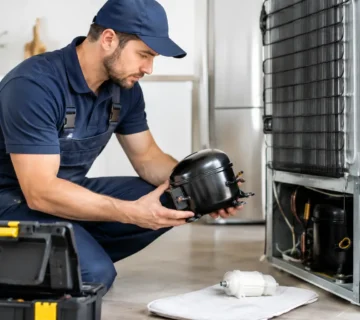
Experienced refrigerator service includes checking the gasket, door alignment, hinge condition, cabinet contact surface, leveling, and cooling performance together. This approach helps avoid replacing a part that is not actually the cause of the air leak.
What to Do Before Scheduling Service
Protecting your food is the first priority. Check that the refrigerator is set to an appropriate temperature and use a refrigerator thermometer if you have one. The fresh-food compartment should generally stay at or below 40 degrees Fahrenheit, while the freezer should remain at 0 degrees Fahrenheit. If food has been held above safe temperatures, follow food-safety guidance rather than relying on appearance or smell.
You can also remove anything blocking the door, wipe the gasket clean, and check whether shelves or bins are installed correctly. Do not force the door upward, bend hinges, or use adhesives on the seal. Those quick fixes can make a straightforward repair more difficult and may damage the liner, hinge assembly, or gasket.
If the refrigerator is running constantly, making unusual noises, showing error codes, or failing to cool, treat the door seal as one possible cause rather than the full diagnosis. Cooling-system concerns deserve prompt attention, especially when groceries are at risk.
A Practical Repair Process for North Texas Homeowners
A dependable service visit starts with identifying why the door is leaking. The technician should inspect the gasket for wear, verify the door alignment and hinge operation, evaluate the cabinet contact area, and confirm that the refrigerator is cooling and cycling as expected. If replacement is the right solution, the correct gasket must match the refrigerator’s specific model and door configuration.
At IAS Appliance Solutions, the goal is to make that process clear and efficient: assess the problem in your home, explain the recommended repair and price upfront, then complete the work with as little disruption as possible. A properly installed gasket should sit evenly around the door, make consistent contact with the cabinet, and allow the door to close without excessive force.
For homeowners in Frisco, Plano, McKinney, Denton, and nearby North Texas communities, prompt attention to a leaking refrigerator door can help preserve food and reduce avoidable wear on the appliance. The best next step is simple: address the seal before the refrigerator has to work overtime to compensate for a problem that may be repairable.


No comment