
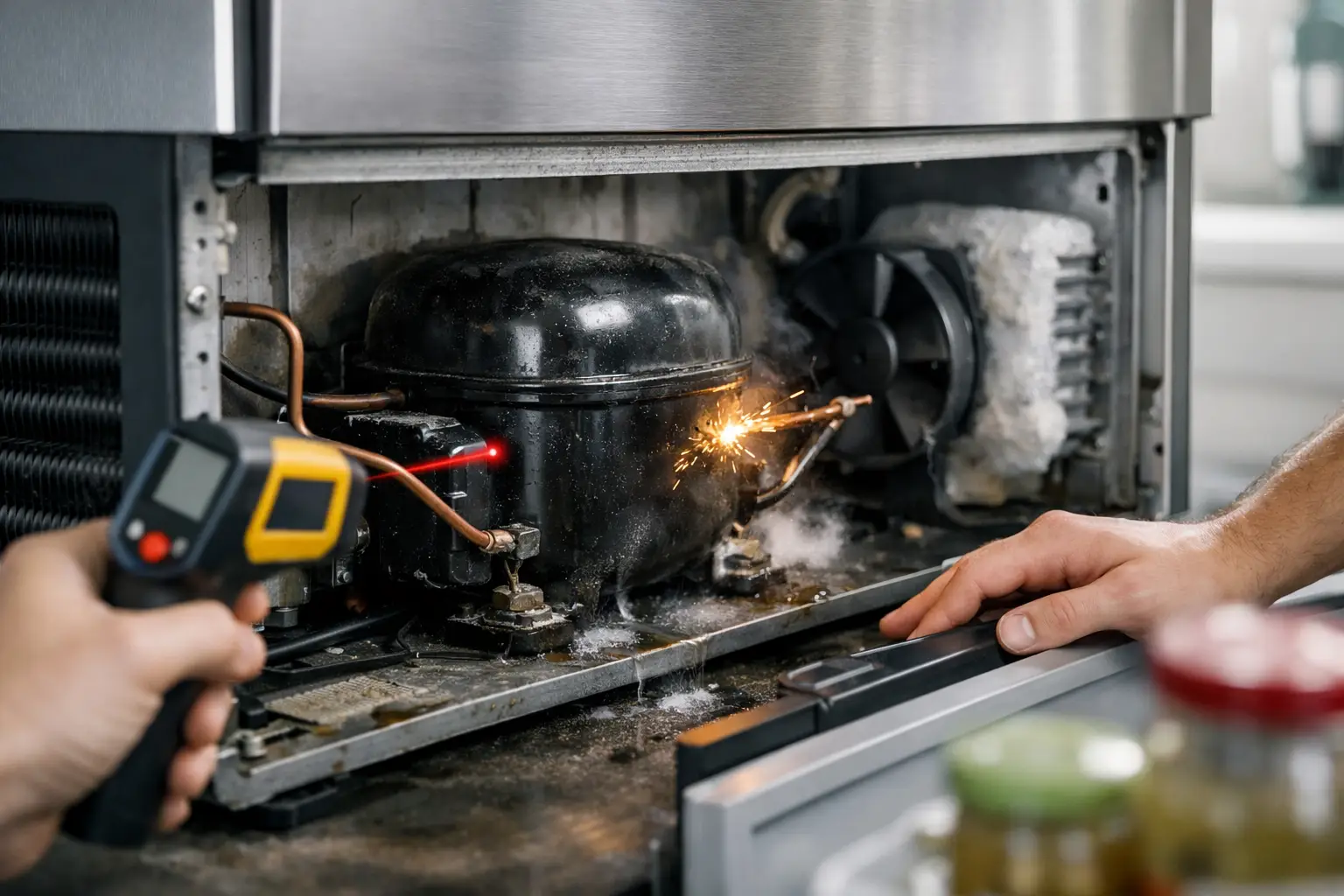
A refrigerator can look like it is running normally while your groceries quietly warm up. Knowing the best signs of refrigerator compressor failure helps you act before spoiled food, water leaks, and a sudden complete breakdown create a bigger household disruption. The compressor is the part that circulates refrigerant through the cooling system. When it cannot do its job, the refrigerator cannot maintain safe temperatures – but several other problems can create similar symptoms.
What a failing compressor usually looks and sounds like
A compressor rarely fails without warning, although the warning may be subtle at first. The clearest clue is a refrigerator that is no longer cooling properly even though interior lights, displays, and fans still work. Your fresh-food section may feel cool but not cold, while the freezer becomes soft enough that ice cream melts or frozen items begin to thaw.
Keep in mind that food safety comes first. Refrigerated food should generally stay at or below 40°F, and a freezer should remain at 0°F. If temperatures are rising, move perishable food to a cooler with ice or another working refrigerator while arranging service.
The refrigerator runs constantly but does not get cold
A refrigerator normally cycles on and off. If you hear it running almost continuously yet both compartments are warmer than usual, the compressor or sealed cooling system deserves attention. A struggling compressor may run for long periods because it cannot produce enough cooling to reach the set temperature.
This symptom does not automatically mean the compressor is bad. Dirty condenser coils, poor airflow around the unit, damaged door gaskets, a failed condenser fan, or a defrost issue can also make a refrigerator work overtime. The difference is something a technician confirms through testing, not guesswork.
Clicking, buzzing, or a repeated start-and-stop sound
Most compressors produce a low, steady hum while operating. A sharp click every few minutes followed by silence can indicate that the compressor is trying and failing to start. You may also hear a brief hum, buzz, or vibration before the click.
Sometimes the problem is a start relay or overload protector rather than the compressor itself. That can be a more straightforward repair, which is why replacing a refrigerator based on sound alone is often premature. A proper diagnosis checks the compressor’s electrical condition and its starting components together.
Excessive heat at the back or bottom of the refrigerator
It is normal for the area near the compressor to feel warm. It is not normal for the refrigerator to become unusually hot, give off a burning smell, or repeatedly shut down after getting hot. Overheating can occur when a compressor is overworking, when ventilation is restricted, or when another component is putting added strain on the system.
Turn off the refrigerator and avoid using it if you notice a burning odor, smoke, or a tripped breaker. Those are electrical safety concerns, not symptoms to monitor for a few more days.
Warm refrigerator, warm freezer, and working lights
When both the refrigerator and freezer are warm but the display, interior lights, and fans seem normal, the cooling system is likely the area to investigate. The compressor may have failed, but the issue could also involve the control board, inverter board, start device, condenser fan, or a refrigerant leak.
A freezer that is cold while the fresh-food compartment is warm points more often to an airflow or defrost problem. For example, frost buildup behind the freezer panel can block air from reaching the refrigerator section. That distinction can save homeowners from assuming the most expensive repair is the only answer.
Best signs of refrigerator compressor failure versus other problems
The compressor is a major component, so it is understandable to worry when cooling changes. Still, a reliable repair decision starts by separating compressor symptoms from common, repairable issues.
A dirty condenser coil can prevent heat from leaving the refrigerator efficiently. Pet hair, dust, and debris are especially common around floor-level coils and rear-access areas. Poor clearance around the appliance can have a similar effect. Cleaning accessible coils and making sure vents are not blocked may help, but do not remove electrical panels or handle wiring unless you are qualified to do so.
A faulty evaporator fan can leave the freezer cold and the refrigerator warm. A damaged door seal can create condensation, frost, and long run times. A failed defrost heater or sensor can create a wall of frost that stops proper airflow. These problems can resemble compressor trouble, but they have different repair paths and costs.
A sealed-system refrigerant leak is another possibility. Signs may include poor cooling, a compressor that runs continuously, or an unusual frost pattern on the evaporator. Because refrigerant work requires specialized equipment and training, it should be evaluated by an experienced appliance technician.
What to do when you suspect compressor trouble
Start with a few safe checks. Confirm the temperature settings have not been changed accidentally, make sure the doors are closing fully, and check that vents inside the refrigerator are not blocked by food containers. Look behind or beneath the unit for heavy dust buildup if the area is safely accessible. Also listen for repeated clicking or an unusual lack of compressor sound.
Next, pay attention to the timeline. Cooling that drops over several days can point to a different issue than a refrigerator that suddenly goes warm overnight. Note whether the freezer is affected, whether frost is building up, and whether the unit runs continuously. These details help make an in-home diagnosis more efficient.
Avoid repeatedly unplugging and restarting the refrigerator in hopes that it will reset itself. A compressor that is unable to start may continue to trip its overload protection, and repeated attempts do not fix the underlying fault. Do not use an extension cord for a full-size refrigerator, either, since inadequate power can create performance and safety problems.
Is compressor repair worth it?
Whether a compressor repair makes financial sense depends on the refrigerator’s age, brand, condition, warranty coverage, and the exact cause of the failure. If testing finds a failed relay, fan, sensor, or control component, repair may be considerably less involved than a compressor replacement. If the compressor itself or sealed system has failed, the decision requires a more careful cost comparison.
For a newer refrigerator in otherwise good condition, a qualified repair can be a reasonable way to protect the investment. Manufacturer parts warranties may also affect the equation, though labor and diagnostic coverage vary. For an older unit with multiple issues, replacement may be the better long-term choice. An honest assessment should explain both options clearly rather than pushing a repair that does not make sense for your household.
Get a clear diagnosis before replacing the refrigerator
Compressor symptoms overlap with electrical, airflow, defrost, and control-board issues. That is why a trained technician should test the appliance before anyone labels the compressor as failed. The goal is not just to get the refrigerator running for a day or two. It is to identify the failed part, explain the repair scope and upfront cost, and help prevent another interruption soon after.
For homeowners in Frisco, Plano, McKinney, Denton, and nearby North Texas communities, IAS Appliance Solutions provides refrigerator diagnostics and repairs with a practical focus on minimizing downtime. A stocked service vehicle can make a meaningful difference when the correct replacement part is available on the first visit.
If your refrigerator is warming up, clicking repeatedly, or running without cooling, protect your food first and schedule a diagnosis promptly. A clear answer is usually far more useful than guessing at the most expensive part.




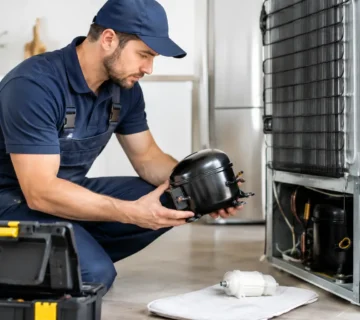


[…] serious consideration when the appliance has frequent breakdowns, has a major sealed-system or compressor failure, shows extensive rust or water damage, or needs several high-cost parts at once. Safety concerns […]