A washer that finishes its cycle with a tub full of water can bring the entire laundry routine to a stop. If you need a washer not draining repair service, the goal is not simply to get the water out. It is to identify why the machine failed to drain, make the right repair, and help prevent the same disruption from happening again.
For busy North Texas households, a non-draining washer creates more than a pile of wet clothes. Water can leak onto the floor, laundry can develop odors, and repeated attempts to restart the cycle may put added strain on the appliance. A trained technician can diagnose the issue safely and provide a clear recommendation before repairs begin.
What a Washer That Will Not Drain May Be Telling You
Draining is one of the washer’s most important functions. At the right point in the cycle, the machine must move water through a drain hose and into your home’s plumbing so it can spin the clothes properly. When any part of that process is interrupted, the washer may stop mid-cycle, display an error code, hum without draining, or leave clothes soaking wet.
Some drain failures are caused by a simple blockage. Others involve a worn component, an electrical issue, or a problem with the washer’s controls. The symptoms matter, but they do not always reveal the exact cause. A washer that hums may have a blocked or failing drain pump, while one that does nothing may have a lid-lock, wiring, or control issue.
The most common signs include:
- Standing water in the drum after a wash or rinse cycle
- Clothes that are much wetter than normal after spinning
- A washer that pauses, hums, or displays a drain-related error code
- Water leaking near the appliance or from the drain hose
- A burning smell, grinding noise, or repeated tripping of a breaker
If you notice a burning odor, smoke, active leaking, or a breaker that trips repeatedly, stop using the washer and arrange service. Continuing to run it can turn a repairable problem into a larger appliance or flooring issue.
Common Causes Behind a Washer Drain Problem
A clogged drain hose is one possibility. Hoses can become kinked behind the washer, pinched during installation, or blocked by lint and small objects. The home drain itself can also be slow or clogged, particularly if water backs up from the standpipe when the washer tries to empty.
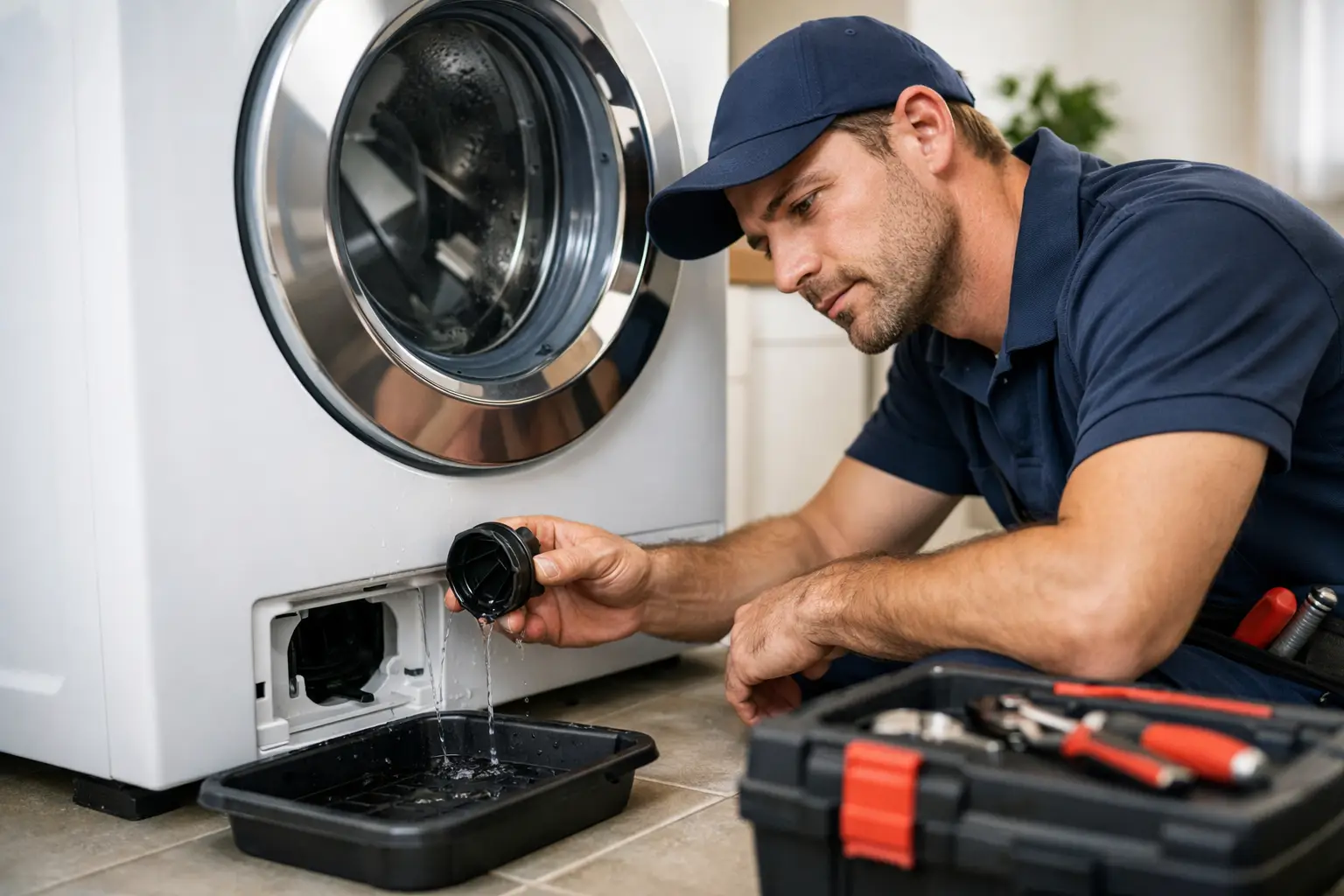
The drain pump is another frequent source of trouble. Small items left in pockets, such as coins, hair ties, pins, or pieces of fabric, can make their way into the pump area. They may block the impeller or damage the pump over time. A failed pump may make a humming or grinding sound, though a quiet pump can still be defective.
Modern washers also rely on several sensors and electrical components to manage draining and spinning. Depending on the make and model, the problem may involve the lid lock, pressure switch, wiring connection, control board, or motor-related component. This is why replacing a part based only on an error code can be a costly guess.
Overloading can contribute to poor spinning and water retention, but it is not always the root cause. An unbalanced load may prevent a washer from reaching full spin speed. If the issue happens repeatedly with normal-sized loads, professional diagnosis is usually the more practical next step.
What to Check Before Scheduling Washer Not Draining Repair Service
There are a few safe checks homeowners can make without disassembling the appliance. First, confirm that the washer is receiving power and that the cycle has fully stopped. Then look behind the machine, if you can do so without straining hoses or electrical cords, to see whether the drain hose is sharply kinked or crushed.
You can also check whether the household drain appears to be backing up. If water overflows from the standpipe or nearby plumbing drains slowly, the issue may involve the plumbing rather than the washer itself. In some cases, both systems need attention.
Avoid forcing the washer through repeated drain or spin cycles when it is full of water. Do not tip the appliance, remove panels, or try to bypass a lid lock. Washers contain electrical connections, heavy moving parts, and stored water that can spill quickly. A proper repair begins with a safe inspection and an accurate diagnosis.
What a Professional Washer Repair Visit Should Include
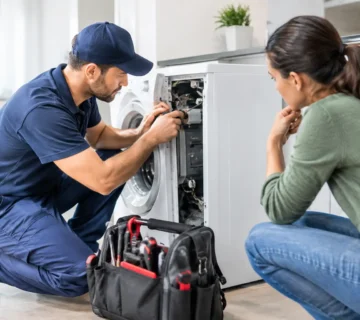
A dependable repair visit should start with listening to what happened. A technician may ask when the issue began, whether the washer makes unusual noises, if an error code appears, and whether water has leaked. These details help narrow the diagnostic process, but the appliance still needs to be tested in person.
The technician should inspect the drain hose, pump system, filters where applicable, lid-lock operation, wiring, and relevant controls. They may check for obstructions, test component function, and verify whether the washer is receiving and responding to the correct signals during the drain cycle.
Once the cause is identified, you should receive an honest explanation of the repair options and upfront pricing before work moves forward. Sometimes a cleared blockage or corrected hose position is all that is needed. In other cases, a pump, lock assembly, or electronic component may require replacement. The right decision depends on the washer’s age, overall condition, repair cost, and the availability of the needed part.
For example, replacing a drain pump can be a sensible repair on a washer that is otherwise reliable. If an older appliance has multiple failing components or has experienced significant water damage, replacement may be worth discussing. A trustworthy technician will explain the trade-off rather than pressure you into one answer.
Why Fast Diagnosis Matters for Your Home
Standing water can create problems beyond the washer itself. Moisture can affect flooring, baseboards, nearby cabinets, and laundry-room walls. Even a small leak can go unnoticed until it leaves staining or causes odors. Addressing a drainage issue promptly helps protect the appliance and the space around it.
Fast service also matters because laundry rarely waits. Families managing school clothes, work uniforms, towels, and bedding need a repair plan that respects their schedule. A service company with experienced technicians and well-stocked vehicles can often complete common washer repairs during the first visit when the required parts are available.
IAS Appliance Solutions provides washer repair for homeowners in Frisco, Plano, McKinney, Allen, Prosper, Celina, Little Elm, Denton, Aubrey, and The Colony. The service process is straightforward: request a consultation, schedule a convenient appointment, then review the diagnosis and service agreement before repairs are completed. Clear communication and no surprise charges make an unexpected appliance problem easier to manage.
Repairing Any Major Washer Brand
Washer drainage systems vary by brand, model, and washer style. Top-load and front-load machines may have different pump access points, filters, control systems, and error-code patterns. A technician who works across major brands can identify the difference between a common obstruction and a model-specific component failure.
That experience is especially valuable when the washer appears to have more than one issue. A machine that will not drain and will not spin, for instance, may have a single underlying cause or two separate problems. Testing the full cycle helps avoid incomplete repairs and gives you a clearer picture of your appliance’s condition.
Choose a Repair That Restores Your Routine
The best washer repair is one that solves the immediate problem without leaving you uncertain about what was done or what comes next. Look for a provider that offers prompt scheduling, straightforward pricing, experienced diagnosis, and warranty protection on parts and labor.
A washer full of water is frustrating, but it does not have to derail your week. Turn the appliance off, avoid repeated restart attempts, and schedule professional help before a drain problem has the chance to become water damage or a larger repair.


No comment