A new wall oven can make a kitchen feel finished, but the installation is where the details matter. If you are searching for wall oven installation near me, you likely need more than someone to slide an appliance into a cabinet opening. You need a technician who can confirm the oven fits, assess the electrical connection, secure it correctly, and make sure it operates safely before the job is done.
For homeowners in Frisco, Plano, McKinney, Allen, and surrounding North Texas communities, professional installation helps prevent the frustrating surprises that can come with a new built-in appliance: a cutout that is slightly too small, wiring that does not match the new unit, trim that will not sit flush, or an oven that powers on but does not heat as expected.
Why Wall Oven Installation Is Different
A freestanding range is designed to stand on the floor and connect at the wall. A wall oven is built into cabinetry, often at chest height or below a cooktop, and its weight, ventilation clearances, electrical requirements, and mounting system all need to work together.
Most wall ovens are hardwired rather than plugged into a standard outlet. Depending on the model, the unit may require a dedicated 240-volt circuit and a specific amperage rating. An older home may have an existing connection that worked for the previous oven but is not appropriate for the replacement. That is one reason it is wise to have the installation assessed before the delivery crew leaves an expensive appliance in the middle of the kitchen.
Cabinet dimensions matter just as much. The listed width of an oven, such as 27 or 30 inches, is not always the same as the required cabinet cutout. Manufacturers specify exact minimum and maximum opening dimensions, required clearance around the unit, and support requirements for the cabinet base. Even a small mismatch can affect the final appearance, airflow, or ability to install the oven safely.
What a Professional Wall Oven Installation Includes
A proper installation begins with a practical review of the appliance, cabinet opening, and existing utility connection. The goal is to identify compatibility concerns before the oven is secured in place.
The technician first confirms the model type and checks that the opening can support it. This includes measuring the cutout, reviewing the cabinet condition, and considering the oven’s depth and trim. A replacement may look similar to the old unit but have different clearance needs, especially with convection models, combination microwave-wall ovens, and double ovens.
Next comes the electrical connection. The technician verifies the power is off, reviews the wiring configuration, and connects the unit according to manufacturer requirements. If the existing circuit, junction box, or wiring is unsuitable, that issue should be explained clearly before installation proceeds. A trustworthy service provider does not hide a compatibility problem or improvise around an electrical safety concern.
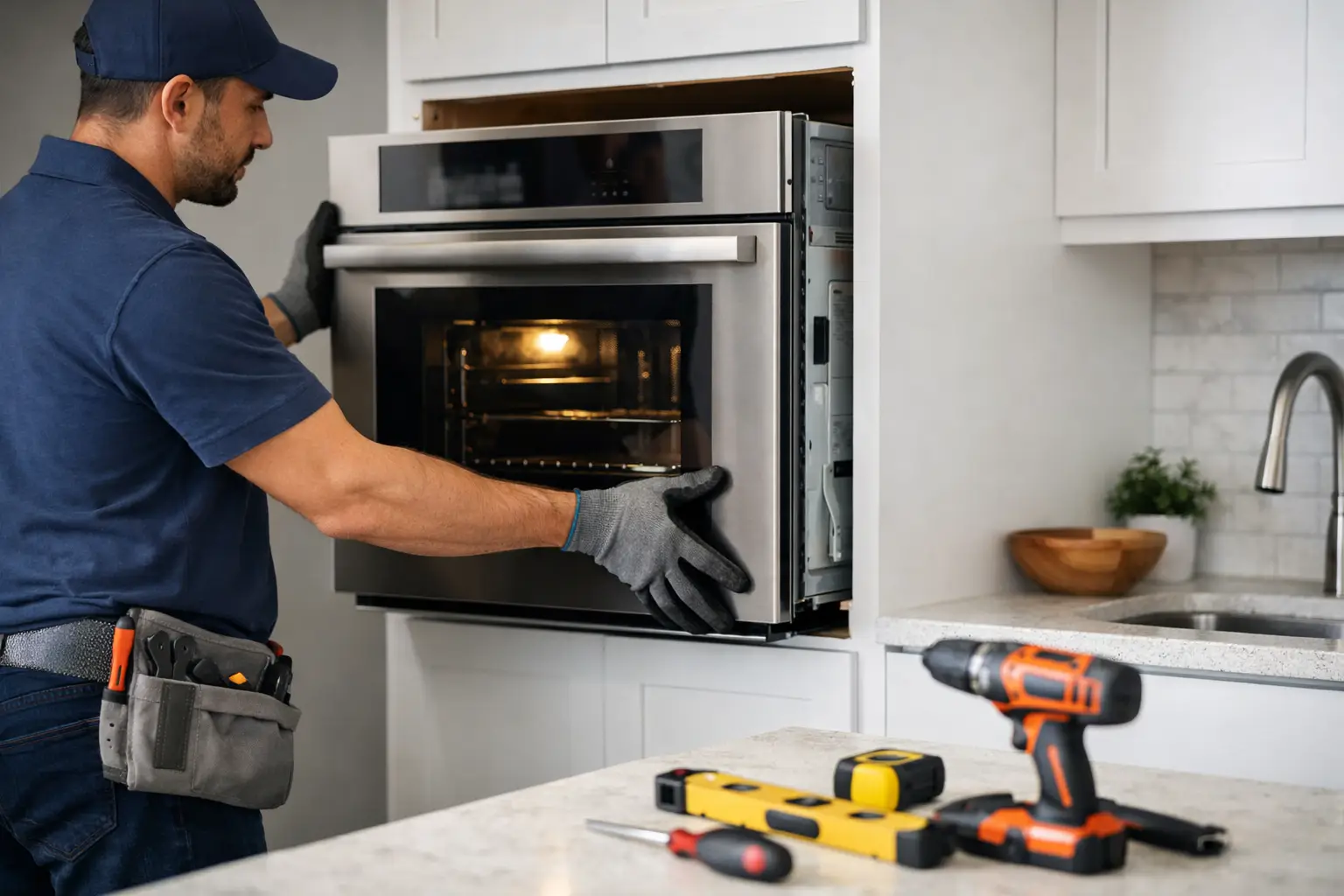
Once connected, the oven is carefully placed into the cabinet, leveled, and fastened using the correct mounting points. The technician then tests basic operation, including the display, heating functions, controls, and door movement. For a double wall oven, both cavities should be checked. The final result should be an appliance that is secure, aligned, and ready for normal use.
Before You Schedule Wall Oven Installation Near Me
A few minutes of preparation can make your appointment faster and prevent avoidable delays. Keep the model number available and, if possible, have the manufacturer’s installation instructions on hand. They provide the exact requirements for that oven rather than general estimates.
Before installation day, make sure the new appliance is at the home and accessible. Clear dishes, baking pans, and other items from the surrounding cabinets. If the old oven is still installed, ask in advance whether removal and disposal are included in the service you are scheduling.
It also helps to check these details ahead of time:
- The cabinet cutout width, height, and depth
- The new oven’s installation specifications
- The location of the electrical junction box
- Whether your home has a dedicated circuit for the oven
- Any visible cabinet damage, loose trim, or prior electrical issues
You do not need to diagnose these items yourself. Providing accurate information during the consultation simply helps the technician arrive prepared and gives you a clearer idea of what the work may involve.
Common Issues Found During Installation
The most common installation challenge is a cabinet opening that does not match the new oven. Sometimes a homeowner replaces a 30-inch unit with another 30-inch model, only to find the required cutout height or depth has changed. Cabinet modification may be needed before the appliance can be installed correctly.
Electrical issues are another frequent concern. An existing wire connection can be damaged, undersized, outdated, or configured differently from what the new oven requires. This is not a situation to solve with an adapter or a guess. The right solution depends on the appliance specifications and the condition of the existing connection.
Weight can also be a factor. Wall ovens are heavy, and double ovens can be particularly difficult to maneuver safely. Attempting to lift one into a cabinet without the right support can damage flooring, cabinets, the oven door, or the appliance itself. More seriously, an improperly supported oven can shift after installation.
A final concern is ventilation and clearance. Built-in ovens need the manufacturer-specified space around the cabinet and trim for safe operation. Covering vents, forcing the appliance into a too-tight opening, or leaving it unsecured can create performance problems that may not be obvious on the first day.
When Replacement Makes More Sense Than Repair
If your current wall oven has failed, repair may still be the right choice. A heating element, temperature sensor, control board, door latch, or wiring issue can often be diagnosed and repaired without replacing the full appliance. The decision depends on the oven’s age, condition, repair cost, parts availability, and whether it has had repeated problems.
Replacement can make more sense when a major component has failed on an older unit, replacement parts are no longer available, or the oven has developed several ongoing issues. If you decide to replace it, measure carefully before ordering. Choosing a model based only on the old oven’s visible size can lead to an installation-day problem.
IAS Appliance Solutions can help homeowners understand the condition of an existing wall oven and provide straightforward installation service when a replacement is the better path. The focus should be on an honest assessment, clear pricing, and work that restores your kitchen with minimal disruption.
Questions to Ask Before Hiring an Installer
The best installer is not necessarily the first name that appears in a local search. Ask whether the company installs your oven type and brand, whether the appointment includes connection and operational testing, and what happens if the cabinet opening or electrical setup does not meet requirements.
You should also know how pricing is handled. A clear quote or service agreement helps distinguish the standard installation from additional work such as cabinet adjustments, electrical corrections, or removal of an old unit. No homeowner wants a vague answer after the technician has already arrived.
Experience with major appliance brands is valuable because installation instructions, mounting hardware, and electrical requirements vary by model. A prepared technician brings the tools needed for the work and communicates directly if the job requires a different solution than expected.
A Safer Start for Your New Kitchen Appliance
A wall oven is a long-term kitchen investment, and installation is the step that determines whether it starts out performing as it should. The right service is not about rushing the oven into place. It is about checking the fit, making the correct connection, securing the appliance, and testing it before your household depends on it.
When you are ready to schedule service, have your oven model information and cabinet measurements nearby. That simple preparation helps make the conversation clearer, the appointment more efficient, and your return to home-cooked meals much easier.

No comment