A new gas range should make dinner easier, not create uncertainty about gas connections, clearances, or whether the appliance is safe to use. A professional gas range installation service helps ensure your range is connected correctly, leveled properly, and ready for everyday cooking without unnecessary disruption to your household.
For busy North Texas homeowners, installation is more than placing an appliance in an open kitchen space. Gas ranges combine a fuel connection, electrical power, ventilation considerations, and safety components that all need to work together. A qualified technician can assess the setup before problems become leaks, ignition issues, uneven cooking, or a range that is not securely positioned.
What a Gas Range Installation Service Should Include
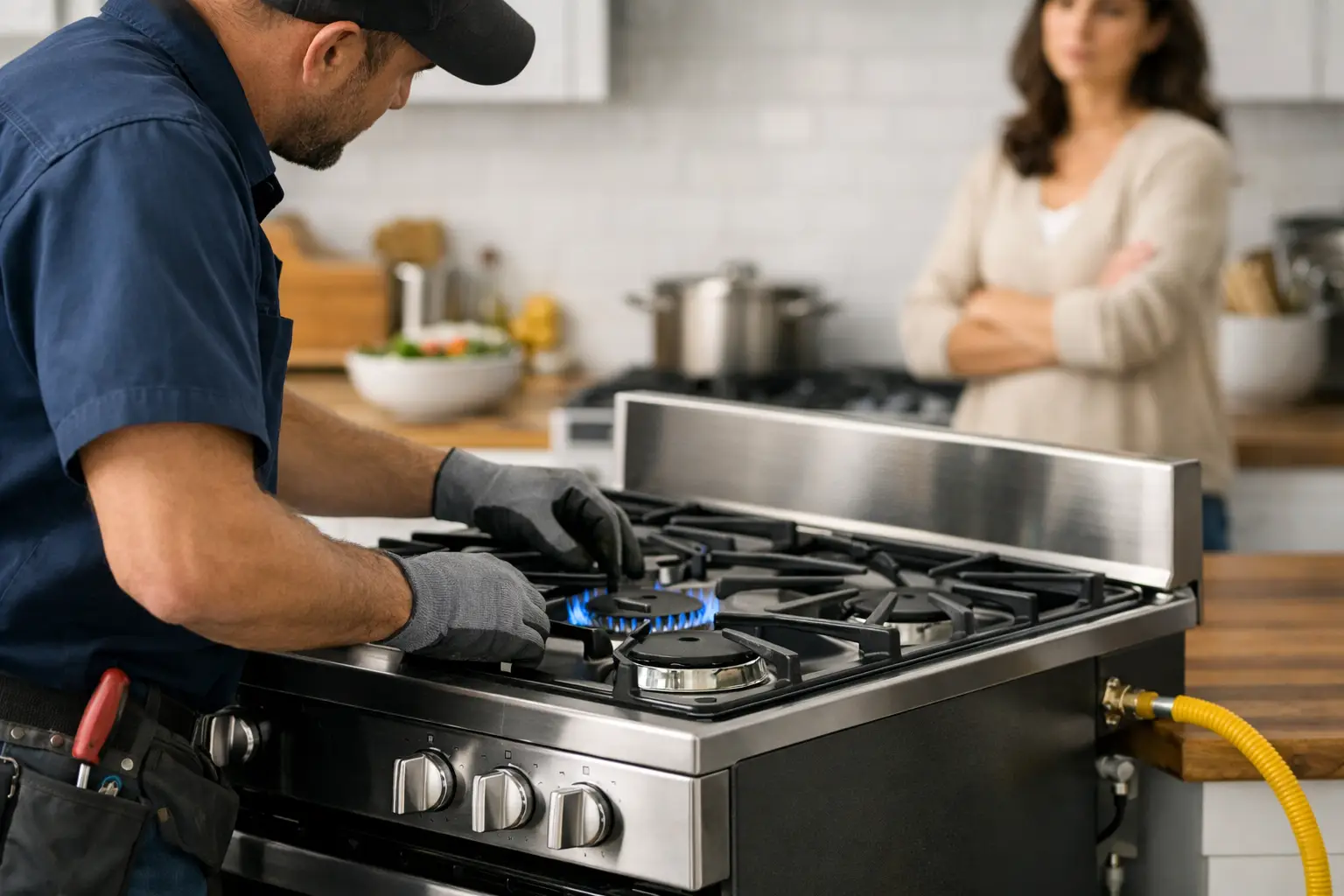
A proper installation begins with an assessment of the existing kitchen connection and the new appliance. The technician confirms that the range is suitable for the available fuel type, whether natural gas or propane, and checks that the gas shutoff valve is accessible and functioning. They also inspect the space around the appliance for appropriate clearance from nearby cabinets, walls, and combustible materials.
The range must be connected using compatible, approved components. A connection that looks fine from the outside can still have a poor seal, an incorrectly sized fitting, or a damaged connector. After the connection is made, the technician checks for leaks and verifies that the burners ignite and operate as expected.
Most modern gas ranges also need a standard electrical outlet. Electricity powers features such as electronic ignition, the oven light, displays, timers, convection fans, and certain safety systems. If the outlet is unavailable, damaged, or incorrectly located, the range may not work as intended even when the gas supply is active.
The final setup matters just as much. A range should sit level so cookware heats evenly and oven racks remain stable. It should also be secured with an anti-tip bracket. This small but essential device helps prevent the appliance from tipping forward if weight is placed on an open oven door.
Why Professional Installation Is Worth It
It can be tempting to treat a gas range like any other large appliance. The difference is that an installation mistake can affect both safety and performance. A loose connection may allow gas to escape. An appliance set up for the wrong fuel type may produce weak flames, unusually high flames, soot, or inconsistent heating. A range that is not level can lead to cooking frustrations that are easy to blame on the appliance itself.
Professional service also saves time when the kitchen has an unexpected complication. Older homes may have a corroded shutoff valve, a gas line in an inconvenient location, an outlet that needs attention, or cabinetry that leaves too little room for the new model. These issues do not always prevent installation, but they should be identified honestly before the range is put into regular use.
An experienced technician can explain what is ready to proceed, what requires correction, and what options make sense for your home. That is a better outcome than forcing an installation and discovering a concern after the delivery team has left.
Natural Gas and Propane Are Not Interchangeable
One of the most common installation details is fuel compatibility. Many ranges are shipped ready for natural gas but can be converted for propane with the manufacturer-approved conversion kit. The conversion changes components that regulate gas flow, so it should not be assumed that switching the connector alone is enough.
If your home uses propane, confirm the range model and conversion requirements before scheduling service. A technician can verify the setup and make sure the burners and oven are configured for the fuel your household uses. Correct fuel setup supports clean combustion, reliable ignition, and more predictable temperature control.
Ventilation Depends on Your Kitchen
Not every gas range installation includes a range hood or vent modification, but ventilation should be part of the conversation. A ducted hood generally removes cooking smoke, moisture, grease, and odors more effectively than a recirculating hood. Still, the right solution depends on the kitchen layout, local requirements, existing ductwork, and how often you cook.
If you are replacing an electric range with gas, take a close look at your ventilation plan. A technician can install the range itself while helping you understand whether the hood, microwave ventilation, or surrounding setup needs additional attention.
Preparing for Your Installation Appointment
A little preparation helps the appointment move efficiently. Clear the path from the entryway to the kitchen and remove cookware, storage bins, and other items from the range area. If an old range is still in place, ask in advance whether removal and haul-away are part of the scheduled service.
Have the new range model information available, especially if it is a propane conversion or a slide-in model with specific clearance requirements. Slide-in ranges are designed to fit closely between cabinets, which can create a clean built-in appearance but leaves less room for error. Freestanding models are often more flexible, though their dimensions and rear clearances still need to be checked.
Before the appointment, it also helps to know the location of your home’s gas shutoff valve if possible. You do not need to disconnect anything yourself. Simply making the area accessible allows the technician to inspect the connection without delay.
When Installation Should Pause Instead of Proceed
A dependable installer does not treat every job as automatic. Some conditions call for a pause and a clear recommendation before the appliance is connected. Examples include a gas odor, visible damage to the supply line, a shutoff valve that will not operate, an incompatible fuel source, or inadequate clearance around the range.
Electrical concerns may also need to be addressed first. A loose outlet, exposed wiring, or a cord that cannot reach safely is not a detail to work around. The same applies to a floor that is badly uneven or cabinetry that prevents the appliance from sitting correctly.
This approach protects your home and avoids surprise charges later. The goal is not simply to get the range into place. It is to leave you with a kitchen appliance that can be used with confidence.
Choosing the Right Local Installer
When comparing a gas range installation service, look beyond the appointment availability. Ask whether the provider works with major appliance brands, checks the gas connection for leaks, verifies burner and oven operation, and installs or confirms an anti-tip bracket. Make sure you understand what is included before work begins and what happens if the existing connection does not meet the appliance’s requirements.
Clear communication is especially valuable when a new appliance is arriving on a tight schedule. You should know whether the installer is prepared to handle typical connection needs, whether they can identify related appliance concerns, and whether their workmanship is backed by a warranty.
IAS Appliance Solutions serves homeowners in Frisco, Plano, McKinney, Allen, Prosper, Celina, Denton, Aubrey, Little Elm, and The Colony with straightforward scheduling, experienced appliance service, and upfront assessments. The focus is on completing the work correctly while respecting your time, your kitchen, and your budget.
A Safer Start for Your New Range
Once your range is installed, keep the area around it clear and make sure household members know not to lean or sit on the open oven door. If you ever notice a gas odor, leave the area, avoid flames or electrical switches, and contact your gas utility or emergency services from a safe location.
For everything else, a professionally installed range gives you a practical starting point: burners that light properly, an oven that is ready to cook, and the confidence that the connection behind the appliance received the attention it deserves.

[…] can have specific clearance, electrical, conversion, and ventilation requirements. For example, a gas cooktop installation may require a proper cutout size and adequate clearance from cabinets, while a gas dryer needs a […]