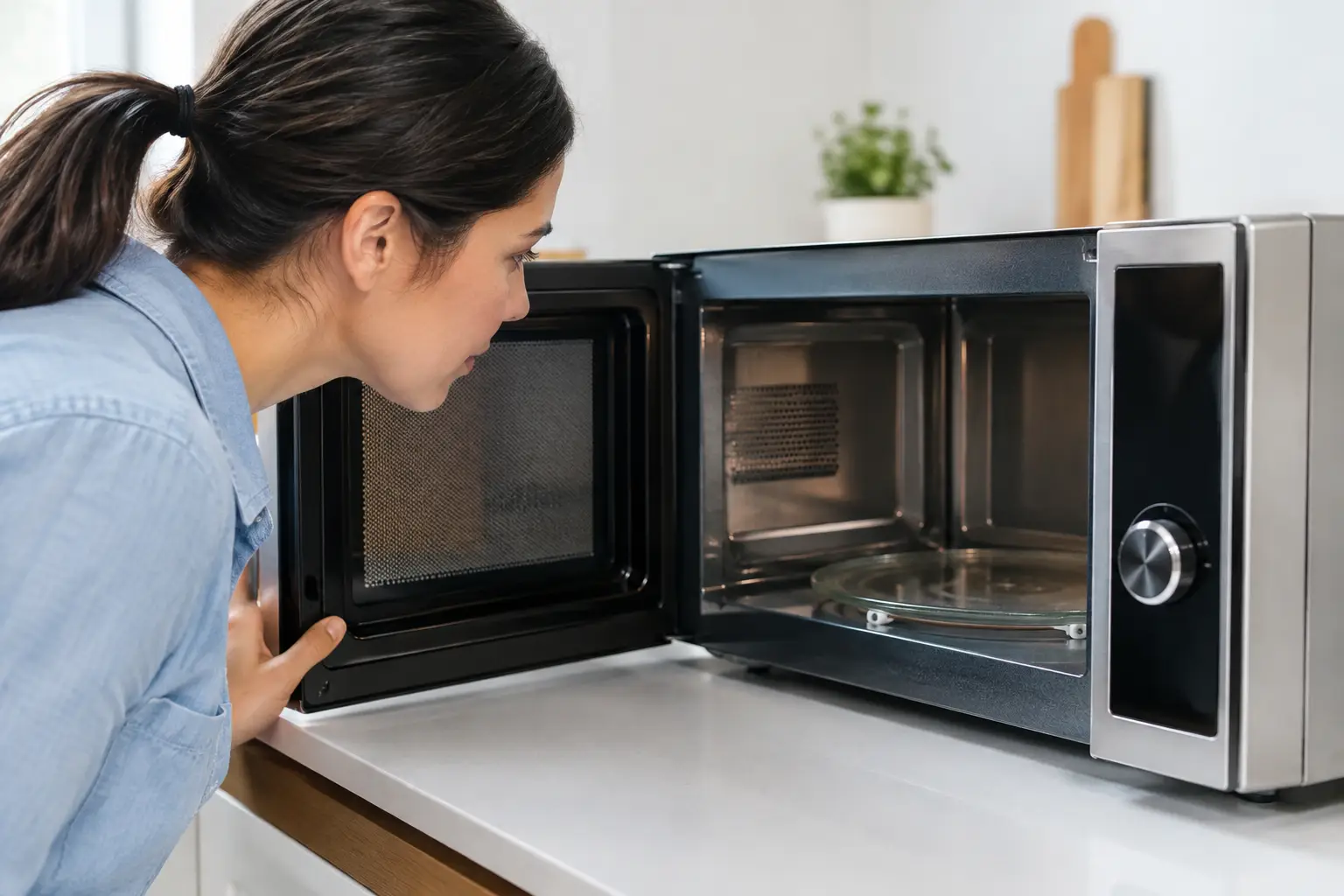
A microwave that starts popping, flashing, or throwing visible sparks can turn a quick dinner into a stressful household problem. If you are wondering how to stop microwave sparking, the first rule is simple: stop the cooking cycle immediately. Do not keep running the microwave to see whether the sparking goes away. Continued arcing can damage internal components, scorch the cavity, and in some cases create a fire risk.
Most microwave sparking has a clear cause, but not every cause is safe to correct yourself. A quick visual check can help you remove an obvious problem. If the sparks return after that check, or if there is burning, smoke, or damage inside the unit, arrange professional microwave repair rather than taking the appliance apart.
What to Do the Moment Your Microwave Sparks
Press Stop or Cancel, then unplug the microwave if it is safe and easy to reach the plug. If it is a built-in or over-the-range microwave, turn off power at the circuit breaker instead. Let the appliance sit for a few minutes before opening the door and inspecting the interior.
If you see smoke or flames, keep the door closed. Turning off the microwave contains the fire better than opening the door and adding oxygen. Disconnect power if you can do so safely. If the fire does not stop promptly or you have any concern about it spreading, call 911.
Once the microwave is cool and powered off, remove the food and container. Look for foil, a metal utensil, a twist tie, a bottle cap, or packaging with a metallic liner. Even small pieces of metal can create electrical arcs inside a microwave. Also check plates, bowls, and mugs for metallic rims, gold decoration, cracks, or chipped glaze.
Do not restart the microwave until you have identified the likely cause or completed a safe inspection. A spark caused by a forgotten fork is one thing. A spark coming from a wall panel, the ceiling, or behind the control panel is another.
Common Reasons a Microwave Starts Sparking
Metal or metallic trim inside the cavity
The most common cause is metal placed inside the microwave. Aluminum foil, cutlery, and many takeout containers are obvious examples, but the problem is not always so visible. Some dishes have metallic paint around the edge. Certain insulated cups, food wrappers, and reusable containers have thin metallic layers that can arc.
Use containers clearly marked microwave-safe. Glass, ceramic without metallic decoration, and microwave-safe plastic are generally appropriate, but condition matters. A cracked dish or worn decorative coating may no longer be safe to use.
Food splatter and grease buildup
Burned food residue can also cause sparking, particularly if it has accumulated around the waveguide cover or on the interior walls. Grease and dried splatter absorb energy, overheat, and can carbonize. Once a spot is charred, it may keep arcing during later use.
Clean the interior with a soft cloth, warm water, and mild dish soap after the microwave has been unplugged and cooled. Avoid abrasive pads and harsh cleaners that can scratch the cavity coating. Dry the interior completely before using it again.
A damaged waveguide cover
Many microwaves have a small thin panel on one side wall or the ceiling of the cooking cavity. This is the waveguide cover, often made from mica. It protects the opening that directs microwave energy into the oven cavity.
If this cover is greasy, burned, cracked, warped, or has a hole, it can spark. Light surface grime may be carefully cleaned, but a damaged cover needs replacement. Do not run the microwave with a missing or visibly burned waveguide cover. The cover may be inexpensive, but the correct replacement and the reason it failed should be confirmed before the microwave goes back into service.
Chipped interior paint or rust
The smooth coating inside a microwave is more than cosmetic. It helps protect the metal cavity beneath it. If the coating has chipped and rust has formed, exposed metal can arc when the microwave runs.
A tiny area of superficial wear may be repairable with an appliance-approved microwave cavity touch-up product, but this depends on the location and extent of the damage. Deep rust, peeling paint, or repeated sparking calls for a technician’s assessment. Covering a serious cavity problem with paint does not make the appliance safe.
A microwave rack or turntable problem
Some microwaves include a metal rack designed for specific cooking modes. That rack should only be used when the owner’s manual permits it and only in the position intended by the manufacturer. A rack that is out of place, bent, or touching the cavity wall can spark.
A damaged roller ring, turntable support, or turntable can also cause a dish to sit unevenly and touch an interior surface. If sparking occurs only while the tray turns, inspect those parts for cracks, food buildup, and improper placement.
Internal electrical failure
When the interior is clean, the proper cookware is being used, and sparks still appear, the issue may be inside the microwave. A failing high-voltage diode, capacitor, magnetron, transformer, wiring connection, or control component can produce arcing, unusual buzzing, burning smells, or intermittent heating.
These are not homeowner repairs. Microwaves contain high-voltage components that can retain a dangerous electrical charge even after the unit is unplugged. Removing the outer cabinet or attempting to test internal parts can result in serious injury. Professional diagnosis is the safe choice.
How to Stop Microwave Sparking Without Making It Worse
After removing an obvious metal item or cleaning light food residue, test the microwave only with a microwave-safe cup containing water. Never run a microwave empty. Use a short heating cycle and watch through the door. If there are no flashes, popping sounds, or burning odors, the original item or residue was likely the cause.
Stop using the microwave if you notice sparking again, if the waveguide cover looks damaged, or if the interior coating is chipped or rusted. The same applies when the microwave heats poorly, trips a breaker, makes a louder-than-normal hum, or gives off a burnt electrical smell. Those symptoms point beyond a simple cookware mistake.
Do not use foil to cover damaged areas, tape over a waveguide cover, or keep operating the appliance at lower power. Lower power does not fix arcing. It can still cause further damage and make a straightforward repair more expensive.
When to Call for Microwave Repair
A trained appliance technician can determine whether the problem is limited to an interior component or whether the microwave has a larger electrical failure. This matters most with over-the-range and built-in models, where replacement may involve ventilation, cabinetry, mounting hardware, and electrical connections in addition to the appliance itself.
For North Texas homeowners, IAS Appliance Solutions provides clear in-home microwave diagnostics and honest recommendations. If repair is practical, the goal is to restore safe operation with the right part and minimal disruption. If the microwave has extensive cavity damage or a repair is not cost-effective, you should receive a straightforward explanation before approving work.
A microwave should make everyday meals easier, not leave you wondering whether it is safe to use. Treat sparks as a stop signal, not a minor annoyance. A careful check of cookware and cleanliness can solve simple cases, while prompt professional service can prevent a damaged microwave from becoming a bigger kitchen problem.

No comment