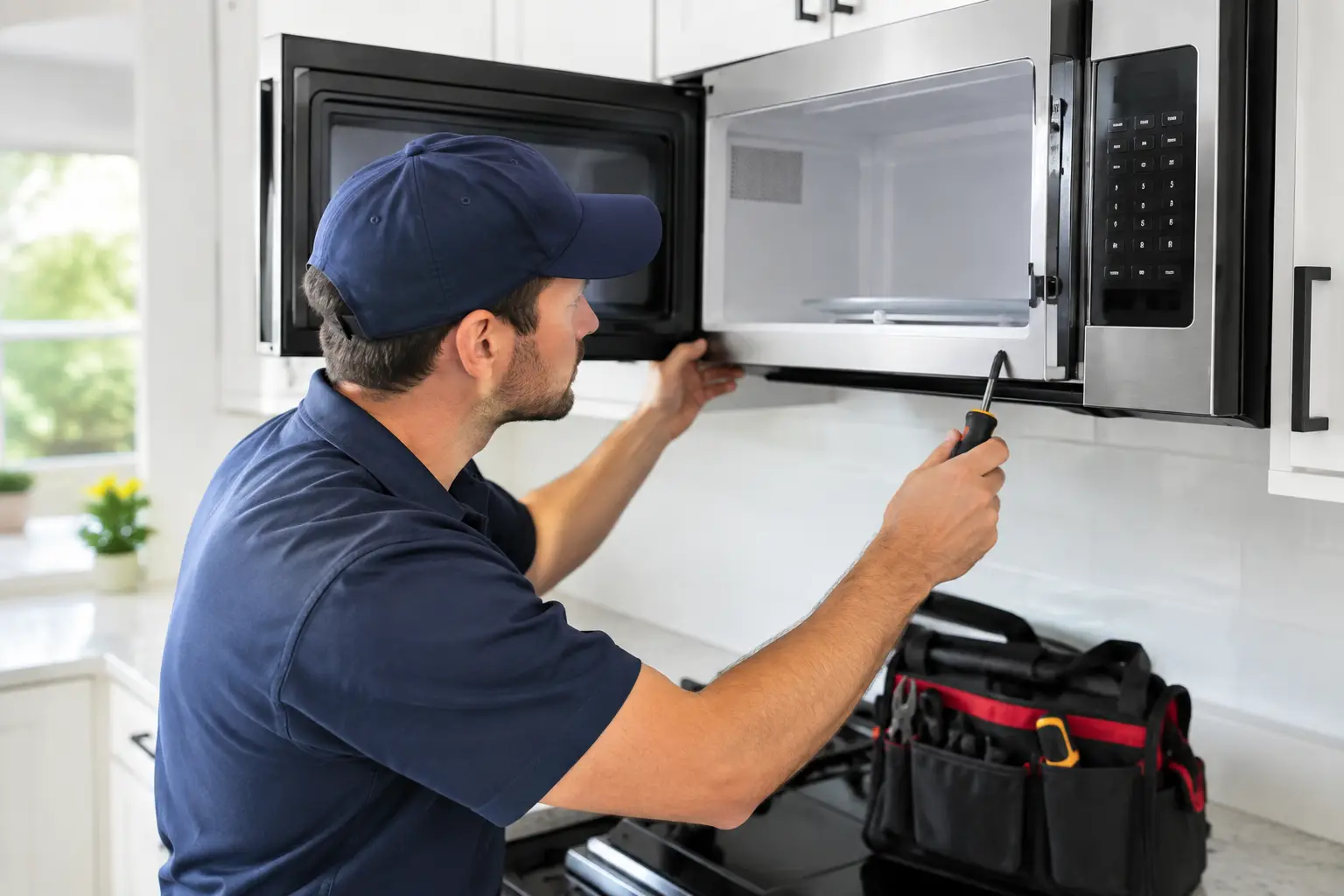
A microwave that suddenly sparks, hums loudly, or stops heating can disrupt a busy day fast. Microwave repair safety starts with recognizing that this is not a typical do-it-yourself appliance repair. Even when a microwave is unplugged, internal components can retain a dangerous electrical charge. Knowing what you can safely check from the outside – and when to schedule professional service – protects your household, your appliance, and your kitchen.
Why Microwave Repairs Require Extra Caution
Most homeowners are comfortable checking whether an appliance is plugged in, resetting a tripped breaker, or cleaning a dirty filter. Those basic checks make sense for many household appliances. A microwave is different because it produces high-voltage energy to heat food, and the parts that make that possible require specialized testing and safe discharge procedures.
The high-voltage capacitor inside a microwave can store a serious electrical charge after power has been disconnected. The magnetron, high-voltage transformer, inverter, door switches, and control board also need to be diagnosed correctly. Removing the cabinet to reach these components can expose a homeowner to shock hazards, sharp metal edges, and damage that makes the unit less safe to operate afterward.
There is another concern: the door and its safety interlock system. A microwave is designed to stop producing energy the instant the door opens. If hinges, latches, switches, or the door frame are damaged, the appliance should not be used until it has been inspected. A repair that appears simple from the outside may involve safety systems that need accurate adjustment and testing.
Warning Signs That Mean Stop Using the Microwave
Some microwave problems are inconvenient. Others are clear signals to stop using the appliance right away. If you notice smoke, a burning odor, sparks, popping sounds, or visible arcing inside the cavity, cancel the heating cycle and unplug the unit if it is safe to do so. Do not open a smoking microwave until the smoke has stopped, since introducing oxygen can worsen a small fire.
Arcing can sometimes be caused by metal cookware, foil, or a forgotten twist tie. It may also come from a damaged waveguide cover, burned cavity surface, a failing rack, or an internal electrical fault. Remove any obvious prohibited item only after the microwave has cooled and been unplugged. If the issue returns with microwave-safe cookware, leave the appliance off and arrange service.
You should also stop using the microwave if the door will not close firmly, the latch feels loose, the door is bent, the interior light stays on when the door is shut, or the microwave runs with the door open. A unit that runs without heating food can have a failed magnetron, diode, capacitor, transformer, inverter, or control-related issue. It is not a reason to keep testing the microwave repeatedly.
A strong buzzing noise, repeated breaker trips, a hot or burning smell from the control panel, or a display that flickers can point to electrical trouble. These symptoms deserve prompt attention, particularly in an over-the-range microwave where ventilation, mounting, and nearby cabinets can complicate access.
Safe Checks Homeowners Can Make First
Before scheduling service, a few external checks can help rule out simple causes without taking unnecessary risks. Start by unplugging a countertop microwave. For a built-in or over-the-range model, switch off power at the breaker if you can identify the correct circuit. Do not pull an installed microwave from its mounting bracket or remove its outer cabinet.
Check the outlet and breaker. If another low-power device does not work at the outlet, the problem may be with the circuit rather than the microwave. If the breaker has tripped, reset it once. A breaker that trips again when the microwave is used should not be repeatedly reset. That pattern can indicate a circuit issue or an appliance fault that needs diagnosis.
Next, inspect the door, turntable, and interior. Clean food residue from the door sealing area and make sure the turntable is correctly seated. Look for chipped paint, scorch marks, cracks in the door, damaged racks, or a burned waveguide cover. Take a photo of any visible damage for the technician, but do not scrape, paint over, or attempt to remove components inside the cavity.
If the microwave display is working but the appliance will not start, make sure the door is fully closed and check whether a control lock has been activated. Your owner’s manual can help with model-specific settings, cleaning instructions, and basic error messages. It should not be treated as permission to access high-voltage components.
What Not to Do During Microwave Troubleshooting
The safest microwave repair decision is often deciding what not to touch. Do not remove the outer cover, even if online videos make the repair look quick. The danger is not limited to a microwave that is currently plugged in.
Avoid these common mistakes:
- Never attempt to discharge a microwave capacitor yourself.
- Never bypass, tape down, or alter the door safety switches.
- Never operate a microwave with a damaged door, latch, seal area, or cabinet.
- Never use a microwave that produces sparks, smoke, repeated breaker trips, or unusual burning odors.
- Never spray cleaner directly into vents, control panels, or openings around the door.
It is also wise to avoid the old habit of running a microwave empty to see whether it works. Microwaves are designed to transfer energy into food or liquid. Operating one empty can stress internal components and may cause damage.
When Repair Is the Smart Choice
Whether to repair or replace a microwave depends on the type of failure, the appliance’s age, its installation style, and the cost of the needed part. A countertop model with extensive damage may be more practical to replace. An over-the-range or built-in microwave can be worth repairing because replacement may involve cabinet fit, venting configuration, trim, electrical connections, and installation labor.
Many issues can be resolved with professional repair, including failed door switches, worn latches, turntable problems, control panel concerns, blown fuses, and certain heating or ventilation failures. The right answer comes after a proper diagnosis. Replacing parts based on guesswork can cost more than a service call and may fail to address the actual problem.
A trained technician can identify whether the issue is isolated to a serviceable component or whether replacement is the more sensible long-term choice. That assessment should include an honest discussion of the repair cost, part availability, appliance condition, and expected value of the repair.
What to Expect From a Professional Microwave Service Visit
A professional visit should begin with the symptoms you observed: when the issue started, whether the microwave heats at all, whether it trips the breaker, and any noises or smells you noticed. Photos of error codes, arcing marks, or door damage can help, but do not feel obligated to test the microwave again just to recreate a symptom.
The technician will evaluate the power supply, door interlock operation, controls, heating system, and other relevant components using proper tools and safety procedures. For mounted units, they can also assess installation concerns such as secure mounting, ventilation, and access. Once the diagnosis is complete, you should receive a clear explanation of the problem and the recommended next step before repair work proceeds.
For homeowners across North Texas, IAS Appliance Solutions provides microwave service with a focus on practical diagnosis, transparent pricing, and minimal disruption. A properly equipped technician can often complete common repairs efficiently, while giving you a straightforward recommendation if replacement makes more financial sense.
Keep the Next Problem From Becoming a Safety Issue
Microwaves last longer when they are used within their limits. Use microwave-safe containers, keep metal and foil out unless the manufacturer specifically allows it, clean spills promptly, and avoid slamming the door. Make sure vents are not blocked, especially on over-the-range models that also support kitchen ventilation.
Pay attention to small changes before they become major ones. A door that needs to be lifted to latch, a turntable that hesitates, a new buzzing sound, or intermittent heating is worth addressing early. You do not need to diagnose the internal cause yourself. You only need to recognize when the appliance is asking for qualified help.
A microwave should make daily meals easier, not create uncertainty in your kitchen. When a symptom involves heat, electricity, smoke, sparks, or door operation, leave the cabinet closed, stop using the appliance, and choose a repair path that keeps your home and household safe.

No comment