
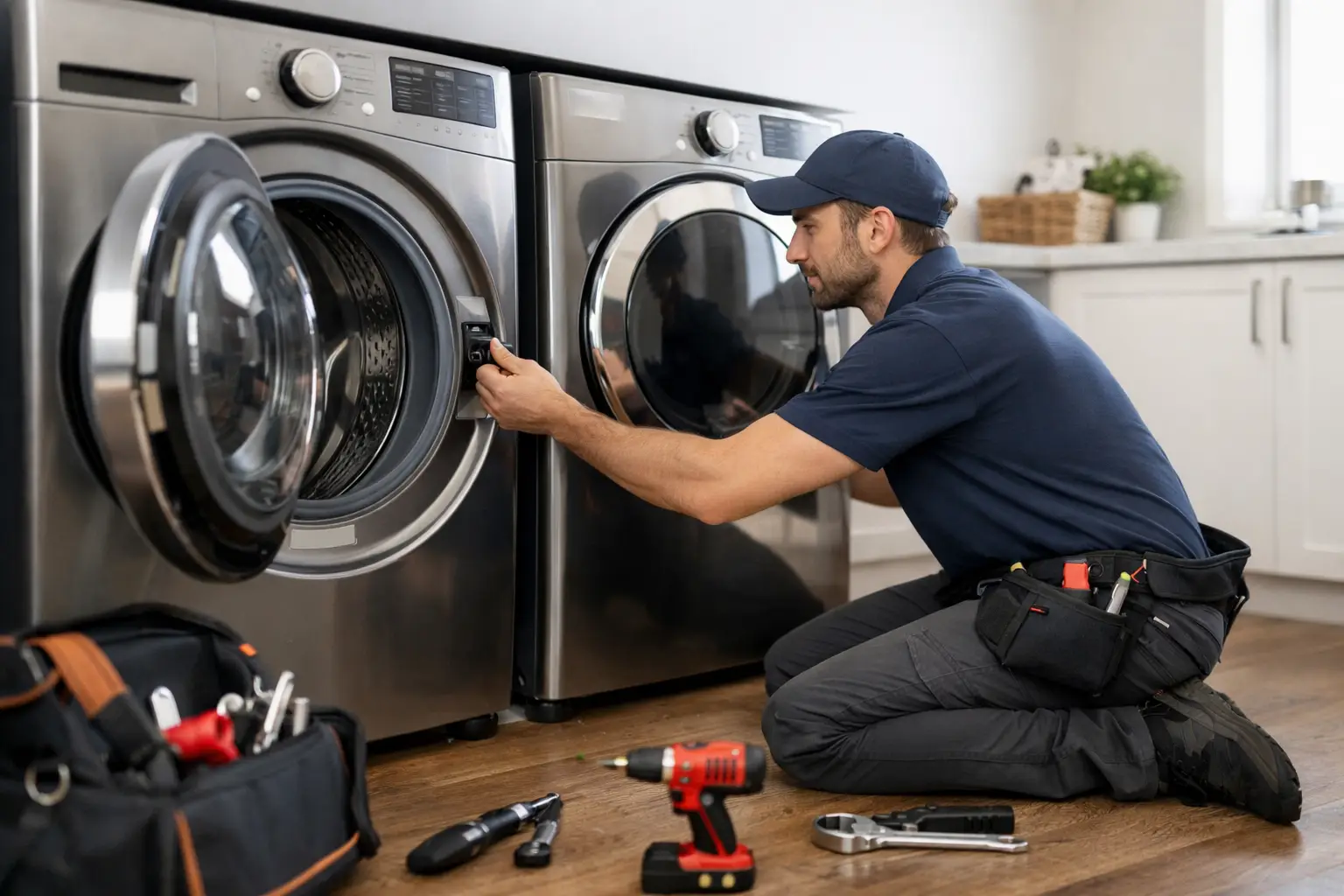
A new washer and dryer can arrive at the perfect time – right when the old set starts leaking, shaking, or leaving laundry unfinished. But delivery is not the same as a proper washer dryer installation service. The connections behind and beneath your appliances affect water safety, drainage, electrical performance, venting, and the daily reliability of your laundry room.
For homeowners, the goal is simple: get the new appliances working correctly without creating a hidden problem that appears after the installer leaves. A professional installation helps protect your floors, walls, utility connections, and investment in a new appliance.
What a Proper Installation Includes
Washer and dryer installation is more than placing two appliances against a wall and plugging them in. The technician needs to confirm that the space, utility connections, and appliance requirements all match before the equipment is put into service.
For a washing machine, that usually means checking the hot and cold water supply hoses, shutoff valves, drain hose placement, and drain connection. A washer that is not level can walk across the floor during a high-speed spin cycle, create excessive noise, and put unnecessary stress on internal parts. A drain hose installed at the wrong height or without proper securing can lead to slow draining, siphoning, or water damage.
Dryer installation depends on whether the unit is electric or gas. An electric dryer must have the correct outlet and electrical setup for the model. A gas dryer requires careful connection to the gas supply and a proper test for leaks. Both types need a safe exhaust path when the dryer is vented. Crushed, overly long, disconnected, or poorly routed venting can reduce drying performance and allow heat and lint to build up where they do not belong.
A qualified technician also confirms that doors, hoses, cords, and vents have enough clearance. This matters especially in laundry closets, upstairs utility rooms, and tight spaces where moving an appliance into place can easily pinch a line or damage a wall.
Why Installation Details Matter After the First Load
Most installation issues do not announce themselves immediately. A washer may complete a test cycle but begin dripping from a weak valve connection after several uses. A dryer may heat but take two cycles to dry a load because the vent is restricted. A stacked unit may look stable until an unbalanced load exposes a leveling problem.
These are frustrating problems because they interrupt routines and can be expensive if water reaches flooring, baseboards, or the ceiling below an upstairs laundry room. Correct installation is practical prevention. It helps the appliance perform as intended from day one and gives you a clearer starting point if a future repair is ever needed.
There are also situations where a replacement appliance exposes an older issue. Newer machines can have different hose locations, vent requirements, power needs, or depth measurements than the appliance they replace. If the laundry area was set up for an older model, forcing the new one into the same arrangement is not always the right answer.
When a Professional Washer Dryer Installation Service Makes Sense
Some homeowners are comfortable handling a simple replacement when the connections are accessible, the utilities are in good condition, and the new appliance matches the existing setup. Even then, it is worth reading the manufacturer requirements carefully.
Professional help is the safer choice when gas is involved, when the dryer venting needs adjustment, when a washer is being installed upstairs, or when the utility connections show corrosion, wear, or signs of leaking. It is also helpful for stacked laundry centers, compact units, pedestal installations, and tight closet spaces where there is little room to inspect connections once the appliances are moved into place.
A professional installation can save time when a household is already dealing with a failed appliance. Instead of making multiple trips for hoses, fittings, electrical components, or vent materials, homeowners can have the setup evaluated as part of the service visit. The right approach depends on the home and the appliance model, but the standard should remain the same: no shortcuts around safety or performance.
What to Do Before Your Appointment
A little preparation makes installation faster and helps the technician focus on the work. Clear laundry baskets, cleaning supplies, and storage items away from the appliance area. Make sure there is a path from the entryway to the laundry room, particularly if the unit must go through narrow halls or around stairs.
If possible, keep the appliance model information available. The make and model can help confirm electrical, gas, drainage, and venting requirements before the appointment. It is also useful to point out anything you have noticed with the existing setup, such as a slow drain, a loose outlet, a damaged vent, a dripping valve, or a dryer that has taken too long to dry clothes.
Do not try to hide a known issue just to get the new appliance connected quickly. An honest assessment of the condition behind the machines is the best way to avoid a return visit or a preventable problem later.
The Installation Process Should Be Clear
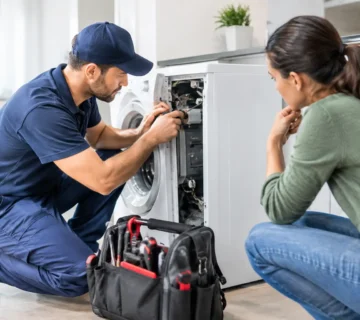
A dependable service visit should not leave homeowners guessing about what was done. The process starts with an assessment of the appliance location and existing connections. The technician can then explain whether the installation can proceed as planned or whether a worn component, incompatible connection, or safety concern needs to be addressed first.
After the service agreement is approved, the appliances are positioned, connected, leveled, and tested. Testing is a meaningful part of the job. A washer should be checked for proper filling, draining, and spin stability. A dryer should be checked for operation and, when applicable, airflow through the venting system. Gas connections require appropriate leak testing before the dryer is used.
Transparent communication matters here. If a connection needs replacement or the laundry area requires additional work, the homeowner should understand the reason and cost before moving forward. There should be no hidden fees or surprise charges after the fact.
Common Problems That Should Not Be Ignored
Sometimes installation reveals a problem that is outside the appliance itself. Older shutoff valves may not close fully. A standpipe may drain slowly. A dryer outlet may not match the new appliance. Venting may be packed with lint, disconnected in the wall, or routed in a way that restricts airflow.
These issues are not reasons to panic, but they should not be ignored to finish the job faster. Connecting a new washer to a compromised water valve can put the home at risk of a leak. Running a dryer with poor exhaust airflow can increase drying times and strain the machine. The best solution is based on the actual condition of the home, not a one-size-fits-all installation checklist.
Local Help for Busy North Texas Households
Laundry problems quickly affect a household’s schedule. Families have school clothes to wash, working professionals have limited time at home, and property owners need appliances ready for tenants or new residents. That is why prompt scheduling, clear pricing, and capable in-home service matter as much as the installation itself.
IAS Appliance Solutions serves homeowners in Frisco, Plano, McKinney, Allen, Prosper, Celina, Little Elm, Denton, Aubrey, and The Colony with practical appliance service designed to minimize disruption. Experienced technicians can assess the setup, explain the work clearly, and help ensure the washer and dryer are ready for normal use.
Before scheduling, take a quick look at the laundry area and write down any concerns you have noticed. Sharing those details at the start of the visit helps your technician arrive prepared and helps your new appliances begin their work the way they should.


[…] A washer must sit firmly on all four feet. Even a slight tilt can become a major vibration when the drum reaches high spin speed. This is especially common after moving the appliance, replacing flooring, or installing a new washer-and-dryer set. […]