A range hood fan not working is more than an inconvenience when dinner is already on the stove. Without ventilation, smoke, grease, steam, and strong cooking odors can quickly spread through the kitchen and nearby rooms. The good news is that some causes are simple to identify. Others involve electrical components or a failed motor and need a trained appliance technician to resolve safely.
Before assuming the entire range hood needs replacement, start with a few basic checks. A clear description of what the hood is doing – no sound, humming without airflow, intermittent operation, or a fan that will not shut off – can also make professional diagnosis faster and more accurate.
Start With the Simple Power Checks
A hood that appears completely dead may have lost power rather than suffered a major mechanical failure. Check whether the hood light works. If the light and fan are both out, the issue could be related to the circuit breaker, the wall switch, the outlet, or the home’s wiring.
Look at your electrical panel for a tripped breaker. Turn the breaker fully off, then back on once. If it trips again, do not keep resetting it. Repeated tripping can point to a short circuit, a failing component, or a wiring issue that should be inspected.
Some under-cabinet range hoods plug into an outlet inside the cabinet above the unit. Make sure the plug is secure. If the outlet is controlled by a switch, verify that switch is on. For a hardwired hood, avoid removing the electrical cover or handling wiring yourself. Power should be disconnected before any internal electrical work is performed.
Range Hood Fan Not Working, but the Light Is?
When the hood light works but the fan does not, the appliance is receiving power. That narrows the possible causes, but it does not mean the repair is always simple. The fan switch, control board, motor capacitor, blower motor, or internal wiring may be at fault.
Older hoods often use mechanical push-button or slide switches. These switches can wear out after years of use, particularly if grease has built up around the control area. A newer model may use an electronic touch panel or control board. Moisture, heat, and power fluctuations can affect those electronic controls.
Try each fan speed. If the fan works on one setting but not another, the issue may be a speed switch, control board, or motor winding. If the fan makes a low hum but the blades or blower wheel do not turn, turn the hood off. A humming motor can overheat if it continues trying to run while stuck.
Check Filters and Airflow Before Calling It a Motor Failure
A fan can sound like it is running while doing very little to clear the air. In that case, the motor may be fine, but airflow is restricted.
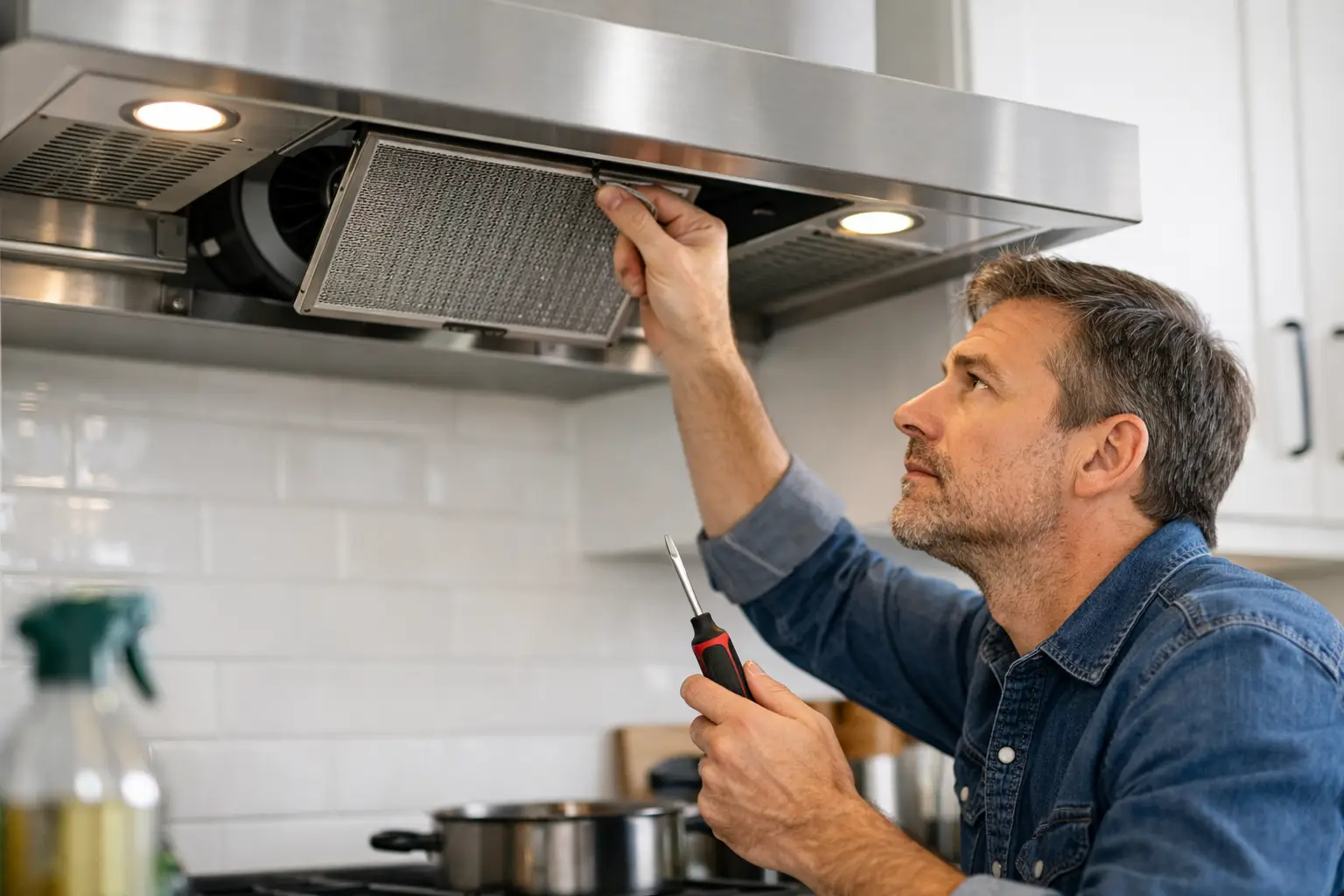
Metal grease filters collect cooking residue over time. When they become heavily coated, air cannot move through them efficiently. Most metal filters can be removed and cleaned according to the manufacturer’s instructions. Allow them to dry completely before reinstalling them. Charcoal filters, commonly used on ductless or recirculating hoods, are typically replaced rather than washed.
If your range hood vents outside, the ductwork and exterior vent cap also matter. A blocked exterior damper, crushed duct, pest nest, or grease buildup can reduce airflow. The fan may operate normally, yet smoke still remains in the kitchen. Duct obstructions are especially worth checking if performance changed gradually rather than stopping all at once.
Do not run the hood without its required filters for routine cooking. Filters help protect internal components from grease and are part of the appliance’s intended airflow design.
Common Reasons a Hood Fan Stops Running
A professional diagnosis is useful because several failures can create similar symptoms. A technician can test components instead of replacing parts based on a guess. Common causes include:
- A worn or failed blower motor that no longer turns consistently or has overheated.
- A faulty fan switch, touch control, relay, or control board that is not sending power to the motor.
- A failed capacitor on models that use one to start or maintain motor operation.
- Loose, damaged, or grease-affected wiring connections inside the hood.
- A jammed blower wheel caused by debris, broken parts, or excessive grease buildup.
The right repair depends on the hood’s design, age, and condition. Replacing a small switch or capacitor can be cost-effective. If the motor, control assembly, and other components are failing on an older unit, replacement may offer better long-term value. An honest assessment should consider both the immediate repair and the likely remaining life of the appliance.
When the Fan Runs but Will Not Clear Smoke
Poor ventilation is not always a fan failure. A recirculating range hood does not exhaust air outdoors. Instead, it passes air through filters and returns it to the kitchen. These units can help reduce odors and grease, but they are not designed to remove heat and moisture as effectively as a properly ducted outdoor vent.
For a ducted hood, weak capture can also be caused by the hood’s size, mounting height, and blower capacity. A powerful cooktop, high-heat searing, or frequent wok cooking may produce more smoke than a basic hood can handle. This is not necessarily a repair issue, though a technician can confirm whether the fan is operating as intended and whether an installation concern is limiting performance.
If smoke seems to blow back into the room, check whether the exterior damper is opening. A stuck damper may restrict exhaust and can create unusual noise. Because accessing the duct connection or roof and wall vent can involve electrical and installation work, this is often best handled by an experienced service professional.
Signs You Should Stop Using the Hood
Turn the hood off and arrange service if you notice a burning smell, visible smoke from the appliance, sparking, a breaker that repeatedly trips, or a loud grinding noise. These symptoms can indicate an electrical fault, a failing motor, or a damaged blower assembly.
Grease accumulation adds another reason to act promptly. Range hoods are exposed to heat and airborne grease every day. A motor or wiring problem should not be ignored in an appliance designed to operate above a cooking surface.
If the hood is installed above a gas range, dependable ventilation is particularly valuable. The hood may not replace fresh-air requirements or address every indoor air concern, but it helps remove cooking byproducts, moisture, and odors during normal meal preparation.
What to Expect From a Professional Range Hood Repair
A qualified technician should begin by confirming the symptom and checking power at the appropriate points. From there, the technician can inspect the controls, motor, capacitor where applicable, blower wheel, filters, and accessible duct connection. This process helps avoid replacing a motor when the actual problem is a switch, or replacing a control board when airflow is blocked.
For homeowners in Frisco, Plano, McKinney, Prosper, Allen, and nearby North Texas communities, IAS Appliance Solutions provides straightforward range hood diagnosis and repair for major brands. The goal is to identify the cause, explain the available options clearly, and complete the repair with minimal disruption whenever the needed parts are available.
Before scheduling service, note the hood’s brand and model number, when the problem started, and whether the light still works. Mention any humming, grinding, odor, or breaker issues. Those details help the technician arrive prepared and help you get a clearer answer about repair versus replacement.
A working range hood keeps everyday cooking more comfortable, but you should not have to troubleshoot live wiring or disassemble a greasy motor housing to restore it. A prompt, accurate diagnosis can turn a smoky kitchen back into a functional one without adding another unfinished task to your week.

[…] or built-in microwave can be worth repairing because replacement may involve cabinet fit, venting configuration, trim, electrical connections, and installation […]