
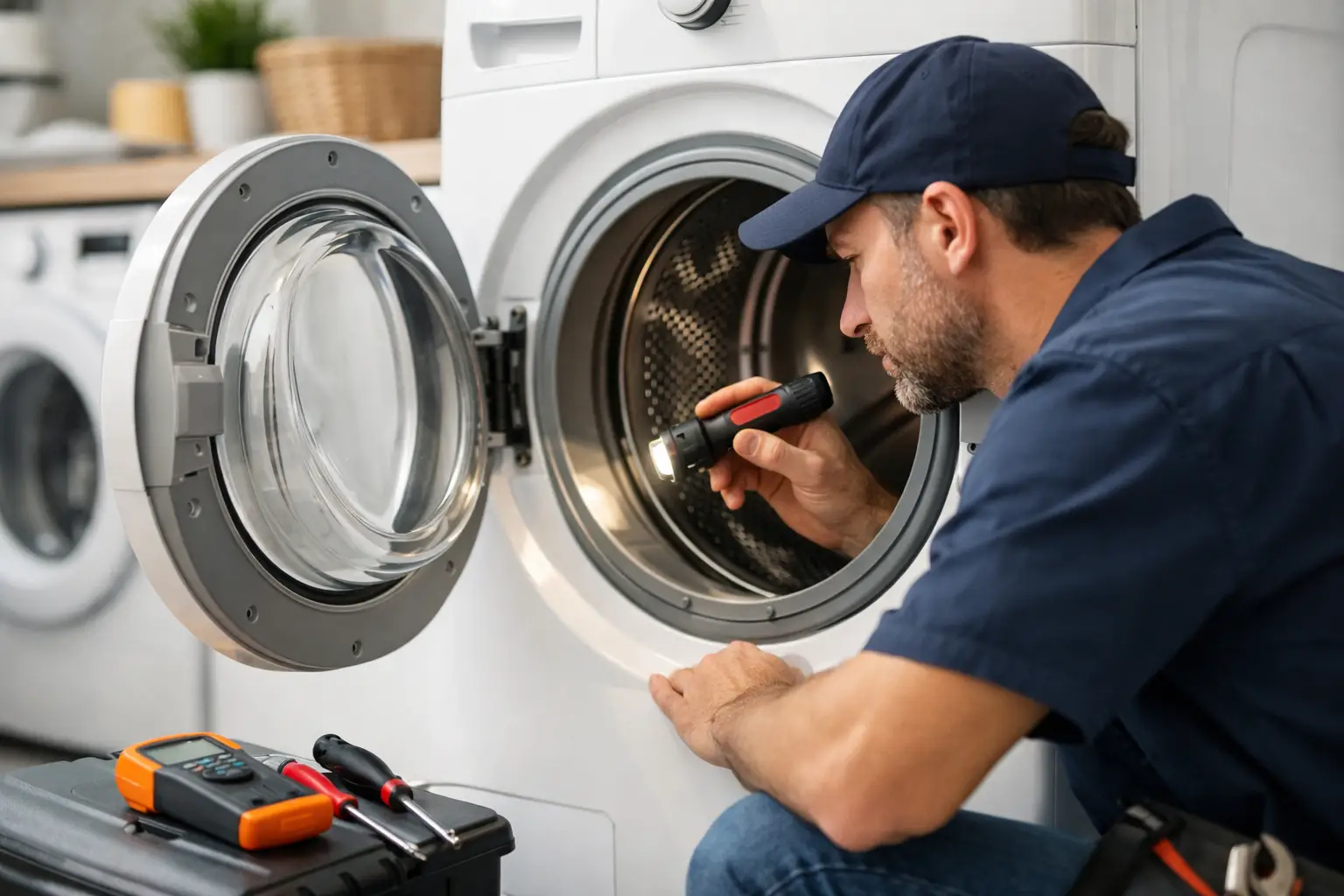
A dryer that tumbles normally but leaves clothes cold and damp can disrupt the entire week. If you are searching for dryer not heating repair near me, you likely need a clear answer quickly: Is this a simple setting or vent issue, or does the dryer need professional repair? The right next step depends on the dryer type, the symptoms, and whether there are any safety concerns.
For most households, a no-heat dryer is not something to ignore for long. Repeated cycles waste time and energy, moisture can build up in the laundry area, and a restricted vent can create a more serious airflow problem. A trained appliance technician can identify the actual failed component instead of replacing parts based on guesswork.
What a Dryer That Will Not Heat May Be Telling You
A dryer needs more than power to spin the drum. Electric models need a functioning heating element and the correct voltage supply. Gas models need reliable gas flow, an igniter, and working burner components. Both types rely on thermal safety devices, controls, and unrestricted airflow to create and maintain proper heat.
That is why a dryer may continue tumbling even when it cannot heat. The motor can have enough power to turn the drum while a separate heating circuit, gas ignition system, or safety component has failed. This symptom is common, but the source of the failure can vary considerably.
On an electric dryer, common causes include a failed heating element, blown thermal fuse, faulty thermostat, damaged wiring, or a tripped breaker affecting part of the 240-volt power supply. On a gas dryer, the problem may involve the igniter, flame sensor, gas valve coils, or a component that is preventing the burner from lighting.
A blocked or poorly installed dryer vent can also contribute to overheating and repeated safety fuse failures. Replacing a fuse without addressing the airflow issue may get the dryer running temporarily, but it does not provide a lasting solution.
Safe Checks to Make Before Scheduling Service
There are a few homeowner checks that can help rule out simple issues. Start with the dryer settings. Air Fluff, Air Dry, and similar cycles are designed to run without heat. Try a normal timed-dry or high-heat cycle with a few damp towels and allow several minutes for the dryer to warm up.
Next, clean the lint screen and inspect the outside vent hood while the dryer is operating. The exterior flap should open and release warm air during a properly functioning heated cycle. Weak airflow, excess lint around the outlet, or a flap that does not open may point to a venting concern.
For an electric dryer, check the home electrical panel. A dryer typically uses a double breaker. In some cases, one side can trip while the drum still turns. If a breaker appears tripped, turn it fully off and then back on once. If it trips again, do not keep resetting it. That calls for a qualified diagnosis.
Avoid removing dryer panels, bypassing thermal fuses, or testing live electrical components without the right training and equipment. Gas dryers require additional caution. If you notice a gas smell, turn off the appliance if it is safe to do so, leave the area, and contact your gas provider or emergency services as appropriate. Do not attempt to light or repair the burner yourself.
When Dryer Not Heating Repair Near Me Is the Right Search
Professional service is usually the most practical choice when the dryer runs but stays cold after basic checks, trips a breaker, stops mid-cycle, makes unusual noises, or shows an error code. It is also the right call when the dryer is heating inconsistently. Clothes that dry one day but need multiple cycles the next often indicate a developing component or airflow issue.
A repair visit is especially useful because several problems can produce the same no-heat symptom. For example, a failed heating element, thermostat, thermal fuse, control board, or wiring connection may all leave an electric dryer spinning without heat. The correct repair starts with testing and inspection, not assumptions.
The same principle applies to gas models. An igniter may glow without the burner lighting, or the dryer may light briefly and then lose heat. Those details matter to a technician, and they help determine whether the issue is with ignition, gas valve operation, sensing, ventilation, or controls.
What a Professional Dryer Diagnosis Should Include
A dependable repair process begins by confirming the appliance model, dryer type, and reported symptoms. The technician should inspect the unit safely, verify the incoming power or gas-related operation, and test relevant components rather than recommending a part before identifying the failure.
For an electric dryer, diagnosis may include checking the heating element, high-limit thermostat, thermal fuse, cycling thermostat, wiring, terminal block, and voltage supply. For a gas dryer, the technician may inspect the igniter, flame sensor, gas valve coils, thermal devices, control system, and burner operation.
Ventilation should be part of the conversation as well. A repair can restore heat, but a severely restricted vent can shorten the life of new parts and reduce drying performance. Sometimes the appliance itself is the only problem. Other times, the dryer and the vent system both need attention for clothes to dry reliably again.
At IAS Appliance Solutions, the goal is to provide an honest assessment and a repair recommendation that makes sense for your household. Technicians service major dryer brands and arrive prepared to complete many common repairs during the first visit whenever parts availability allows. You should understand the issue, the recommended work, and the upfront price before repair begins.
Repair or Replacement: How to Make a Practical Decision
A no-heat dryer does not automatically mean replacement. Heating elements, igniters, thermostats, fuses, and gas valve coils are common repair items, and many dryers have years of useful life left after the right repair. The decision becomes less clear when the dryer has multiple failures, extensive corrosion, a damaged drum, major control-board problems, or repeated breakdowns.
Age matters, but it is not the only factor. A well-maintained dryer with one isolated failed part may be worth repairing even if it is no longer new. On the other hand, a lower-cost unit with a large repair estimate and a history of problems may be better replaced. A technician can explain the trade-off based on the condition of your actual appliance, not a one-size-fits-all rule.
If replacement is the better path, proper installation also matters. An incorrectly connected power cord, gas line, or vent can affect safety and performance from day one. Professional installation helps ensure the new dryer is set up for reliable operation.
What to Expect From a Local Service Appointment
The process should be straightforward. First, request a consultation or quote and describe what the dryer is doing. Mention whether it is electric or gas, whether the drum turns, whether it heats at all, and whether you have noticed weak airflow, noises, error codes, or a burning smell.
Then schedule a convenient appointment. During the visit, the technician diagnoses the problem in your home, explains the findings in clear terms, and provides the service agreement before work proceeds. If a replacement part is needed, you should know what it is and why it is being recommended.
For homeowners in Frisco, Plano, McKinney, Allen, Prosper, Celina, Little Elm, Denton, Aubrey, and The Colony, local service can reduce the disruption of a stalled laundry routine. Prompt scheduling, stocked service vehicles, and parts-and-labor warranty protection all help turn a frustrating appliance problem into a manageable repair.
A dryer that will not heat rarely fixes itself, but you do not have to spend days guessing at the cause. A safe check of settings, power, lint, and airflow is a sensible start. After that, a clear professional diagnosis can help you get back to dry clothes, fewer repeat cycles, and a laundry routine that works when you need it.




[…] of an airflow issue, a fan motor, a defrost component, a sensor, or an electronic control. A dryer that will not heat may have a failed heating component, a thermal safety device, a power supply issue, or restricted […]
[…] dryer has several parts that can cause poor drying: a heating element, thermostat, moisture sensor, blower wheel, control board, or drive motor may be involved. But […]