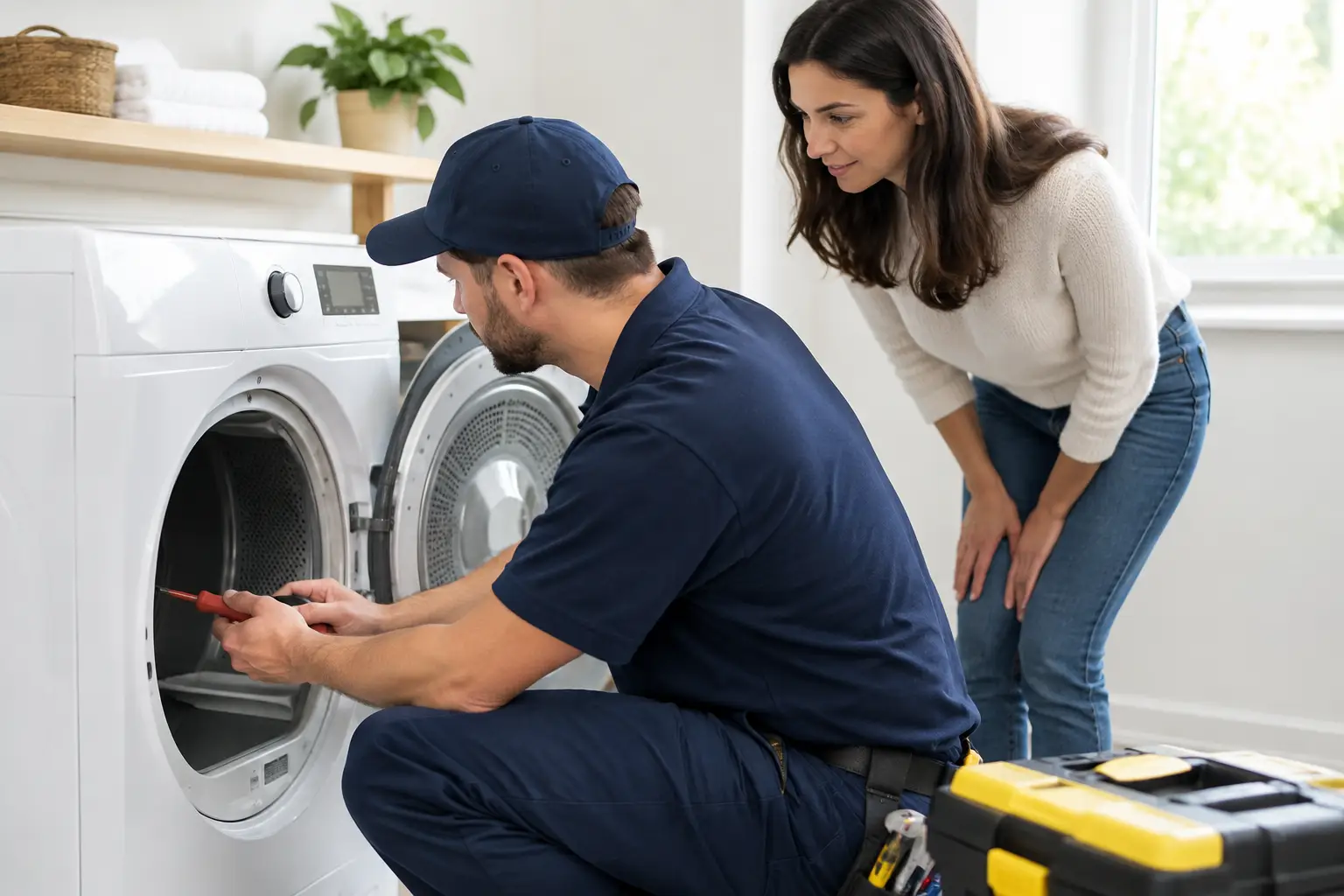
A dryer that runs but leaves clothes damp can turn a normal laundry day into an all-evening problem. Before choosing a repair company, dryer service reviews can help you see how a provider handles the details that matter most: appointment timing, diagnosis accuracy, pricing clarity, and whether the repair actually lasts.
Reviews are useful, but a five-star average alone does not tell the full story. A helpful review gives you a clearer picture of what happened in the home, how the technician communicated, and whether the customer felt informed before approving work. For North Texas homeowners balancing work, family, and a growing pile of laundry, those details are often more valuable than a star rating by itself.
What Dryer Service Reviews Can Tell You
The best reviews describe the service experience from first call through completed repair. Look for comments about how quickly an appointment was available, whether the technician arrived within the scheduled window, and whether the issue was explained in plain language. A dryer can fail for several reasons, including a worn heating element, faulty thermal fuse, damaged belt, failed rollers, blocked venting, or an electrical or control issue. A dependable technician should diagnose the actual cause rather than guess at the most obvious part.
Pay attention when reviewers mention an upfront estimate. Appliance repairs sometimes uncover additional issues, especially in older machines or dryers that have been operating with poor airflow. That does not automatically mean the service is unreliable. The important question is whether the technician explained the finding, discussed the options, and received approval before moving forward.
Reviews that mention a repair holding up over time are particularly useful. A dryer may heat again immediately after service, but a quality repair should address the underlying problem whenever possible. For example, replacing a failed heating component without identifying restricted airflow can leave the dryer vulnerable to another failure.
Read Beyond the Star Rating
A high rating is a positive signal, but read both recent and detailed feedback. Recent reviews show how a company is currently scheduling, communicating, and performing repairs. Detailed reviews are more credible because they often include specifics, such as a dryer that would not start, a drum that stopped turning, or a unit that took multiple cycles to dry a load.
A few less-than-perfect reviews are not necessarily a reason to move on. Home appliance work involves part availability, manufacturer design differences, and conditions inside each home. What matters is the pattern. Are customers repeatedly reporting surprise charges, missed appointments, unclear diagnoses, or a lack of follow-up? Or do they describe isolated frustrations that were handled professionally?
Also consider how the business responds to concerns. A calm, respectful response that addresses the issue is a stronger trust signal than a generic reply. Homeowners deserve direct communication, especially when a repair requires a return visit or a special-order part.
Look for Evidence of Clear Communication
Good service reviews often use simple phrases such as “explained the problem,” “showed me the failed part,” or “gave me options.” Those comments point to a repair process that keeps the homeowner involved.
You should know what is wrong with your dryer, what repair is recommended, what it will cost, and whether replacement may be the more practical choice. The answer is not always repair. If a dryer is near the end of its expected service life, has multiple expensive component failures, or requires a part that is no longer available, an honest assessment may include replacement as an option.
That kind of transparency is especially important with dryers because the symptoms can overlap. A machine that will not heat may have a heating-element problem, but it could also have an airflow restriction, a power supply issue, or a safety component that has opened due to overheating. A qualified technician should explain the difference without overwhelming you with technical jargon.
Signs a Dryer Repair Company Respects Your Time
Laundry appliances are not optional for most households. When a dryer stops working, families may be hauling loads to a laundromat, timing laundry around work, or letting damp clothes pile up. Reviews can show whether a company understands that urgency.
Look for consistent comments about prompt scheduling, on-time arrival, and repairs completed during the first visit when possible. Fully stocked service vehicles can make a real difference for common dryer failures because the technician may have frequently needed parts available. Still, no company can carry every part for every model. Specialty components, less common brands, and older units may require an ordered part. Honest reviews usually recognize the difference between a necessary delay and poor communication.
It also helps when a provider confirms appointments and gives customers a reasonable arrival window. You should not have to lose an entire workday waiting without updates. Respect for your schedule is part of professional home service, not an extra.
Check Whether the Review Matches Your Dryer Problem
Not every positive appliance review applies directly to dryer repair. A company may receive excellent feedback for refrigerator or dishwasher work, but you should still look for signs of dryer-specific experience. Search review details for concerns similar to yours: no heat, burning smell, loud thumping, drum not spinning, dryer shutting off early, error codes, or clothes taking too long to dry.
A burning smell, repeated overheating, or a dryer that trips a breaker deserves prompt attention. Stop using the appliance until it can be assessed. Dryer problems can involve electrical components and airflow restrictions that are not safe to treat as a simple do-it-yourself project.
For gas dryers, experience matters even more. Gas connections and combustion-related concerns require careful diagnosis and proper handling. Reviews that mention knowledgeable work across major brands, clear recommendations, and professional service can help you narrow your choices before scheduling.
Questions Reviews Cannot Answer for You
Even the most detailed online feedback cannot replace a direct conversation. Before booking, ask whether the company services your dryer brand and model, whether there is a diagnostic or service-call fee, how estimates are presented, and what warranty applies to parts and labor.
You can also ask what to expect during the appointment. A straightforward process should feel easy to follow: request a consultation or quote, choose an appointment time, review the diagnosis and service agreement, then decide whether to approve the repair. There should be no pressure to authorize work before you understand the recommendation and cost.
If vent cleaning is needed, clarify whether it is included in the repair scope or handled separately. Dryer venting can affect performance, drying time, energy use, and safety, but the correct recommendation depends on the condition of the vent path and the dryer itself.
Use Reviews as One Part of a Smart Decision
Customer feedback is most valuable when it confirms the service standards you expect: trained technicians, clear pricing, respectful communication, and work backed by a meaningful warranty. For homeowners in Frisco, Plano, McKinney, Denton, and nearby North Texas communities, local experience can also matter. A provider working in the area regularly is more likely to understand the value of prompt scheduling and accountable in-home service.
IAS Appliance Solutions approaches dryer repair with that practical focus – identify the problem, explain the options, and complete a lasting repair with minimal disruption whenever possible. Whether the issue is a dryer that will not start or one that needs two cycles to finish a load, the goal should be a clear answer rather than a temporary guess.
When you read reviews, trust the ones that make you feel informed, not simply reassured. The right repair company should leave you knowing what failed, what was done, what it cost, and what to watch for next time you start a load of laundry.




No comment