
A dishwasher that finishes its cycle with dirty water sitting at the bottom is more than an inconvenience. It can leave dishes grimy, create unpleasant odors, and bring dinner cleanup to a stop. Learning how to unclog dishwasher drain can solve a simple food-debris blockage, but the right approach matters. Pushing too hard into a hose or using chemical drain cleaner can turn a minor clog into a leak, damaged pump, or more expensive repair.
Before taking anything apart, turn off power to the dishwasher at the breaker or unplug it if the plug is accessible. Let the water cool completely if the machine has recently run, then place old towels around the base of the dishwasher. These few minutes of preparation help protect your flooring and make the job less stressful.
Start by Confirming It Is a Drain Problem
Some water left below the filter area is normal. Dishwashers retain a small amount to keep pump seals from drying out. The concern is a visible pool of water that remains after a completed cycle, especially if it smells bad or returns after you remove it.
A clogged drain is likely when the dishwasher fills and washes normally but does not empty. You may hear a low humming sound during the drain portion of the cycle, or the machine may stop and display a drain-related error code. If the dishwasher is not getting water at all, leaking from the door, or losing power, the issue may be unrelated to the drain system.
First, run the kitchen sink. If the sink drains slowly or backs up, the dishwasher may be fine but connected to a clogged household drain. Clear the sink-side plumbing issue before assuming the dishwasher itself needs repair.
How to Unclog Dishwasher Drain Safely
Most dishwasher drainage problems begin where food particles, grease, labels, or broken dish fragments collect: the filter and sump area at the bottom of the tub. Work from the accessible components outward rather than immediately pulling the appliance away from the wall.
Remove standing water and clean the filter
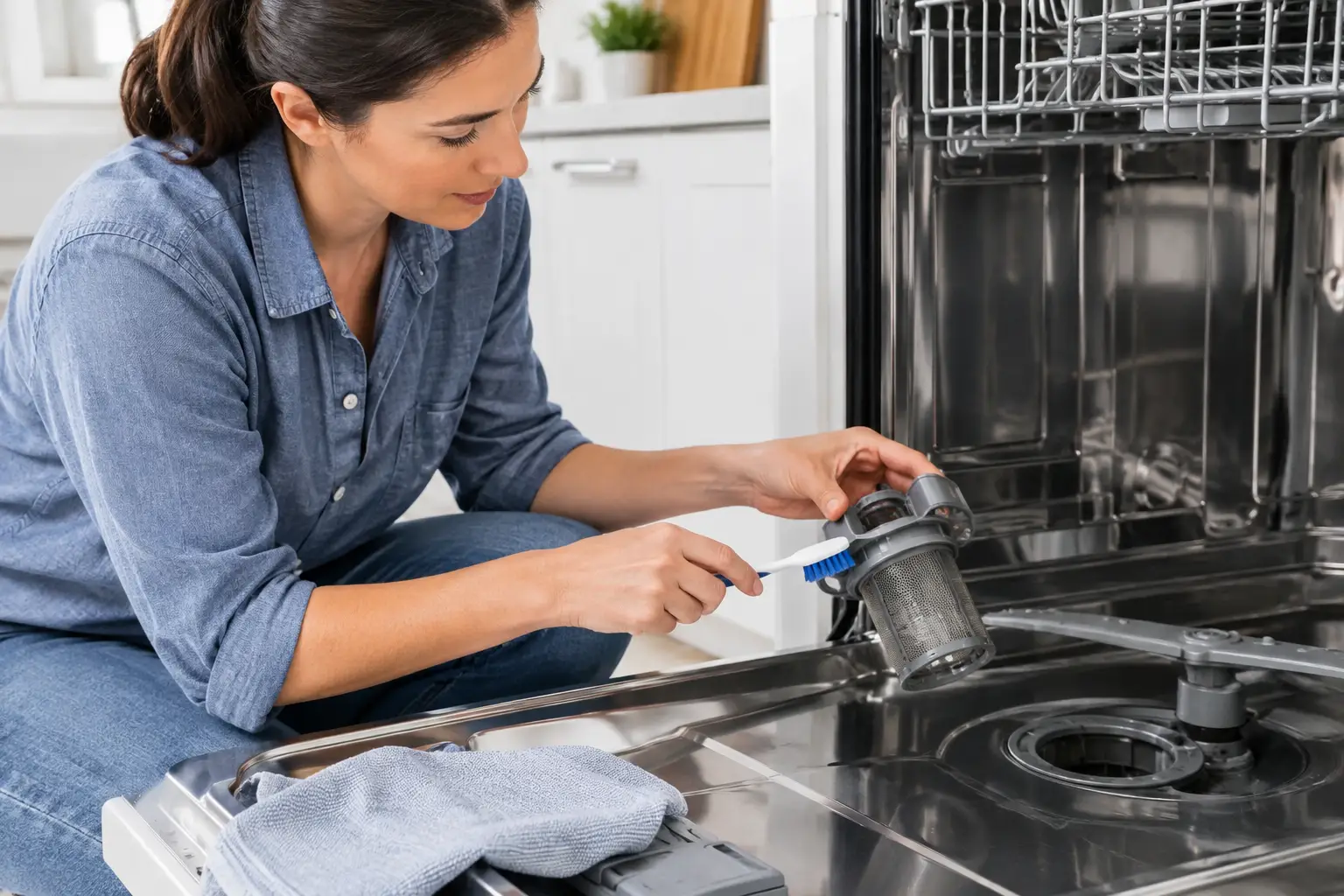
Take out the lower rack and remove as much standing water as possible with a cup, sponge, or wet-dry vacuum. Check the owner’s manual for your model’s filter instructions. On many dishwashers, the cylindrical filter twists out by hand, while a flat screen or cover may lift out beneath it.
Rinse the filter under warm running water and use a soft brush to remove grease and trapped debris. Do not force or bend the mesh. Inspect the sump area below the filter with a flashlight and remove visible items carefully. Small pieces of glass, bones, twist ties, or produce stickers can block the pump inlet. Wear gloves if you cannot clearly see what is inside.
Replace the filter securely when finished. A filter that is not seated properly can allow debris to pass through and create another blockage.
Check the drain pump area without forcing it
Depending on the dishwasher model, a small cover near the filter may provide access to the drain pump. Remove it only if the manual identifies it as a user-serviceable part. Look for debris around the impeller, the small fan-like piece that moves water out of the machine.
The impeller should move with slight resistance, not feel jammed or spin freely with no resistance at all. Never use a screwdriver or other hard tool to pry it loose. If glass, a label, or a foreign object is caught in the pump and cannot be safely removed, stop there. Forcing the component can damage the pump housing or seals.
Inspect the garbage disposal connection
If your dishwasher drains through a garbage disposal, run the disposal with cold water for 20 to 30 seconds. Food buildup inside the disposal can restrict the dishwasher drain path.
This check is especially useful after a new disposal installation. A dishwasher will not drain if the installer did not remove the knockout plug inside the disposal’s dishwasher inlet. The plug is a small plastic disk that blocks the connection until it is intentionally removed. This is not a clog, but it creates the same standing-water symptom from the first cycle onward.
Look at the air gap or high loop
Some kitchen sinks have an air gap, a small metal or plastic fixture near the faucet. If water spills from it while the dishwasher drains, remove its cap and clean out visible debris. A clogged air gap can prevent normal drainage.
Homes without an air gap commonly use a high loop: the dishwasher drain hose rises high under the sink cabinet before connecting to the disposal or drain line. That rise helps keep sink water from flowing back into the dishwasher. If the hose has slipped down, kinked, or become crushed by stored items, correct its position gently. Do not sharply bend the hose, since a kink can restrict flow or eventually split the line.
Flush the dishwasher after cleaning
Once the filter, sump area, and accessible drain path are clear, restore power and run a short rinse cycle. Stay nearby for the drain portion. Listen for water moving through the hose and check under the sink for drips.
A hot cleaning cycle with dishwasher cleaner can help remove light grease buildup after the machine is draining correctly. It will not remove a solid obstruction, repair a failed pump, or fix a blocked household drain. Skip vinegar, baking soda combinations, and chemical drain openers as a primary fix. They are often ineffective against the actual blockage and can harm rubber seals, metal components, or plumbing connections.
When the Clog Is Beyond a Simple Cleanup
If water remains after cleaning the filter and checking the disposal connection, the obstruction may be deeper in the drain hose or plumbing. A drain hose can collect grease and fine food particles over time, particularly when dishes go into the machine with heavy residue. The hose may need to be removed and cleaned, but that work can involve pulling the dishwasher from the cabinet and disconnecting water and electrical connections.
Other symptoms point to a mechanical issue rather than a clog. A drain pump that only hums, makes a grinding sound, runs intermittently, or stays silent during the drain cycle may be worn out or electrically faulty. A control issue, damaged wiring, faulty door switch, or blocked plumbing branch can also keep a dishwasher from draining.
Call for service sooner if you notice repeated leaks, a burning smell, tripped breakers, water backing up into the sink, or broken glass in an area you cannot reach safely. These are not good situations for trial-and-error repair. An experienced technician can determine whether the problem is the filter, pump, hose, disposal connection, or home plumbing before replacing parts that may not be needed.
For homeowners in Frisco, Plano, McKinney, Denton, and surrounding North Texas communities, IAS Appliance Solutions can provide an honest assessment and clear upfront pricing when a dishwasher drain problem will not resolve with basic cleaning. A properly diagnosed repair helps avoid repeat clogs and minimizes disruption to your kitchen routine.
Keep the Dishwasher Draining Properly
You do not need to pre-rinse every dish until it is spotless, but scrape plates, pans, and containers well before loading. Remove produce stickers, toothpicks, bones, and other items that can come loose during a wash cycle. Clean the filter regularly, with the frequency based on how often your household runs the dishwasher and how much food residue goes in.
If your dishwasher begins draining slowly again soon after a thorough filter cleaning, treat that as useful information rather than a reason to keep adding cleaners. A recurring problem usually means there is a restriction farther along the drain path or a component beginning to fail. Addressing it early is the practical way to protect your dishwasher, your cabinets, and the time you depend on in a busy kitchen.






No comment