A new gas range, cooktop, oven, or dryer can make daily life easier, but the installation is not a place to take chances. This gas appliance installation safety guide explains what homeowners should expect, what to check before an appointment, and which warning signs require immediate action. The goal is simple: a properly connected appliance that works reliably without putting your household at risk.
Gas appliances combine fuel, ignition components, ventilation requirements, and manufacturer-specific installation rules. A connection that looks fine from the outside can still have a leak, improper pressure, poor clearance, or an issue with the gas shutoff valve. Professional installation helps prevent problems that could disrupt your home or create a serious safety concern later.
Why Gas Appliance Installation Requires Care
Natural gas and propane are dependable household fuel sources when they are handled correctly. The risk comes from incorrect connections, damaged flexible connectors, inadequate ventilation, or attempting to modify a gas line without the right training and equipment.
Installation also affects appliance performance. A range may ignite unevenly, a gas dryer may not heat properly, or an oven may display ignition problems when the issue is not the appliance itself, but the gas supply, regulator, or connection. Getting the installation right from the start protects the appliance, helps preserve manufacturer requirements, and reduces the likelihood of a service call caused by preventable setup errors.
For homeowners, the practical takeaway is straightforward: prepare the space, know the safety basics, and have a qualified technician complete the gas connection and testing.
Gas Appliance Installation Safety Guide: Before Service Begins
A smooth installation starts before the technician arrives. Clear the path to the appliance location and remove cookware, cleaning products, boxes, and other items from the work area. If you are replacing an existing unit, confirm whether the old appliance will be moved or disconnected as part of the service agreement.
Make sure the area around the appliance is accessible. The technician may need to reach the gas shutoff valve, electrical outlet, vent connection, cabinetry, and the rear of the appliance. Crowded spaces slow down the work and can make it harder to inspect important components safely.
It also helps to have the appliance model information available. Different brands and models can have specific clearance, electrical, conversion, and ventilation requirements. For example, a gas cooktop installation may require a proper cutout size and adequate clearance from cabinets, while a gas dryer needs a correctly routed exhaust vent in addition to a safe gas connection.
If your home has been remodeled, recently purchased, or has an older gas line, mention that before the appointment. Older valves, connectors, or supply configurations may need closer inspection. An honest assessment upfront is better than discovering an avoidable issue after an appliance has already been placed in position.
The Safety Checks a Proper Installation Should Include
A professional installation is more than attaching a connector and turning the gas back on. The appliance, gas supply, and surrounding space all need to work together correctly.
Confirming the Gas Supply and Shutoff Valve
The gas supply must be compatible with the appliance. Natural gas and propane appliances are not automatically interchangeable, and a conversion should only be completed according to the manufacturer’s instructions by a qualified professional. Using the wrong fuel type or an incorrect conversion can affect combustion, burner performance, and safety.
The shutoff valve should be accessible and functional. Homeowners should know where it is located, but should not force a valve that is stuck, corroded, or difficult to turn. A damaged valve is a service issue, not something to work around.
Using the Right Connector and Fittings
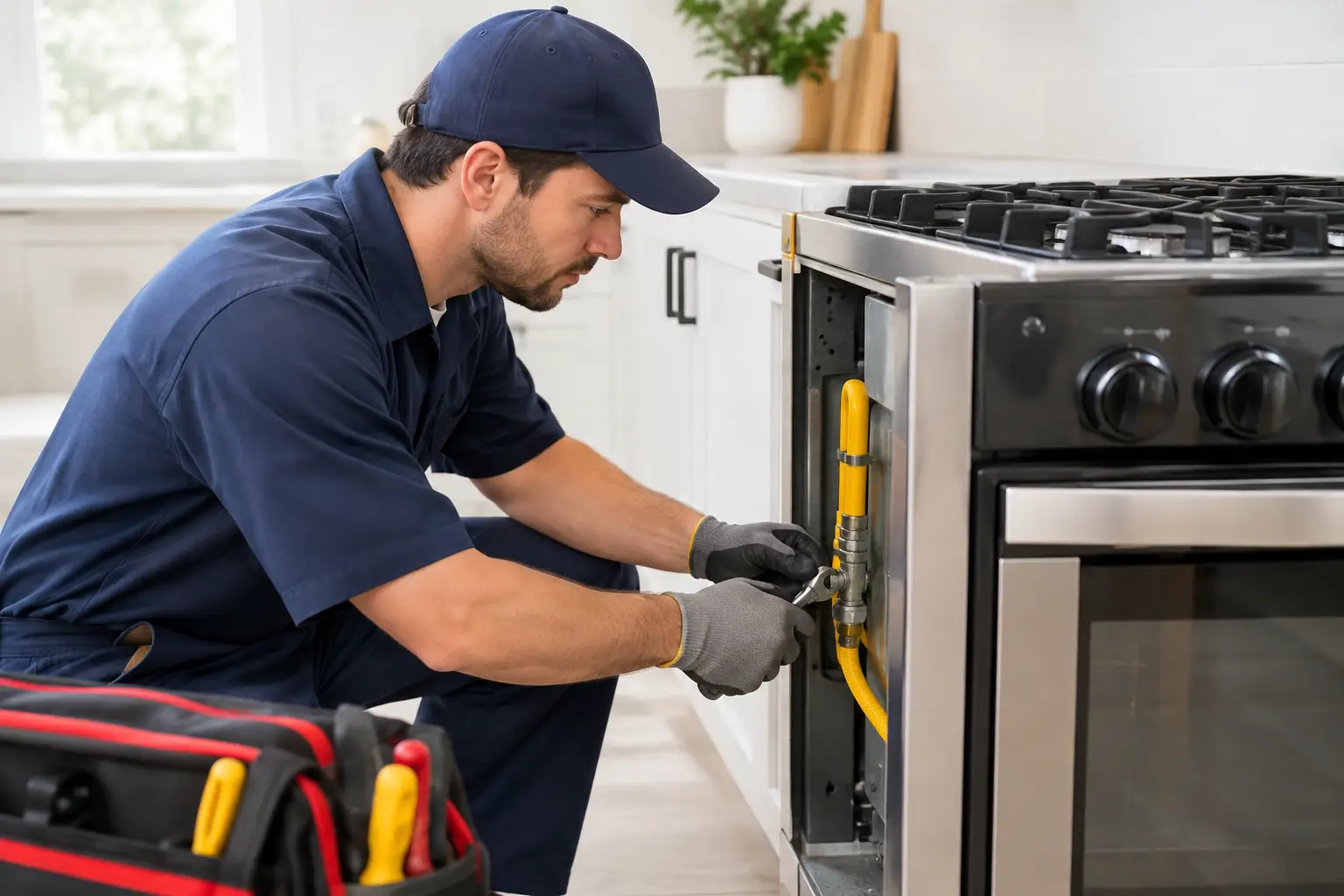
Flexible gas connectors are not one-size-fits-all parts to reuse indefinitely. Connectors can become damaged, kinked, corroded, or incompatible with a new appliance. A technician should use approved materials appropriate for the installation and avoid placing the connector where it can be crushed, stretched, or exposed to excessive heat.
This is especially relevant when replacing a slide-in range or moving an appliance into a tight cabinet opening. Once the unit is pushed back, the connector must remain protected and free from strain. A connection that is pinched behind a range may not be visible during normal use, which is exactly why careful positioning matters.
Testing for Leaks and Proper Operation
After the connection is completed, the system should be checked for leaks before the appliance is put into regular use. The technician should also verify that burners ignite correctly, flames are stable, and the oven or dryer operates as expected.
For gas ranges and cooktops, a normal flame is generally steady and mostly blue. A weak, uneven, lifting, or persistently yellow flame can point to an adjustment, burner, fuel, or combustion issue. Flame appearance can vary slightly by model and operating conditions, so it should be evaluated by a trained technician rather than treated as a DIY adjustment.
Ventilation Is Part of the Installation
Gas appliances produce combustion byproducts. That makes proper ventilation a central part of safe operation, not an optional extra.
A gas dryer requires a correctly installed exhaust vent that directs moisture and lint outdoors. A crushed, disconnected, overly long, or lint-filled vent can reduce drying performance and create a separate fire concern. The gas connection may be sound while the dryer still needs vent correction before it can operate safely and efficiently.
For gas ranges and cooktops, use a range hood or other appropriate kitchen ventilation whenever possible, especially during longer cooking sessions. Ventilation helps move heat, moisture, odors, and combustion byproducts away from the cooking area. If you are installing a new range hood along with a gas cooktop or range, confirm that the hood configuration and ducting are appropriate for the space.
Carbon monoxide alarms also belong in a home with fuel-burning appliances. They are not a substitute for proper installation or maintenance, but they provide an added layer of warning when placed and maintained according to their instructions.
Warning Signs You Should Never Ignore
Most gas appliance concerns do not start with a dramatic event. They often begin with a smell, a change in ignition, or an appliance that suddenly performs differently. Pay attention if you notice a sulfur or rotten-egg odor, hissing near a gas line, repeated clicking without ignition, burner flames that look unusual, soot, headaches or dizziness near an operating appliance, or a carbon monoxide alarm sounding.
If you smell gas, do not light a match, smoke, use a phone inside the home, operate switches, or start appliances. Leave the building, move to a safe distance, and contact emergency services or your gas utility from outside. Do not return until you have been told it is safe to do so.
A gas odor that seems faint or intermittent still deserves attention. Do not assume it will resolve on its own, and do not try to locate a suspected leak with an open flame. A qualified professional can assess the appliance connection and identify whether the issue is within the appliance, the connector, the valve, or the home’s gas supply.
Common Shortcuts That Create Bigger Problems
Homeowners are often tempted to reuse an old connector, push an appliance tight against the wall, or delay a ventilation repair because the appliance appears to work. Those shortcuts can create problems that are more expensive and disruptive later.
Another common issue is installing a new appliance without confirming the space meets the manufacturer’s requirements. Cabinet clearances, flooring height, anti-tip brackets for ranges, electrical access, and vent paths all matter. A beautiful new appliance can still be unsafe or difficult to service if it is installed in a space that does not support it properly.
It also depends on the appliance and your existing setup. Replacing a similar gas range in a newer home may be relatively straightforward. Installing a gas dryer where no approved gas line or exterior vent exists is a more involved project that may require additional work before installation can be completed.
When to Schedule Professional Help
Professional service is the right choice whenever a gas line must be connected, modified, inspected, or repaired. It is also wise to schedule an inspection if you are replacing an older gas appliance, moving a range or dryer, converting fuel types, noticing ignition issues, or questioning the condition of the shutoff valve or connector.
For homeowners in Frisco, Plano, McKinney, Denton, and surrounding North Texas communities, IAS Appliance Solutions provides experienced gas appliance installation support with clear communication and upfront service expectations. The focus is on completing the work carefully, testing operation, and helping you get back to a functional kitchen or laundry room with minimal disruption.
A gas appliance should make your home more comfortable and convenient, not leave you wondering whether a connection was done correctly. Give the installation the same care you would expect from the appliance itself, and address any unusual smell, flame, sound, or performance change before it becomes a larger concern.

No comment