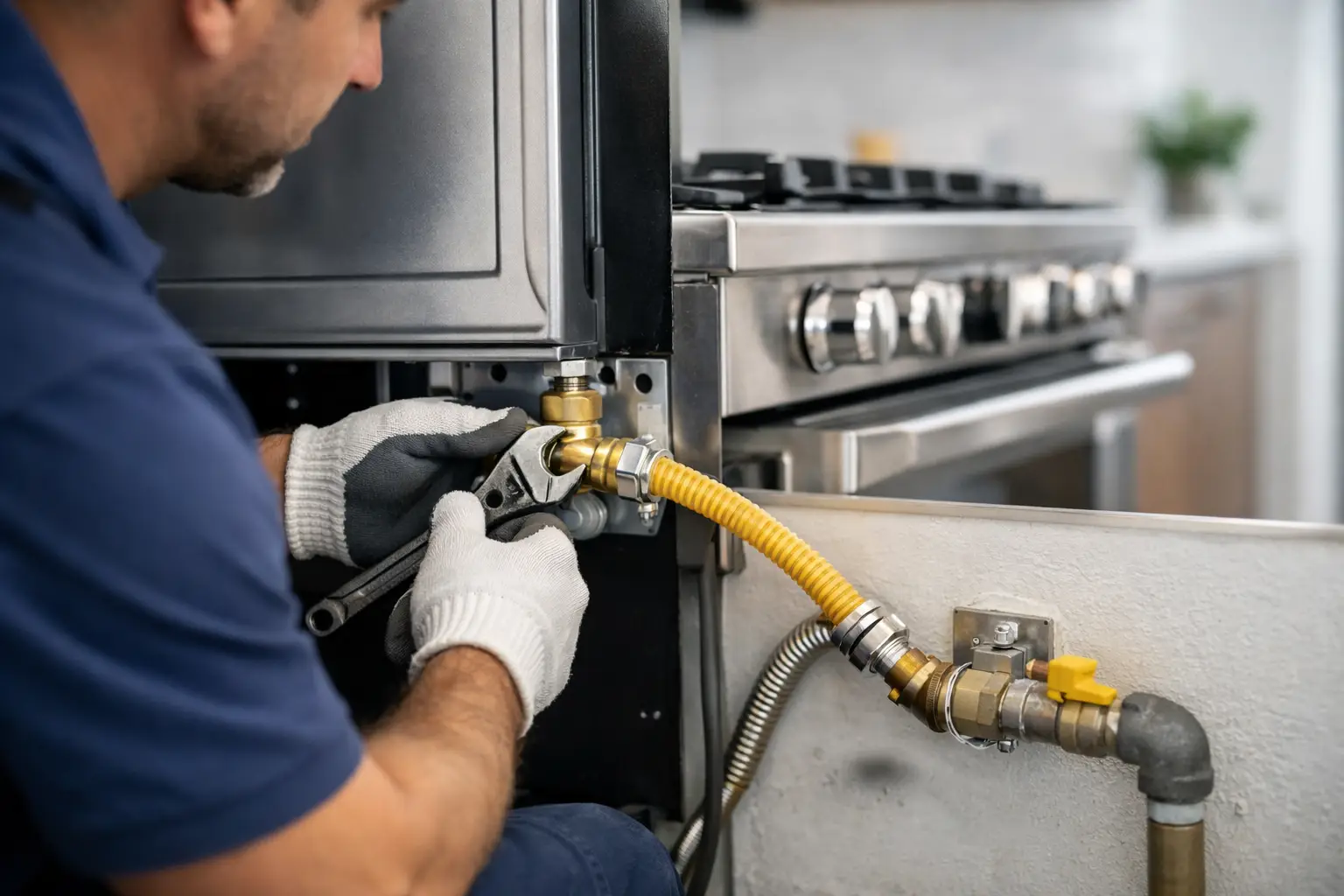
A new gas range, cooktop, or dryer can make a kitchen or laundry room feel complete – until the installation reaches the gas connection. Frisco gas appliance hookups require more than sliding an appliance into place and turning it on. The connection must match the appliance, the existing gas supply, and applicable local requirements so your household can use the appliance with confidence.
For homeowners, the goal is simple: get the new appliance installed correctly without creating a safety concern, damaging a new unit, or losing another day to an unusable kitchen or laundry room. A qualified appliance installation professional can assess the setup, explain what the job requires, and complete the work with minimal disruption.
What a Gas Appliance Hookup Usually Includes
A gas appliance hookup connects a compatible appliance to a properly sized gas supply and verifies that the appliance operates as intended. The work commonly applies to gas ranges, cooktops, ovens, and gas dryers. While the basic purpose is similar, the details can vary significantly by appliance and home.
A professional installation typically begins by confirming the appliance model, fuel type, and placement. Natural gas appliances and propane appliances are not automatically interchangeable. Some models can be converted with approved manufacturer components, while others cannot. Connecting an appliance set up for the wrong fuel type can lead to poor performance and a serious safety risk.
The technician also reviews the shutoff valve, gas connector, supply location, clearances, and appliance condition. After the connection is made, the system should be checked for leaks and the appliance should be tested. On a range or cooktop, that may include confirming proper ignition and burner operation. For a gas dryer, the technician will also consider the exhaust vent connection and airflow, because a gas connection alone does not make the installation complete.
Why Professional Frisco Gas Appliance Hookups Matter
Gas appliances are dependable and efficient when installed correctly, but the connection is not a casual do-it-yourself project. A loose fitting, damaged connector, incorrect conversion, or hidden supply issue can create hazards that are not always obvious at first glance.
Professional service is also valuable because many installation problems begin before the new appliance arrives. The existing line may be in the wrong location for the appliance’s required clearance. A shutoff valve may be difficult to access, outdated, or not functioning properly. A new slide-in range may sit differently than the older freestanding unit it replaces, affecting the space behind it and the connection point.
A trained technician can identify these conditions before forcing an appliance into place. That protects the flooring, cabinetry, appliance finish, and connection itself. It also gives you a clear answer about whether the current setup is ready for installation or whether additional gas-line work is needed from the appropriate trade.
When an Existing Gas Line Is Ready – and When It Is Not
An existing gas connection can make an installation more straightforward, but it does not guarantee that every new appliance can be connected immediately. The right answer depends on the appliance, the fuel type, the condition of the existing setup, and the home’s layout.
If you are replacing a similar appliance in the same location, the existing supply may be usable after inspection. For example, replacing one gas range with another gas range is often simpler than changing from an electric range to gas. Even then, the new appliance may have different clearance needs or a different connector position.
More extensive work may be needed when you are moving an appliance, converting from electric to gas, remodeling the kitchen, or installing a higher-capacity appliance. These situations can involve extending or modifying a gas line, addressing ventilation, adding the correct electrical connection for ignition or controls, or coordinating permits and inspections where required.
A reliable service provider should be direct about the scope. If the job falls outside a standard appliance hookup, homeowners deserve an honest assessment rather than a rushed workaround or surprise charge.
Gas Ranges, Cooktops, and Dryers Have Different Needs
The word “hookup” can make these installations sound identical. They are not. Each appliance has its own installation requirements, and a careful technician accounts for them.
Gas ranges and ovens
A range needs a secure gas connection, appropriate clearance from surrounding surfaces, and a working electrical supply for electronic ignition, clocks, lights, and control boards. The anti-tip bracket is another critical detail. It helps prevent the range from tipping forward if weight is placed on an open oven door.
If burners do not ignite properly after installation, the cause may be as simple as a misplaced burner cap or as involved as a fuel-conversion issue. Testing the appliance before the appointment ends can catch those problems early.
Gas cooktops
Cooktops require careful fitment in the countertop opening as well as a safe connection below the counter. Cabinet space, drawer clearance, and access to the shutoff valve all matter. A cooktop may also need a dedicated electrical connection for igniters and controls.
Because the appliance sits within the counter rather than against a wall like a range, it is especially important not to assume the old cutout, gas line location, or cabinet layout will work with a new model.
Gas dryers
A gas dryer needs both gas and electricity, but safe venting is equally essential. A crushed, excessively long, disconnected, or lint-filled vent can reduce drying performance and create a fire risk. During installation, the dryer should be positioned to avoid pinching the gas connector or vent behind the unit.
If a dryer takes too long to dry clothes after installation, do not assume the appliance is defective. Restricted airflow is a common issue and should be addressed promptly.
What to Do Before Your Installation Appointment
A little preparation can help the appointment go smoothly. Make sure the appliance has been delivered, the path to the installation area is clear, and the old appliance is disconnected or scheduled for removal if that service is needed. Keep model information available, especially if the appliance is being converted between natural gas and propane.
It is also helpful to check the manufacturer’s installation instructions before buying accessories or connectors. The correct parts are not always universal, and using an unapproved component can affect performance, warranty coverage, or safety. If you are uncertain about what your appliance needs, ask before the appointment instead of purchasing parts based on appearance alone.
Let the technician know about any recent remodeling, previous gas concerns, unusual odors, ignition issues, or changes to the home’s fuel system. Those details can save time and help identify whether the installation is routine or needs additional evaluation.
A Clear Installation Process Reduces Surprises
Homeowners should not have to guess what will happen when scheduling gas appliance installation. At IAS Appliance Solutions, the process is built around a consultation, a scheduled appointment, and a service agreement before work begins. That creates an opportunity to discuss the appliance, the current connection, and any concerns that could affect the job.
At the home, the technician evaluates the installation area and explains the recommended work. If the existing conditions support a standard hookup, the installation can move forward efficiently. If a code, supply-line, ventilation, or placement concern changes the scope, you should receive a clear explanation before approving additional work.
This approach is particularly helpful for busy Frisco homeowners replacing an appliance after a sudden failure. A new range or dryer is supposed to restore routine, not create another project to manage.
Signs You Should Stop and Call for Help
If you smell gas, hear a hissing sound near a connection, or suspect a gas leak, do not try to troubleshoot the appliance yourself. Avoid flames, sparks, and operating electrical switches in the area. Leave the area if necessary and contact your gas utility or emergency services according to the situation.
For non-emergency concerns, schedule professional service if the appliance will not ignite, flames appear unusually large or irregular, the dryer is not venting properly, or a new appliance does not fit the existing connection. Small installation issues are easier to correct before the appliance becomes part of your daily routine.
A properly installed gas appliance should feel uneventful: it fits where it belongs, operates the way it should, and lets your household get back to cooking, laundry, and normal life without second-guessing the connection.

No comment