
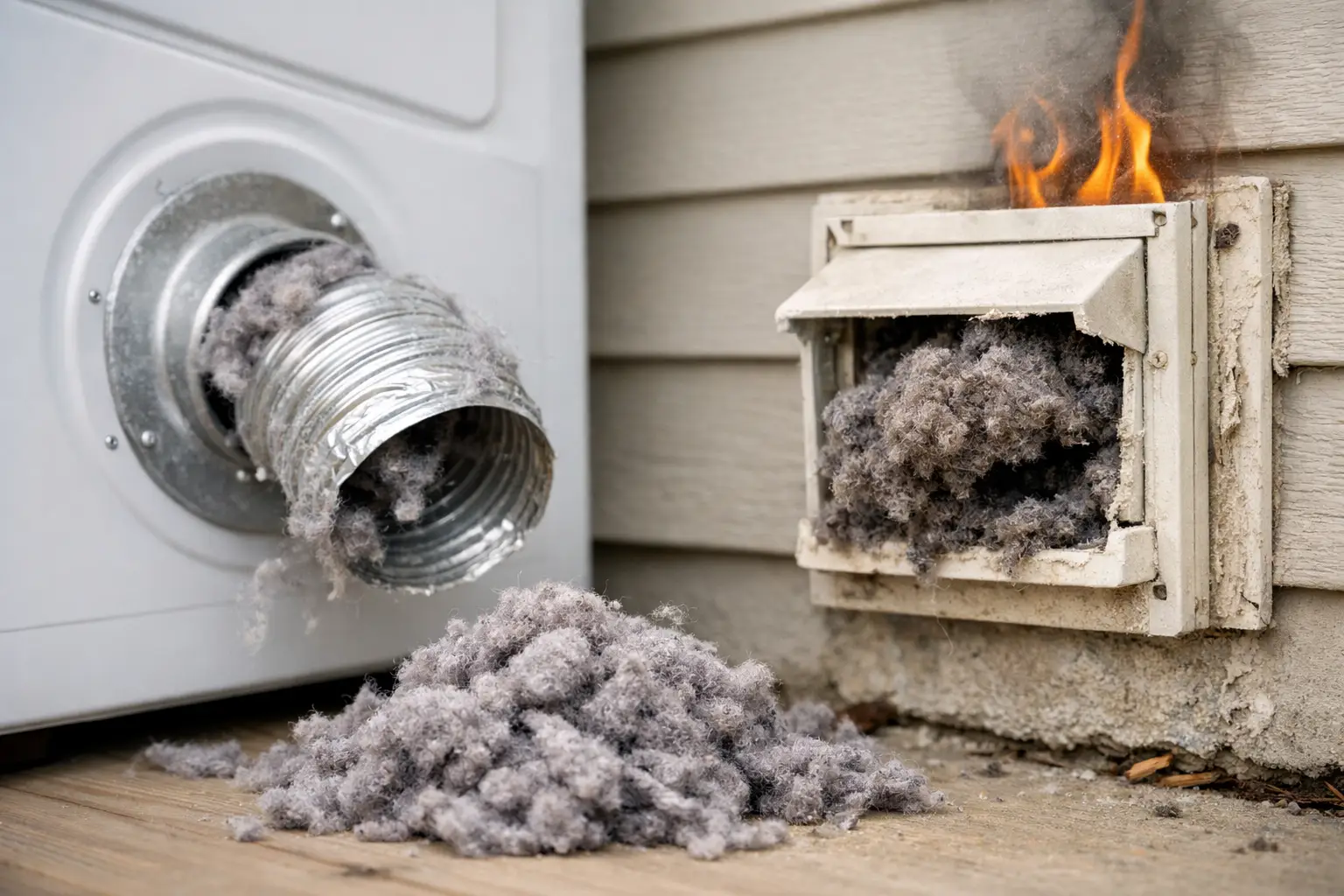
A load that once dried in 45 minutes now needs two cycles. The laundry room feels unusually hot, and there may be a warm, musty smell near the dryer. These are dryer vent warnings many homeowners first dismiss as a minor appliance issue. In reality, restricted airflow can strain the dryer, raise energy use, damage clothing, and create a serious fire concern.
A dryer needs a clear path to move hot, moist air from the drum to the outside of the home. Lint can build up inside the vent line, at the exterior hood, or around the dryer connection. In North Texas, exterior vents can also collect windblown debris, nesting material, or dust. Recognizing a problem early gives you time to address it before a routine laundry day becomes a larger repair or safety issue.
Dryer Vent Warnings to Take Seriously
The clearest sign is longer drying time. If normal loads are still damp after a full cycle, do not assume the dryer is simply getting old. A blocked vent is often the reason. The dryer keeps producing heat, but moisture and hot air cannot leave efficiently.
A dryer that feels excessively hot on the outside also deserves attention. Some warmth is normal during operation. Heat that makes the laundry room uncomfortable, overheats clothes, or seems much stronger than usual is not. Restricted airflow causes heat to remain around the dryer instead of exhausting outdoors.
Pay attention to odors as well. A musty smell may come from moisture trapped in the vent system. A burning smell can mean lint is overheating or an electrical component is failing. If you smell something burning, see smoke, or notice scorching near the appliance, stop the dryer immediately. Do not run another cycle to see whether the issue goes away.
Other warning signs include unusually humid laundry-room air, little or no airflow from the outdoor vent hood while the dryer runs, and a dryer that repeatedly shuts off before clothes are dry. A modern dryer may trip a thermal safety device when it overheats. That feature can prevent worse damage, but it does not fix the airflow problem that caused the overheating.
Why a Slow Dryer Is Not Always a Dryer Failure
A dryer has several parts that can cause poor drying: a heating element, thermostat, moisture sensor, blower wheel, control board, or drive motor may be involved. But before replacing parts, a technician should consider airflow.
When the vent is restricted, the appliance can appear to have a heating or sensor problem because cycles run long, clothing stays damp, and high-limit safety components react to excess heat. Replacing a part without resolving the vent condition can leave the same symptoms in place.
This is why a proper assessment matters. A qualified technician can check the appliance itself, verify whether it is heating and tumbling correctly, and identify when venting is contributing to the problem. The right solution depends on the source of the restriction, the length and routing of the vent, and the condition of the dryer.
There is also a practical cost issue. Repeatedly running two or three cycles for every load uses more electricity or gas and adds wear to belts, rollers, heating components, and sensors. Addressing airflow early is usually easier on both the appliance and the household budget.
What You Can Safely Check First
Start with the lint screen. Remove lint after every load, not only when it looks full. Fabric softener sheets and laundry-product residue can leave a nearly invisible film on the screen that reduces airflow. If water pools on the screen instead of passing through it, wash it gently with warm water and mild dish soap, then allow it to dry completely before reinstalling it.
Next, while the dryer is running, look at the exterior vent hood. The flap should open when air is moving through the system. If it does not open, airflow may be restricted, or the hood may be stuck. Keep plants, stored items, and outdoor debris away from that outlet.
You can also inspect the area behind the dryer without pulling, crushing, or disconnecting the vent line. Look for a visibly kinked flexible connection, lint accumulating around the appliance, or a dryer pushed tightly against the wall. If access is limited or the venting runs through a wall, attic, crawlspace, or roof, avoid trying to force a cleaning tool through it. Improper work can disconnect a duct, puncture it, or push debris farther into the line.
Do not use the dryer if you find a damaged vent connection, heavy lint buildup, or signs of overheating. Cleaning the lint screen is routine homeowner maintenance. Diagnosing an internal dryer problem or a concealed vent restriction calls for the right equipment and experience.
When to Stop Using the Dryer Right Away
Some situations should not wait for the next available laundry day. Stop using the appliance and arrange professional help if you notice any of the following:
- A burning odor, smoke, sparks, or visible scorching
- A dryer that becomes extremely hot, trips a breaker, or shuts down repeatedly
- No outside airflow during operation, especially with damp clothes after a normal cycle
- A loose, crushed, torn, or disconnected vent behind the dryer
- A gas odor near a gas dryer
For a suspected gas leak, leave the area, avoid switches, flames, and electrical devices, and contact your gas utility or emergency services from a safe location. Do not attempt to diagnose a gas connection yourself.
A dryer can also have electrical symptoms that resemble a vent issue. For example, a weak or partially failed electric supply may allow the drum to turn without producing normal heat. That is another reason a diagnosis should go beyond the obvious. The goal is not simply to get one load dry. It is to restore safe, reliable operation without guessing at the cause.
Vent Material and Routing Matter
Not every dryer vent installation performs the same way. Long vent runs, multiple bends, crushed flexible ducting, and poorly placed exterior terminations all reduce airflow. The more turns air has to make, the harder the dryer works to exhaust moisture.
Rigid or semi-rigid metal venting is generally more durable and less likely to trap lint than flimsy plastic or foil-style material. However, the correct setup for a home depends on the dryer location, building layout, manufacturer requirements, and local code considerations. A vent route that is acceptable in one laundry room may not be appropriate in another.
This is especially relevant after a move, renovation, or washer-and-dryer installation. A dryer may operate normally at first, then develop poor airflow because the vent connector was compressed as the appliance was pushed back into place. Leave enough room behind the dryer to prevent crushing the connection, and make sure it remains accessible for appropriate inspection and maintenance.
A Simple Maintenance Habit That Protects Your Dryer
The best routine is uncomplicated: clean the lint screen after each load, keep the outdoor vent opening clear, and pay attention when drying performance changes. Do not normalize a dryer that takes multiple cycles, overheats the room, or leaves the laundry area humid.
How often the full vent system needs service varies. A household doing daily laundry, drying pet bedding, or using the dryer for heavy towels may need attention more often than a one- or two-person household. Vent length and the number of bends matter just as much as how often you run the machine.
If your dryer is running hot, taking too long, or shutting off mid-cycle, IAS Appliance Solutions can help homeowners across North Texas determine whether the issue is inside the appliance, related to airflow, or both. You receive a clear assessment before repair work begins, so you can make a practical decision without surprise charges.
A dryer should make laundry easier, not turn a normal chore into a safety concern. When its performance changes, treating that change as an early warning can protect your appliance, your time, and your home.







[…] problem whenever possible. For example, replacing a failed heating component without identifying restricted airflow can leave the dryer vulnerable to another […]