A sulfur-like or “rotten egg” smell near a range, cooktop, oven, or gas dryer can turn a normal weekday into a serious household concern. Gas appliance leak repairs should always begin with safety, not a quick attempt to get dinner started or finish a load of laundry. Knowing what to do in the first few minutes protects your home, your family, and the technician who will diagnose the problem.
If You Smell Gas, Act Before You Investigate
Natural gas is odorized so homeowners can recognize a potential leak. If you notice that distinct odor, hear a hissing sound near a gas connection, or suspect gas is present, do not try to locate the source yourself.
Leave the home with everyone inside, including pets, and avoid creating a spark. Do not turn lights, appliances, exhaust fans, or switches on or off. Do not use a phone inside the house, light a match, smoke, or start a vehicle in an attached garage. Once you are a safe distance away, call 911 or your gas utility provider from outside.
A strong or persistent gas odor requires immediate emergency guidance from the utility or fire department. If they determine the home is safe and the issue is isolated to an appliance or its connection, a qualified appliance technician can then inspect the equipment and recommend the proper repair. The appliance should remain off until it has been professionally evaluated.
Physical symptoms also matter. Headaches, dizziness, nausea, or unusual fatigue can have many causes, but they should never be ignored when there is also a possible gas odor or appliance combustion concern. Get to fresh air and seek emergency help as needed.
Not Every Appliance Odor Is a Leak, but None Should Be Dismissed
Some kitchen and laundry odors come from food residue, spilled grease, an overheated component, or lint buildup. A gas appliance may also produce a brief smell when the burner first lights. Still, an odor that lingers, returns repeatedly, appears when the appliance is off, or becomes stronger near the shutoff valve or supply line needs professional attention.
Gas burners that click continuously, ignite unevenly, produce unusually yellow or orange flames, or fail to light can point to a burner, igniter, control, or gas-flow issue. An oven that takes too long to ignite, makes a delayed “whoosh” when it starts, or releases an unusual odor during operation should also be inspected.
These symptoms do not automatically mean there is a gas leak. That distinction is exactly why diagnosis matters. Replacing a visible part without confirming the cause can waste money and leave the original safety issue unresolved.
What Gas Appliance Leak Repairs Involve
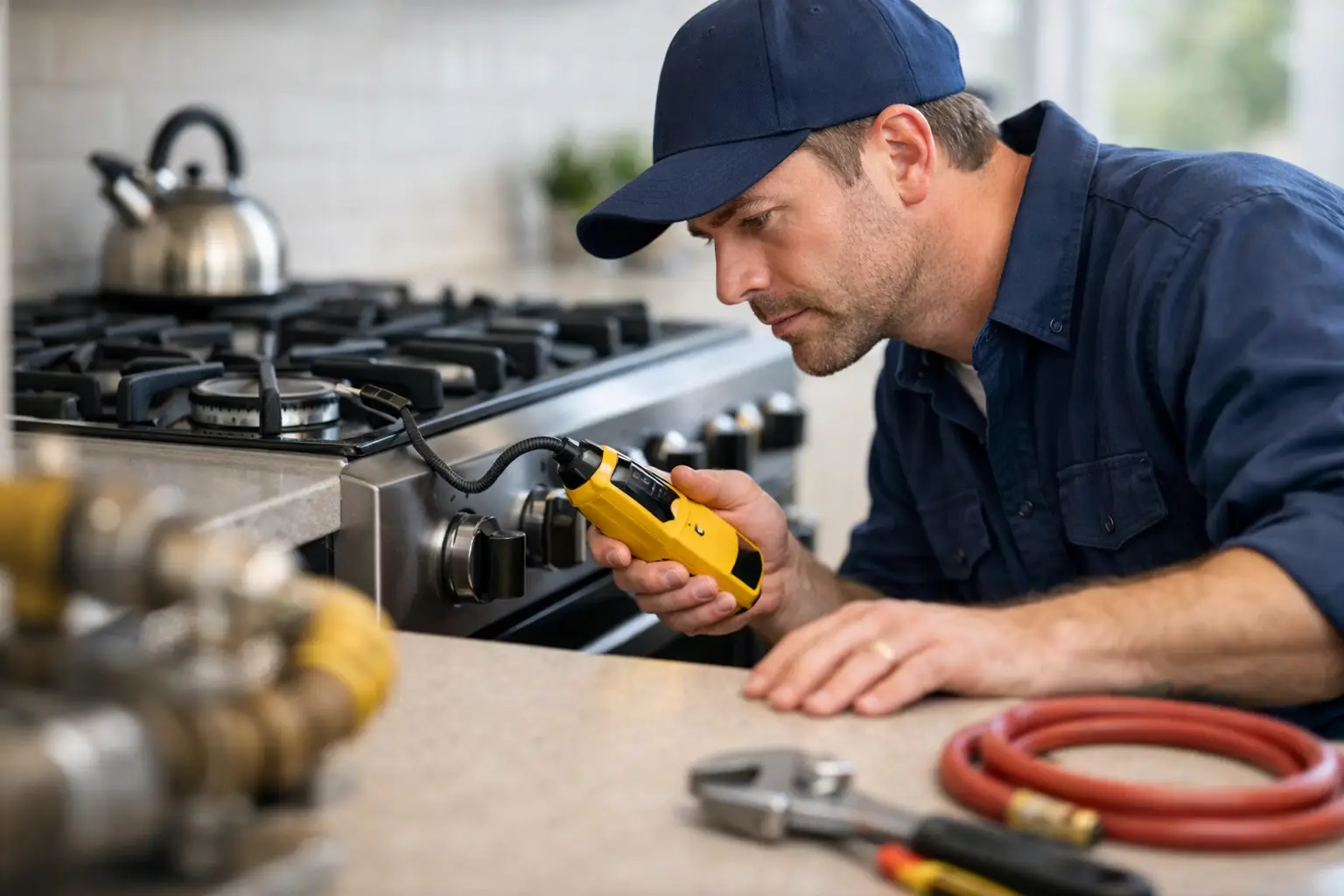
Professional gas appliance leak repairs are more than tightening a connection or replacing a burner. A qualified technician evaluates the appliance as a system, including its visible connections, ignition components, burners, valves, regulators where applicable, and operating behavior.
Finding the Actual Source
The source may be at the appliance connection, a flexible connector, a valve, a burner assembly, or an internal component. In other situations, the appliance itself is operating improperly because of an ignition or control failure rather than a leak. A trained technician uses appropriate testing methods to identify what is happening before recommending work.
This careful approach helps avoid two common problems: repairing the wrong component and overlooking an issue that requires the gas utility or another licensed trade. Honest assessments matter because the safest repair is not always the fastest-looking fix.
Repairing for Safe Operation
Once the issue is identified, the repair may involve replacing a failed igniter, burner component, valve, damaged connector, or control-related part. The exact repair depends on the appliance model, the condition of the part, and whether replacement components are available.
After a repair, the appliance should be tested for proper ignition and operation. A technician should also explain what was found, what was repaired, and whether there are any practical next steps for the homeowner. Clear answers are especially valuable when the problem disrupted cooking, laundry, or daily routines without warning.
Appliances That May Need Gas Service
Gas ranges, cooktops, wall ovens, and dryers all have different operating systems and failure points. A cooktop with one burner that will not light is not necessarily the same problem as an oven that smells of gas during preheat. Likewise, a gas dryer that will not heat may have an ignition, airflow, power, or gas-supply concern.
The appliance’s age and brand also affect the repair path. Many problems can be resolved with a targeted replacement part. But if a major gas valve or control component has failed on an older appliance, homeowners may need to compare the cost of repair with the value and expected remaining life of the unit.
That decision should not be based on age alone. A well-maintained appliance with a readily available part may be worth repairing, while a newer unit with repeated failures may require a closer look at the full repair history. The goal is a lasting solution, not a temporary fix that leads to another service call soon after.
Repair or Replacement: How to Make a Clear Decision
When a gas appliance problem is confirmed, a technician should provide straightforward information about the recommended repair, expected parts, and pricing before work begins. Upfront pricing gives homeowners room to make a decision without surprise charges after the job is complete.
Repair often makes sense when the appliance is otherwise reliable, the issue is isolated, and the replacement part is available. It may make less sense when critical parts are discontinued, repair costs approach the price of a comparable replacement, or the appliance has developed multiple unrelated problems.
Replacement can also involve installation considerations. A new gas range, cooktop, wall oven, or dryer must be compatible with the home’s existing setup, electrical requirements, ventilation needs, and fuel connection. Professional installation helps ensure the appliance is properly connected and operating as intended from the start.
What to Expect From a Professional Service Visit
A good repair experience should reduce uncertainty, not add to it. The process begins with a consultation or service request where you can describe the odor, appliance behavior, model information, and any steps already taken. Mention whether the gas utility has visited or shut off service, since that information can help guide the appointment.
At the scheduled visit, the technician inspects and diagnoses the appliance, explains the findings, and presents a service agreement before repairs move forward. If a common replacement part is available in the service vehicle, completing the repair on the first visit may be possible. When a special-order part is needed, you should know why and what the next step will be.
For homeowners across Frisco, Plano, McKinney, Denton, Little Elm, Prosper, Celina, Allen, Dallas, Fort Worth, and nearby North Texas communities, IAS Appliance Solutions provides appliance repair and installation with a focus on prompt scheduling, transparent recommendations, and minimal disruption. Parts-and-labor warranty coverage can also provide added confidence after a completed repair.
Simple Habits That Help Prevent Disruptions
You cannot prevent every appliance failure, but a few habits can make warning signs easier to catch. Keep the area around gas appliances clear of stored items and avoid forcing knobs, doors, or controls that are not operating normally. Pay attention to changes in flame appearance, ignition time, heating performance, and recurring odors.
For gas dryers, keep up with lint removal and have venting concerns addressed promptly. Restricted airflow is not the same as a gas leak, but it can affect dryer performance and create a separate safety concern. If an appliance has been moved, remodeled around, or disconnected for flooring or cabinet work, have its connection and operation checked before regular use.
Carbon monoxide alarms are another useful layer of household protection, particularly near sleeping areas. They do not replace appliance maintenance or gas-leak response, but they can alert your household to a combustion-related concern that may otherwise be difficult to detect.
A gas appliance problem is not the time for guesswork. If you suspect a leak, get to a safe location and contact emergency services or the gas utility first. Once the immediate risk has been addressed, a qualified appliance technician can help restore safe, dependable operation with a clear diagnosis and a repair plan that fits your home.

No comment