
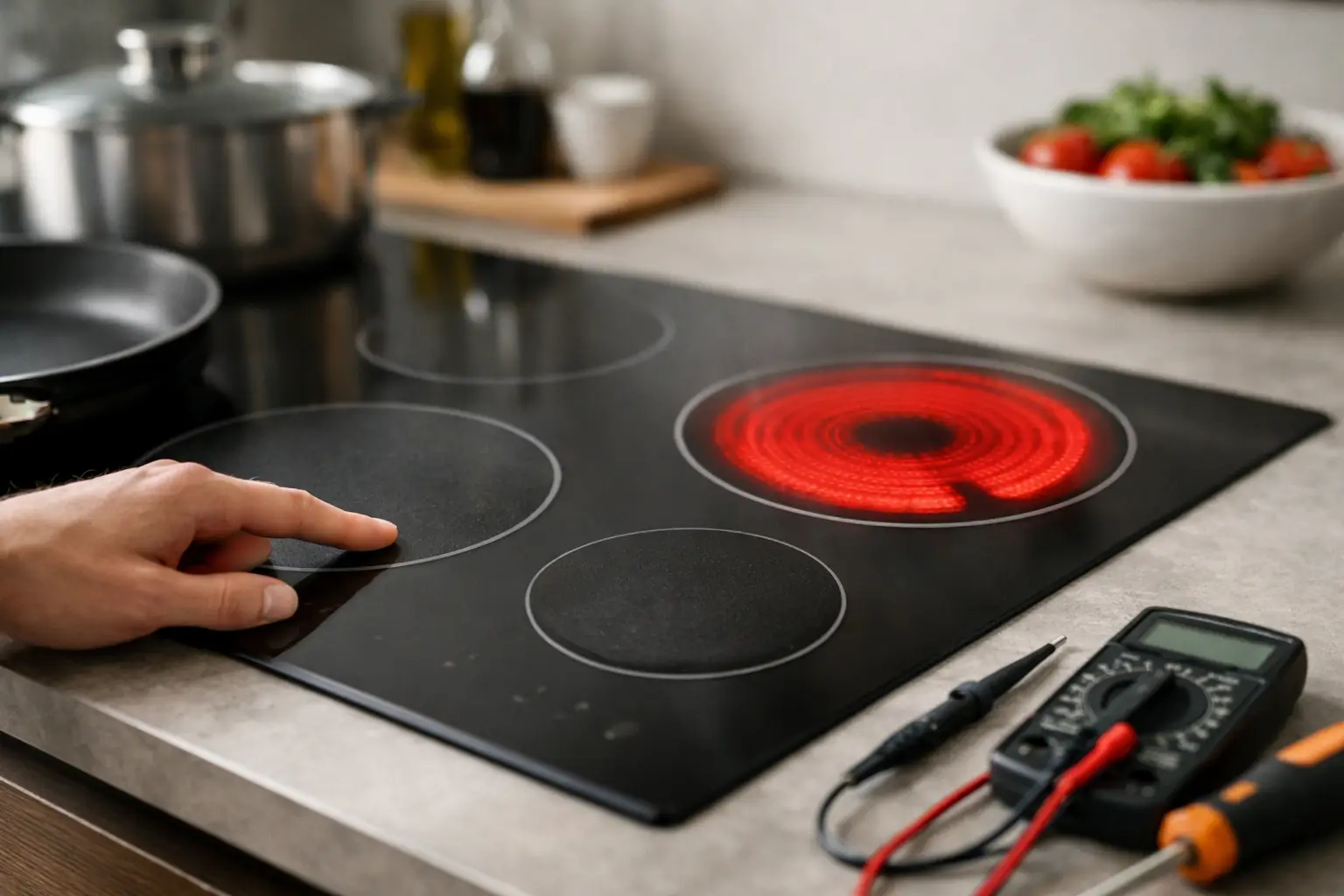
A single electric cooktop burner not working can throw off dinner, meal prep, and the rhythm of a busy household. One minute you are boiling pasta; the next, a burner stays cold, heats only on high, or cycles so unpredictably that cooking feels like guesswork. The good news is that many cooktop problems have a clear cause. The right next step depends on whether the issue is a simple power connection, a worn heating element, or a component that should be diagnosed by a qualified appliance technician.
Start with a few safe checks
Before assuming the cooktop needs a major repair, give the appliance a quick visual and functional check. Do not remove panels, touch internal wiring, or attempt a live electrical test. Electric cooktops use high-voltage power, and an incorrect repair can create a shock, burn, or fire risk.
If your cooktop has removable coil burners, make sure the affected coil is fully seated in its receptacle. A burner can look connected while sitting slightly out of position. With the cooktop turned off and completely cool, remove and reinstall the coil carefully. Look for visible damage such as blisters, cracks, burned spots, or a warped surface.
Next, check whether the other burners and the oven are working. If every cooking surface is out, the problem may involve the household circuit breaker, the cooktop’s power supply, or its terminal connection. If only one burner has failed while the rest work normally, the cause is more likely isolated to that burner, its switch, or its wiring.
For a tripped breaker, reset it once. If it trips again, leave it off and arrange service. Repeated tripping is not something to work around. It can point to a shorted component, damaged wiring, or another electrical fault that needs a proper diagnosis.
Why an electric cooktop burner stops heating
A nonworking burner is not always a failed burner. Electric cooktops rely on several parts working together: the heating element, infinite switch or electronic control, wiring, sensor components, and the electrical supply. A technician’s job is to identify which part has actually failed before recommending a repair.
A worn or damaged heating element
On a coil cooktop, the element itself is often the most straightforward possibility. Over time, repeated heat cycles can weaken the element. It may stop heating entirely, heat unevenly, spark at the connection point, or work intermittently.
Radiant glass cooktops have heating elements beneath the glass surface. These elements are not visible in the same way, but they can still fail. A burner that remains cold, takes far too long to heat, or only reaches a low temperature may have a failing radiant element or a related connection issue.
A faulty burner switch or control board
On many traditional electric cooktops, the knob operates an infinite switch. This part regulates how much power reaches the burner. When the switch fails, a burner may stay off, run only at full heat, or fail to respond when you adjust the setting.
Electronic cooktops and some newer ranges use touch controls, relays, and control boards instead. These components offer precise temperature settings, but diagnosis can be more involved. A display error, unresponsive touch pad, or burner that behaves differently from its selected setting may point to the control system rather than the heating element.
Loose, burned, or damaged wiring
Heat and age can affect the wiring and terminals behind a cooktop. A loose connection can prevent a burner from receiving power. A burned terminal can cause intermittent operation, visible scorching, or a hot electrical smell.
If you notice smoke, sparks, a burning odor, discoloration around a knob, or a popping sound, turn the cooktop off at the breaker immediately. Do not continue cooking on the affected surface until it has been inspected.
A problem with the power supply
Electric cooktops typically require 240-volt power. In some cases, one side of that power supply is lost due to a breaker issue, wiring problem, or terminal failure. The result can be confusing: lights or controls may still turn on, while one or more burners fail to heat properly.
This is one reason a working display does not necessarily mean the appliance has full power. A professional diagnosis can separate a cooktop fault from a home electrical supply issue and help you avoid replacing a part that was never the problem.
Induction cooktop compatibility or sensor issues
Induction cooktops work differently from coil and radiant models. They heat magnetic cookware rather than the glass surface directly. If an induction zone will not activate, first make sure the pan is induction-compatible, flat-bottomed, and centered on the cooking area. Small pans may not be detected, and aluminum, glass, or copper cookware generally will not work unless it has a magnetic base.
If compatible cookware is in place and the burner still will not operate, the issue may involve a sensor, cooling fan, control board, or internal power component. Induction repairs should be left to an experienced technician because of the appliance’s electrical complexity.
When a simple burner swap can provide an answer
For a removable coil cooktop only, you can sometimes narrow down the issue without disassembling anything. Once the cooktop is off and cool, move the suspected coil to another same-size working position. If the problem follows the coil, the element is likely at fault. If the same position remains dead with a known working coil, the receptacle, switch, or wiring may be the issue.
This check does not apply to smooth-top radiant or induction cooktops. Never force a coil into a different-sized receptacle, and do not use an element that shows signs of damage. A failing coil can damage the receptacle as well, turning a smaller repair into a larger one.
When to schedule professional cooktop repair
Some symptoms warrant a service call right away. That includes a burner that sparks, a cooktop that trips the breaker, melted or scorched components, a burning odor, cracked glass, or controls that do not respond. A cracked glass-ceramic surface deserves prompt attention even if the burner still heats. Moisture and spills can reach internal components, while the damaged surface can worsen under heat.
It is also time for professional help when a burner works inconsistently. Intermittent problems rarely fix themselves. They often indicate a connection or control component that is deteriorating, and continued use can cause more damage.
For homeowners in Frisco, Plano, McKinney, Allen, Denton, and nearby North Texas communities, an experienced local technician can inspect the cooktop, test the relevant components safely, and explain the repair in plain language. IAS Appliance Solutions focuses on honest assessments, upfront pricing, and practical repairs that restore the kitchen with as little disruption as possible.
What a proper diagnosis should include
A reliable repair starts with more than replacing the most obvious part. The technician should confirm the cooktop has the correct incoming voltage, inspect the element or burner assembly, check switches or electronic controls, and examine wiring and terminals for heat damage. On a glass cooktop, this may also include evaluating the condition of the radiant element, limiter, sensor, or relay.
The best repair decision depends on the appliance’s age, condition, and the cost of the needed part. Replacing a single burner switch or element is often a sensible repair. If a much older cooktop has multiple failing burners, a damaged glass surface, and control issues, replacement may offer better long-term value. A clear service assessment gives you the information to decide without pressure or surprise charges.
Preventing future burner problems
Cooktops are built for heat, but they still benefit from a little care. Avoid dragging heavy cookware across a smooth glass surface, which can scratch or crack it. Keep spillovers from baking onto burner areas, especially sugary spills on glass cooktops. Use cookware that sits flat so heat transfers evenly, and avoid operating a coil burner with no pan on it for long periods.
For coil models, keep the burner receptacles clean and dry, and replace worn drip pans before corrosion spreads. For any electric cooktop, treat flickering heat, slow performance, or unusual smells as early warning signs rather than inconveniences to ignore.
A cooktop problem does not have to put your kitchen out of commission for long. Turn off anything that seems unsafe, avoid trial-and-error electrical repairs, and get a clear diagnosis before replacing parts. That approach protects your appliance, your budget, and the next meal waiting to be made.



No comment